Czech public-media staff have gone on strike and thousands have protested against planned funding cuts that critics say invite political pressure. Brussels is examining the changes, but a European journalists’ federation wants it to do more to protect the broadcasters’ independence.
“Without strong legal safeguards direct state funding would indeed open the door to political pressure,” Renate Schroeder, director of the European Federation of Journalists, told EU Perspectives. She warned that the proposed changes could threaten journalists’ jobs and make Czech Television and Czech Radio more vulnerable to political influence.
Protests over funding and independence
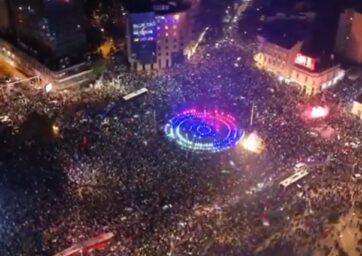
Thousands of people joined demonstrations on Tuesday as employees of Czech Television and Czech Radio staged a one-day strike. The strike disrupted broadcasting, with archived programmes and reduced news coverage replacing parts of the normal schedules. The action followed earlier protests against the reform.
The bill passed its first reading early on 24 October. As currently proposed, it would replace licence fees with state-budget funding and reduce the broadcasters’ combined resources by approximately CZK1.4bn annually, around 15 per cent. It still requires further parliamentary consideration. If MPs approve it, the Senate and the president will then scrutinise it.
Ms Schroeder warned that cuts of that scale would have a potentially devastating impact on working conditions, leading to dismissals and reductions in freelance work. Annual budget negotiations could also pressure broadcasters to accommodate political interests to protect their funding, she argued. “In the Czech case there has not been any serious consultation of national stakeholders in advance on this important issue,” she said.
Prime Minister Andrej Babiš maintains that abolishing compulsory fees would reduce costs for households and businesses. “Nobody wants to take control of public service media or nationalise them,” he said in Czech at his press conference earlier this week. The replacement model remains uncertain: he has also suggested voluntary contributions and financing outside the state budget. According to the Czech News Agency, he expects MPs to discuss the details at the second reading, potentially around 15 January.
Brussels assesses Prague’s response
The European Commission confirmed on 3 November that it had already sent a letter to the Czech authorities and was assessing their reply. Spokesperson Markus Lammert acknowledged the vote and stressed public-service media’s role in keeping citizens informed. “We will continue to follow closely the developments,” he said at the Commission’s briefing. He did not announce a finding that the proposal breached EU law.
Without strong legal safeguards direct state funding would indeed open the door to political pressure.
— Renate Schroeder, Director of the European Federation of Journalists
Direct public funding can comply with European standards. Under Article 5 of the European Media Freedom Act, member states must use transparent, objective funding procedures established in advance and guarantee adequate, sustainable, and predictable resources. The Act’s explanatory text favours multi-year funding to reduce political influence through annual negotiations. It does not require member states to retain licence fees.
Ms Schroeder questions whether the Czech arrangements would protect editorial autonomy. She also asks whether they would provide enough funding for the broadcasters to fulfil their public-service role. She said the federation had separately written to Commissioner Michael McGrath and the Commission’s digital-policy department but had not received a response. “This is a nice first step but letters are not enough,” she said of the Commission’s contact with Prague.
She wants clear advice on the safeguards needed to avoid infringement proceedings, alongside transparent action to defend public-media independence. If the Commission identifies a breach of EU law, it can pursue an infringement procedure that may ultimately reach the Court of Justice of the European Union. With the Czech funding model still under discussion, lawmakers can address those concerns before settling the final rules.