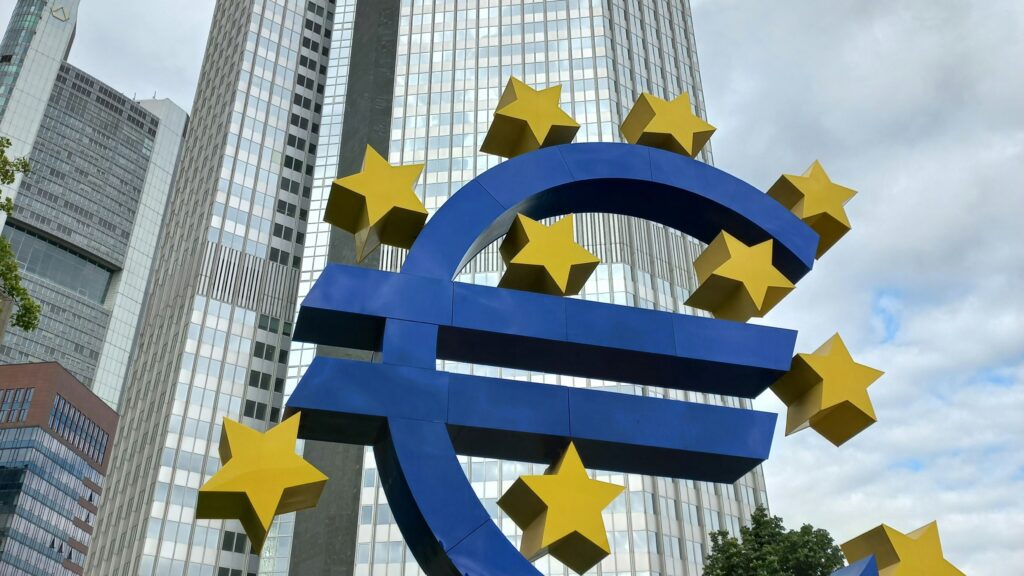
A €45bn landmark cross-border takeover marks a new test for Europe’s fragmented banking market.
The European Commission on Monday unconditionally approved UniCredit’s planned takeover of Germany’s Commerzbank. Brussels found that the €45bn deal would not harm competition on the German banking market. For UniCredit, that removes a major regulatory hurdle — and brings Europe closer to its biggest cross-border banking deal since the global financial crisis.
UniCredit completed its offer for Commerzbank shares in July, taking its stake in the German bank to 48 per cent. By the end of the year, it wants to secure roughly half of Commerzbank’s voting rights and effectively take control.
Under EU rules, major mergers and acquisitions must pass the European Commission’s competition test. Brussels must assess whether a deal would significantly restrict competition in the European Economic Area.
You might be interested

In the case of UniCredit and Commerzbank, the Commission focused mainly on Germany’s banking market. The two banks overlap across almost every major area of banking. UniCredit operates in Germany through HypoVereinsbank.
Brussels sees no threat to competition
The Commission looked at services for households and businesses, corporate lending and trade finance, among other areas. It paid particular attention to lending to Germany’s Mittelstand, the country’s medium-sized businesses, which play a crucial role in the economy and are a key focus for both banks.
The verdict? The combined bank will hold only a moderate share of most of the markets examined, according to the Commission, and will continue to face plenty of competitive pressure.
Europe needs stronger banks that can compete, grow and support our businesses and families. Cross-border mergers can help make this happen, allowing banks to operate more efficiently and better withstand economic shocks. — Teresa Ribera, Commission Vice-President for Clean, Just and Competitive Transition
Trade finance is the one area where both banks have a stronger position. Even there, however, Brussels sees no problem. Businesses will still have plenty of alternatives, from Germany’s private and public-sector banks and cooperative lenders to international competitors.
The Commission therefore cleared the deal under the EU Merger Regulation without conditions. UniCredit will not have to sell off parts of its business or take any other remedial action.
The decision also came fairly quickly. UniCredit notified the Commission of the deal on 9 October, and Brussels approved it in the so-called first phase of its merger review. That stage covers cases where the Commission sees no serious competition concerns.
“Europe needs stronger banks that can compete, grow and support our businesses and families. Cross-border mergers can help make this happen, allowing banks to operate more efficiently and better withstand economic shocks,“ said Commission Vice-President for Clean, Just and Competitive Transition Teresa Ribera. But growth, she added, must not come at the expense of customers.
Europe wants bigger banks. But not too big
There is an obvious paradox here. The EU worries about excessive market concentration, yet it has also spent years pushing for European banks to become bigger and better able to compete with US and Chinese financial giants.
European banks have strengthened considerably since the 2008 crisis. They hold more capital, are more profitable and face tougher supervision than they did nearly two decades ago. But the bigger problem lies elsewhere: European banking remains largely national.
A major European bank can operate in several countries, but Europe’s banking market is still far from a single market in practice. Cross-border flows of capital and liquidity continue to run into different national rules and supervisory regimes.
And size is no longer just about prestige. Banks need to pour money into digital services, artificial intelligence, cybersecurity and other technologies. A larger bank can spread those costs across a much bigger customer base. It can also spread lending risks across several economies rather than relying mainly on the fortunes of a single domestic market.
Europe will also need huge amounts of private capital for defence, energy, infrastructure and digitalisation. European banks are therefore expected to play a major role in getting money to the companies and projects that need to invest.
That is why the European debate increasingly comes back to one idea: the continent needs genuinely European banking champions, not just large national banks.
The Commission itself made a similar point in Monday’s decision. Cross-border consolidation, it says, can help overcome national fragmentation, deliver economies of scale and strengthen the single market.
Commerzbank does not want to be taken over
UniCredit has been trying to gain control of Commerzbank since 2024. The Italian bank has steadily increased its stake and formally announced an offer for the entire German bank this spring.
Commerzbank is fighting the takeover and wants to remain independent. The German government has also taken a cautious stance. Berlin still holds a significant stake in the bank.
But Germany is not simply trying to protect domestic ownership for its own sake. Commerzbank employs thousands of people, finances German companies and has a particularly important role in lending to medium-sized businesses.
The German government therefore wants guarantees that a takeover would not see a major financial institution disappear from Frankfurt or stop playing its current role in the German economy.
Chancellor Friedrich Merz, however, has not said the government would block a takeover at all costs. The dispute is more about the conditions under which a deal could happen, and how much influence Germany would retain over the bank afterwards.
The “too big to fail” problem returns
Big banks can be more efficient and more competitive. But the financial crisis left Europe with an old lesson: the bigger and more interconnected a bank becomes, the greater the fallout when it fails.
That is why the years after 2008 brought sweeping new regulation, higher capital requirements and the creation of the banking union. The European Central Bank now directly supervises the eurozone’s biggest banks, while the EU has common rules for dealing with failing lenders.
The banking union, however, remains unfinished. A fully fledged common deposit insurance scheme is still missing, for example.
Europe is therefore wrestling with a fairly simple but uncomfortable equation. It needs banks big enough to compete with global giants, but does not want to create new institutions that are simply too big to fail.
UniCredit’s takeover of Commerzbank is one of the clearest tests yet of whether Europe can square that circle.