European farmers may receive uneven financial support during the next round of the EU agricultural policy. Regional leaders fear that changing the rules for funding may end up supporting wealthier countries while neglecting rural development.
Funding for EU farms would be tied to national and regional partnerships in the new policy. The European Commission believes that this would give member states the flexibility to support their rural areas with other EU policies.
But various concerns were brought up during a high level meeting in Brussels as EU officials, parliamentarians and regional leaders discussed the next version of the Common Agricultural Policy (2028-2034). Regional leaders have asked for more guarantees on funding as well as a greater role in decision making.
Regions demand a say in farm funding
The reform suggests that national governments can have greater autonomy in organizing farm support. But regional authorities are concerned that they could lose control over decisions that influence local farmers.
You might be interested
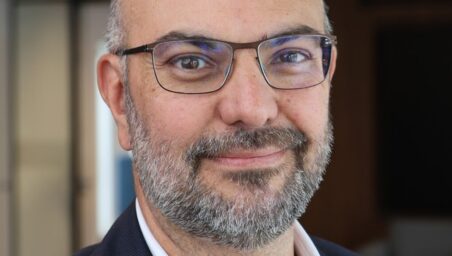
“The region cannot be simply somebody who is giving its advice.”
— MEP Herbert Dorfmann (EPP/ITA)
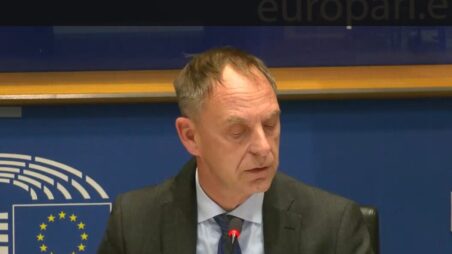
The European People Party Agriculture Committee coordinator, MEP Herbert Dorfmann (EPP/ITA) called for more influence for regions. He also stressed that regions should be involved in the planning of agricultural policies. “The region cannot be simply somebody who is giving its advice,” he said.
Arnaud Lécuyer, coordinator of the Coalition of European AgriRegions also raised similar points. His coalition is made up of 23 regions from seven different EU countries. He admitted that the final say in regional participation will likely be determined by national governments.
Could farmers lose guaranteed support?
Another major point of concern is the funding structure. Alessio Mammi, the Committee of the Regions’ rapporteur on the Common Market Organisation (CMO), raised concerns about the proposed requirement for national co-financing of at least 30 per cent for certain agricultural programs.
The programs provide funding for producer organisations, including fruit and vegetable producer organizations. Some programs currently receive full EU financing. At the meeting, changes to the programs were discussed in which co-financing by the member states would be required.
Mammi indicated that differences between countries would be created as a result of the proposed changes and these changes could impact programs beyond 2028. The question is whether Member States with smaller budgets could continue to support these programs to the same extent.
Strengthening rural areas
Elisabeth Werner, the European Commission Director-General for Agriculture and Rural Development, spoke in support of the proposed structure. She said support to farmers should be thought of as one of the many investments possible for the rural economy, including investment in transport and communication networks, schools and other services.
According to Ms Werner, the effect of merging funding streams would reduce the level of administrative duplication and increase the impact of the financial transfers.
So for us this is not a decrease of support to rural areas. — Elisabeth Werner, DG AGRI
The Commission proposes that regions should also contribute to the preparation and implementation of the new development plans.
But some regions remain unconvinced of the commitment of the Commission to ensure that rural development programmes continue to benefit from sufficient financial resources.
The risk of unfair competition
MEP Thomas Waitz (Greens-EFA/AUT) stated that greater national control could create various subsidy systems throughout Europe. Farmers in neighboring countries often sell their products in the same markets. Thus, different levels of financial support could influence competition. Mr Waitz questioned the degree of power regional authorities would have over the new mechanisms.
MEP Jérémy Decerle (Renew/FRA), was in favour of developing a stronger common European framework. “We do not need 27 different policies,” he quipped.
We do not need 27 different policies.
— MEP Jérémy Decerle, (RENEW/ FRA)
Mr Decerle stressed that EU countries should share the same priorities and offer sufficient flexibility to address particular agricultural challenges in the region. The idea is to remove national differences; it would also affect inequalities among producers.
Rising costs add pressure on farmers
Farmers are already struggling to cope with higher costs and extreme conditions. Agnieszka Baranowska, the vice president of Poland Pomorskie region, said fertiliser prices in her region increased by 60 per cent and energy costs by around 50 per cent. Ms Baranowska said these increases mean farmers are unable to invest.
Water scarcity is also a concern. Emmanuel Ferrand, representing France Auvergne-Rhône-Alpes region, said there is a lack of investment in the continent irrigation systems.
MEP Daniel Buda (EPP/ROU), vice-chair of Parliament Agriculture Committee, also called for more and better water and food supply infrastructure. These calls increase the pressure on the next agricultural budget negotiations.
Rural development needs secure funding
Mary Carey, speaking for the Irish Presidency of the Council, confirmed that part of the future CAP was agreed by EU agriculture ministers on 26 October. While an agreement has been reached on the CAP, there is still no agreement on the overall budget and financial framework.
María José Gómez Rodríguez, Galicia (Spain) regional minister, stated that rural development programs require predictable funding. “Rural development cannot depend on what remains of the budget,” she said. She stressed that rural development programs need long term funding for the integration of young farmers and businesses.
The next CAP is due to take effect in 2028. Before then, it must be agreed how funding will be structured and what influence regions will be allowed to retain. For farmers the outcome will determine whether the new policy brings more flexibility or creates larger disparities in payments across Europe.