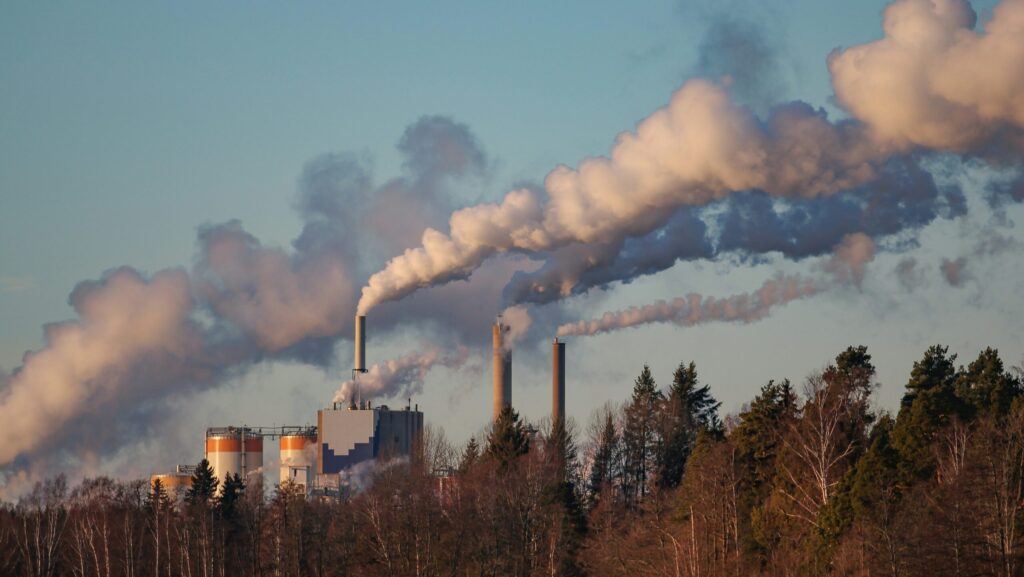
European factories could pay less for their emissions under an EU deal reached on Thursday night. Negotiators agreed to provide around 121 million extra free carbon permits through 2030, following warnings that rising costs could push production abroad.
“This amendment will provide the predictability industry needs for the sustainable transition, while remaining competitive at home and retaining production within the EU,” Irish Climate Minister Darragh O’Brien said after the provisional agreement. The changes cover 2026–2030.
Lower carbon bills for manufacturers
The measure concerns industrial activities whose free allowances depend on heat and fuel use rather than product-specific benchmarks. These rules cover activities including chemicals, paper, food processing, ceramics and glass. The revision follows complaints about reductions in free allocations after a benchmark update in June.
Under the emissions trading system, companies must cover their emissions with allowances. Receiving more for free can reduce the number they need to buy. The policy aims to prevent production shifting to countries where competitors face lower carbon costs.
You might be interested

Reuters calculated in September that the Council’s proposed 121 million permits could save companies about €8.25bn. The temporary increase comes within a system designed to reduce free permits gradually and encourage emissions cuts.
Push to keep allowances out of climate funds
Before the deal, industry associations had pressed negotiators to direct all available permits towards immediate relief. Their October appeal, published by paper industry association Cepi, opposed Parliament’s proposed division of previously unallocated allowances between industry and other objectives.
“Splitting these allowances across different objectives, as proposed by the European Parliament, will fail to provide meaningful and urgent relief to affected installations,” the associations said. They also warned that uncertainty over allocations could complicate investment and production decisions.
This amendment will provide the predictability industry needs for the sustainable transition… — Darragh O’Brien, Irish Climate Minister
The compromise combines around 88 million available allowances with another 28 million previously withheld because installations failed to meet energy-efficiency or climate-planning conditions. A further five million would support particularly exposed sectors. Any unused permits from that reserve would go towards the Modernisation and Innovation Funds.
Parliament and the Council must still formally approve the law before the Commission adopts detailed calculation rules. The EU’s timetable envisages completion in the first quarter of 2027.