Gas that could heat European homes keeps leaking into the air from tanks, valves, and compressor stations. The rules meant to make importers check their foreign suppliers will now start two years late. Lawmakers say energy security comes first. Critics warn the delay will not make anyone’s bills cheaper.
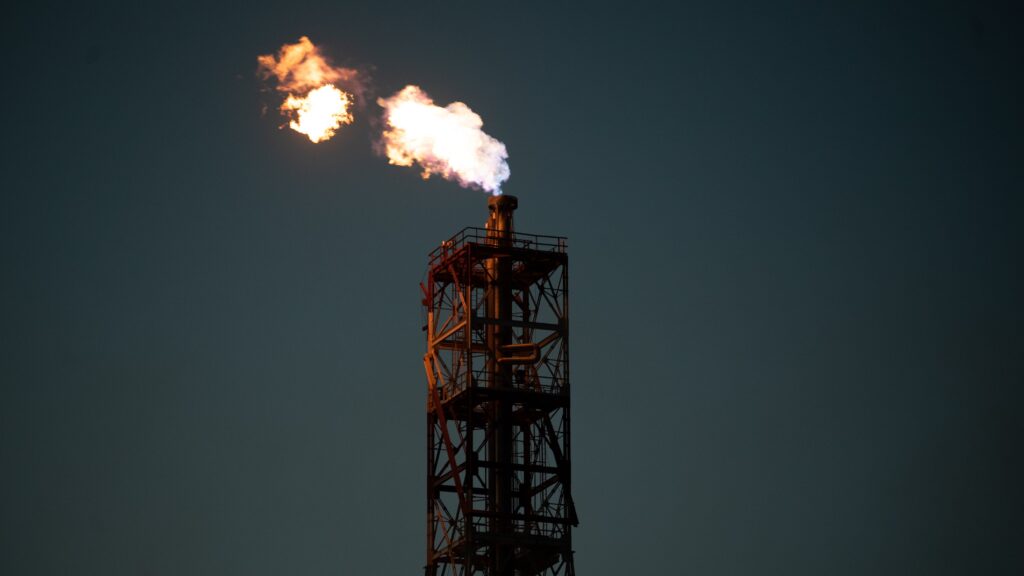
Campaigners from Clean Air Task Force (CATF) spent much of 2026 filming oil and gas sites in seven European countries with infrared cameras. They documented methane at 192 of 275 locations. According to CATF, a Romanian compressor station vented gas from its stack while a gas capture unit stood right next to it. In South Moravia, the group recorded routine venting at the vast majority of crude oil storage sites it visited.
Every leak is gas that never reaches a boiler or a factory. The EU imports about 90 per cent of its gas. CATF calculates that applying existing fixes at Europe’s main suppliers could unlock over 40bn cubic metres of gas. That is more than half of the US liquefied natural gas (LNG) the EU imported in 2025.
Security of supply first
On Thursday, the European Parliament endorsed a deal that delays key parts of the EU’s methane law by two years. The vote was 341 to 224, with 31 abstentions. Importers of crude oil, gas, and coal now have until May 2030 to prove that their new contracts cover only fuel monitored to EU standards. The rules were due to apply from 1 January 2027.
You might be interested
Importers had warned they could not find enough compliant supplies in a market shaken by the war in the Middle East. The European Commission proposed a one-year delay in October. Parliament wanted three years. Negotiators settled on two.
“We stand by the objectives of the methane regulation, but security of supply comes first,” said Borys Budka (EPP/POL), one of Parliament’s lead negotiators. His colleague Dimitris Tsiodras (EPP/GRC) insisted: “We are not suspending the Methane Regulation; we are ensuring that it can be effectively implemented.”
The pressure came from several directions. According to Bloomberg, the United States, Europe’s largest LNG supplier, warned it could take its gas elsewhere unless the rules were eased. Energy Commissioner Dan Jørgensen said a “big” majority of member states had raised concerns.
Who pays the price
Campaigners argue that ordinary Europeans gain nothing from the delay. Energy consultancy Rystad Energy puts the cost of compliance at about 0.3 per cent of the current gas price. “The Regulation did not cause the current energy price crisis or supply disruptions, and delaying its implementation will not solve them,” more than 50 organisations wrote in October.
The cost to health is harder to see. Methane helps form ground-level ozone, which harms human health. In 2022, 94 per cent of people living in EU cities were exposed to ozone above levels recommended by the World Health Organization (WHO), according to the European Environment Agency. Over 20 years, methane also traps more than 80 times as much heat as carbon dioxide.
The EU is caving in to the fossil fuel lobby and the Trump administration. — Jutta Paulus (Greens/EFA/DEU), former lead negotiator on the Methane Regulation
Léa Pilsner of Environmental Defense Fund Europe estimates that 24bn cubic metres of methane will leak during the extra two years. That is roughly two-thirds of what France uses in a year. Jutta Paulus (Greens/EFA/DEU), who negotiated the original law, was blunter: “The EU is caving in to the fossil fuel lobby and the Trump administration.” The Council still has to formally endorse the deal before it becomes law.