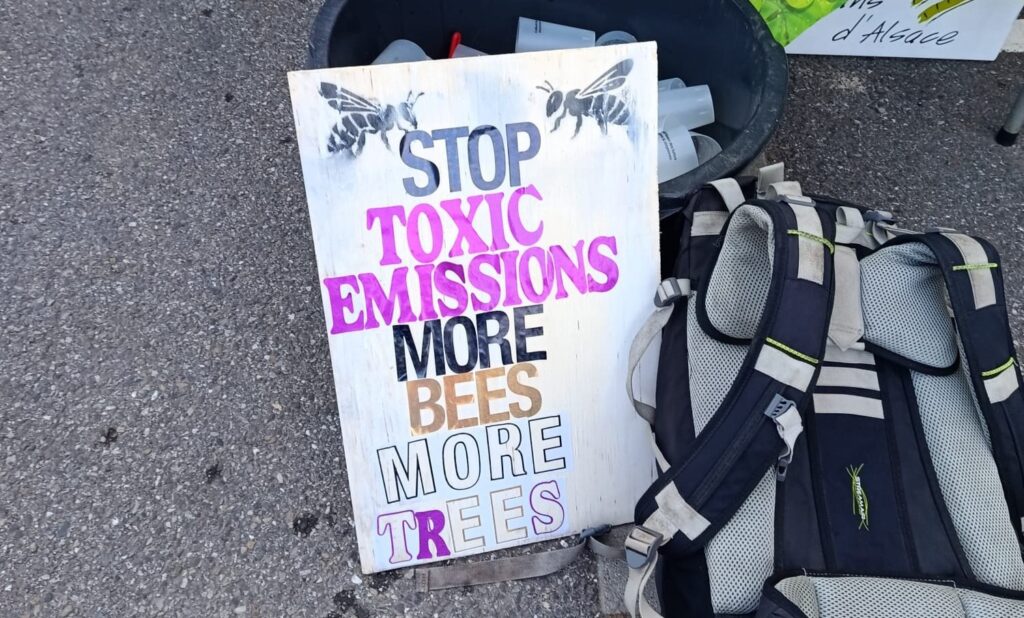
Patients, farmers, and scientists stood side by side outside the European Parliament in Strasbourg on Tuesday. They fear that pesticides harmful to health could stay on the market indefinitely. Backed by 360 organisations, they urged lawmakers to reject a Commission plan to loosen EU pesticide rules.
What the European Commission presents as an effort to simplify EU rules, hundreds of protesters see as a threat to public health. On 24 November, farmers, scientists, and environmental campaigners gathered outside the Parliament. They oppose plans that could weaken safeguards against pesticides linked to cancer and other serious health conditions.
Around 350 people attended the demonstration, with organisers putting the figure at 500, AFP reported. It had the backing of 360 organisations from 24 EU countries. At the centre of the controversy is the Commission’s proposed Food and Feed Safety Omnibus, also known as Omnibus X.
Pesticides without an expiry date
One of the most controversial elements of the Commission’s proposal is the end of fixed expiry dates for approvals. It would apply to many active substances used in pesticides. The Commission argues that systematic renewals create unnecessary administrative burdens. Campaigners, however, fear that removing them could delay the detection of new health and environmental risks.
You might be interested

Consumer protection organisation foodwatch also warned that pesticides could remain in use for up to three years after losing their approval. More than 180,000 people have joined its email campaign urging MEPs to reject the reform.
Alarm among scientists
More than 2,000 scientists and doctors have signed a letter to the European Parliament. They want it to suspend its work on the reform until an independent assessment of its potential consequences is complete. The lack of a dedicated impact assessment also prompted foodwatch to file a complaint with the European Ombudsman in June.
Meanwhile, 52 scientific societies and medical organisations from 16 European countries voiced their concerns in a joint opinion piece published by Le Monde on 23 November. They argued that more funding for the European Food Safety Authority would tackle administrative delays better than relaxing existing safeguards.
Who stands to benefit?
An investigation by Corporate Europe Observatory (CEO) suggests that several proposed changes reflect long-standing demands from the pesticide industry. Nina Holland, a researcher and campaigner at CEO, pointed to years of lobbying by companies and industry groups, including Bayer, BASF, and CropLife Europe.
Farmers themselves are among those most exposed. — Nina Holland, researcher and campaigner at Corporate Europe Observatory
“They stand to profit from weaker rules, while the costs of pesticide pollution and its impact on public health are passed on to society. Farmers themselves are among those most exposed,” she said.
Opposition beyond Strasbourg
Just five days before the Strasbourg demonstration, two anti-pesticide campaigners, one of them a cancer patient, targeted Olivér Várhelyi, European Commissioner for Health and Animal Welfare. They threw ashes over him at the start of his speech at the European Cancer Summit in Brussels.
The ashes symbolised potential future victims of pesticide exposure. “These are the ashes of the people you will kill with the pesticides,” one of the protesters said, as reported by Euronews. European Commission President Ursula von der Leyen condemned the incident, stressing that the right to protest did not justify violence.
Less bureaucracy or weaker safeguards?
The Commission presented Omnibus X in December 2025, arguing that it would reduce administrative burdens without compromising safety standards. The Council’s negotiating position, agreed by EU ambassadors on 30 September, proposes unlimited approvals for low-risk active substances. For others, initial approvals would generally last 15 years, with subsequent approvals lasting 25 years.
Parliament’s agriculture and environment committees had been expected to vote in December. Their joint vote could now slip to January or February 2027, Agence Europe reports. Lead negotiators from the political groups will meet again on 14 December.