A farmworker who handled pesticides for decades is diagnosed with Parkinson’s disease. Whether that counts as an occupational illness depends largely on the country they worked in. Only three EU member states formally recognise the link, and the gaps have now come under scrutiny in the European Parliament.
Across the EU, affected workers face different national rules, limited access to records of the chemicals they handled, and a long process to have their illness recognised as work-related. On 9 November, the European Parliament’s Committee on Employment and Social Affairs held a public hearing on the issue. Representatives of farmers, trade unions, and public health professionals discussed how to better protect agricultural workers exposed to pesticides.
Speakers at the hearing said only three EU countries recognise Parkinson’s disease caused by occupational pesticide use, and only under certain conditions. The debate comes as the EU weighs changes to its pesticide approval rules under the European Commission’s food and feed omnibus. This raises concerns about whether Europe does enough to protect the people who produce its food.
A known risk that is hard to prove
Parkinson’s disease is a progressive neurological condition that affects movement. It causes symptoms such as tremors, muscle stiffness, and difficulty walking. Scientists have found links between exposure to certain pesticides and an increased risk of developing the disease. But exposure does not mean someone will necessarily develop Parkinson’s. Establishing the cause of an individual case can be difficult.
You might be interested

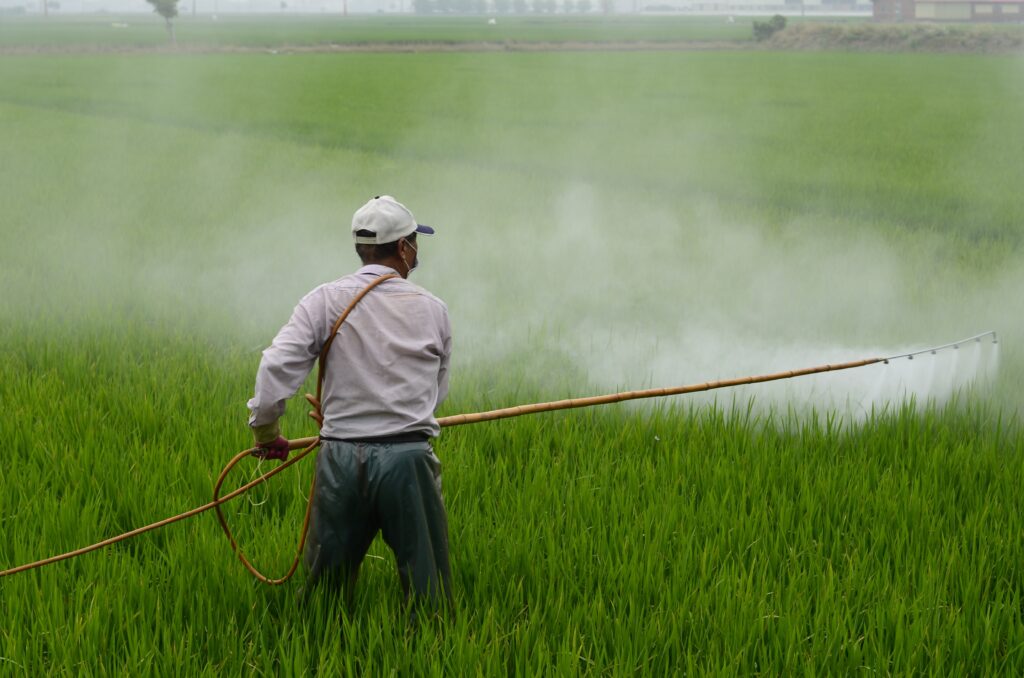
For agricultural workers, exposure is not limited to spraying crops. It can also happen when mixing chemicals, cleaning equipment, handling containers, or entering fields after pesticide treatment. At the hearing, Bogdan Deleanu, Brussels liaison manager at the European Agency for Safety and Health at Work (EU-OSHA), warned that agricultural workers face several overlapping health risks.
The agency’s Workers’ Exposure Survey, carried out in six member states, checks probable exposure to 24 occupational cancer risk factors. Agriculture stands out. Mr Deleanu said: “People working in the crop, animal production, hunting, and related services, so very much the sector, face a probable exposure to at least one cancer risk factor of 84.4 per cent during a normal work week, which is almost double than the average in the EU.” The figure includes hazards such as diesel exhaust and ultraviolet radiation. EU-OSHA also pointed to research linking pesticide exposure with neurological conditions, certain cancers, and reproductive health problems.
A patchwork of national rules
One of the biggest concerns is what happens when a worker becomes ill. The European Federation of Food, Agriculture and Tourism Trade Unions (EFFAT) pointed out that formal recognition remains the exception. Only France, Italy, and Germany list Parkinson’s disease linked to pesticide exposure as an occupational disease.
Each of the three sets its own conditions. Recognition can make it easier for eligible workers to claim compensation for an illness connected to their jobs. But the process remains complicated. Workers may need to prove which pesticides they handled, how long they were exposed, and whether their illness meets national requirements.
In France, for example, the agricultural occupational disease framework requires at least 10 years of regular exposure. Germany asks for pesticide use on at least 100 days over a working life. Other countries use different criteria, and some allow workers to pursue individual compensation claims without having a specific occupational disease recognition scheme. A worker’s chances of obtaining recognition may depend partly on where they worked and whether they can produce evidence of their exposure.
Proving exposure years later
Parkinson’s disease can develop many years after exposure to a potential risk factor. By the time symptoms appear, agricultural workers may have left their jobs, changed employers, or moved to another country. Tracking down records of the chemicals they handled can be difficult.
EFFAT wants workers to receive documents identifying the pesticides and other chemicals used in their workplaces. These records could help doctors assess possible occupational exposure and give workers evidence when applying for compensation.
The issue is particularly important for seasonal and migrant workers. EFFAT cited estimates suggesting that more than 30 per cent of agricultural work is undeclared or informal. That makes it harder to enforce workplace safety rules.
Workers may also lack adequate training or information in a language they understand. The federation argued that existing legislation needs stronger enforcement, alongside better access to information about workplace risks.
Simpler rules, weaker safeguards?
The hearing also exposed disagreements over the Commission’s plans to simplify pesticide authorisation rules. Pesticide Action Network Europe (PAN Europe) warned that proposed changes could weaken health protections. They would allow certain pesticides to remain approved without routine expiry dates. Today, approvals typically run for 10–15 years before a fresh safety review.
The organisation argued that regular scientific reviews are necessary because new evidence about the health effects of chemicals continues to emerge. Agricultural employers took a different view.
Claudia Merlino, president of the agricultural employers’ organisation GEOPA-COPA, argued that simpler administrative procedures do not necessarily mean weaker scientific controls. She stressed that under the Commission’s proposal, regulators would still have to assess new scientific evidence.
Employers also warned that farmers need affordable and effective alternatives to conventional pesticides. Removing crop protection products without suitable replacements, they argued, could increase costs and affect agricultural production.
Calls for EU-wide compensation
Trade unions and environmental organisations want the EU to take a more consistent approach to occupational diseases linked to pesticides. PAN Europe called for a European framework to improve recognition and compensation.
It also proposed that pesticide manufacturers contribute financially to compensation for affected workers. EFFAT supports stronger recognition rules and wants workers to have lasting access to their exposure records.
People working in the crop, animal production, hunting, and related services, so very much the sector, face a probable exposure to at least one cancer risk factor of 84.4 per cent during a normal work week, which is almost double than the average in the EU. — Bogdan Deleanu, Brussels liaison manager, EU-OSHA
EU-OSHA acknowledged that national systems differ. It also admitted that linking workplace exposure to diseases that develop many years later is difficult. The agency expects to publish research comparing national approaches to occupational disease recognition by November 2027.
Protection for farmworkers
The hearing raised questions about whether Europe’s existing rules provide enough protection for agricultural workers. This applies particularly to those exposed to pesticides over many years. Better workplace inspections, access to exposure records, and clearer recognition procedures could help address some of these problems.
For someone diagnosed with Parkinson’s disease after a career in agriculture, the stakes are high. It could mean the difference between having their occupational history recognised and facing years of uncertainty over their claim.