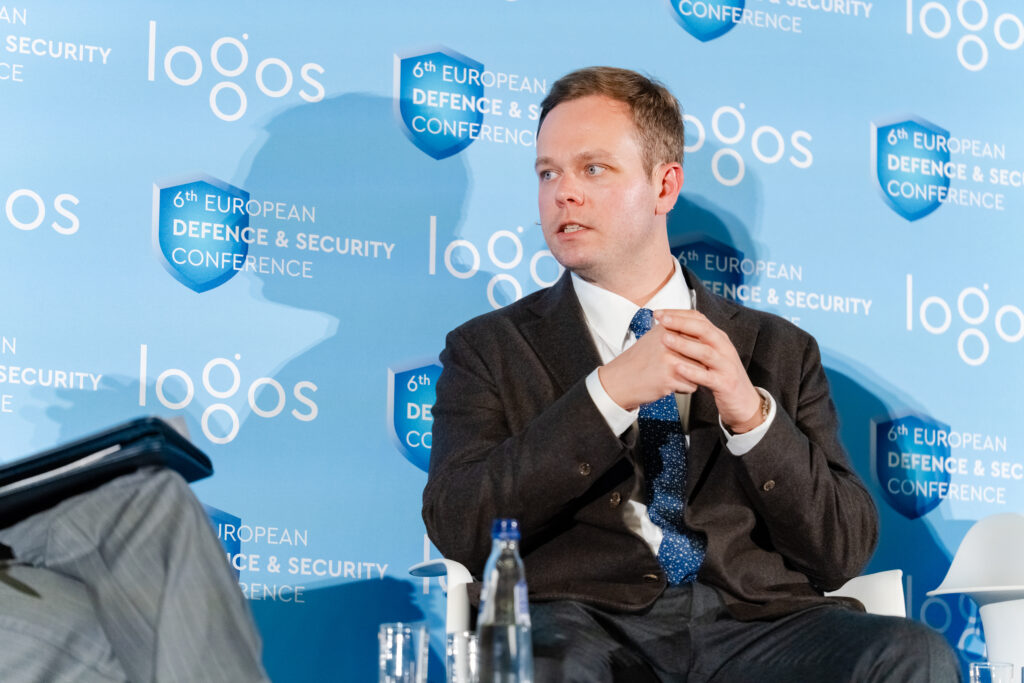
Most wounded soldiers on Ukraine’s front lines are now hit by drones. Fedir Serdiuk, co-founder of defence company MOWA, tells EU Perspectives that Ukraine is ready to join Europe’s defence market. What it lacks are practical ways in.
EU Perspectives first spoke to Mr Serdiuk in April about what the EU can learn from Ukraine’s battlefields. Much has changed since. In July, President Volodymyr Zelensky dismissed Defence Minister Mykhailo Fedorov, and in August Ukraine’s parliament appointed Yevhen Khmara in his place.
We spoke again shortly before the Abu Dhabi peace talks of 10–11 November. For Brussels, his message is clear. “Ukraine is absolutely ready to be integrated with EU defence market and defence space but now it’s a U-turn to find practical and measurable tracks to integrate both industrial-wise.”
How would you describe the situation in Ukraine today?
It’s been four and a half years since the large-scale invasion by Russia started, and it’s for me every day is a gift. Because it’s the formidable power and very serious military power that Russia presents. Also very brutal and capable, unfortunately, with a lot of resources. So being able to defend as good as we are doing this is itself a very good, a very good scenario.
You might be interested
We face numerous issues, and Russia’s inability to reach any military dominance or any practical military achievements leads them to try more and more of the terrorist tactics. So currently, as far as I’m concerned, Kyiv has very limited water supplies and electricity, which is terror and nothing else, because there is no military reason to cut off the electricity for a civilian city and the water supplies also.
From your perspective, how have the tactics on the battlefield changed?
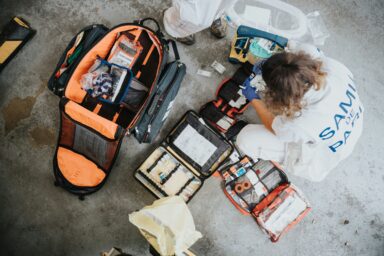
Regarding the tactics, we are witnessing the drone warfare for already a long time. It’s that 80 per cent, according to our senior military officials, of the victims on the front lines, of the wounded soldiers from both sides, are coming from drone attacks. Drones, uncrewed sea vessels, are responsible for most of our success in the Black Sea. As for August, the last month the statistics were published for, ground platforms did more than 25,000 races to missions, accomplished 25,000 missions to fulfil logistics demands and evacuate wounded soldiers and do fire missions also.
Those drones, ground drones that carry weapons. So it evolves and inside of every of this, of these domains, we have new developments and tactics and the techniques are, they are following this. So the better you adjust, the better gets the technology as you provide the feedback to the manufacturer.
What has changed on the ground since Mr Fedorov’s dismissal?
I think that at some point Minister Fedorov started to embody, if you wish, this technological warfare because his name is strongly associated with this, media speaking. However, Ukrainian technology, curiosity or developments, and tactical achievements were never tied to any particular person.
The minister of defence of Ukraine is one of the hardest jobs on earth, and there are many ways you can fail and only one way you can succeed. — Fedir Serdiuk, co-founder of MOWA
The minister of defence of Ukraine is one of the hardest jobs on earth, and there are many ways you can fail and only one way you can succeed. And none of the people ever appointed or whoever will be appointed will be able to succeed in 100 per cent of the cases, in 100 per cent of the functions. I do think that every resignation, every decision about your public service should be faced with dignity. So, nobody is forever in their position.
What do you think about the new Defence Minister Yevhen Khmara?
I think it’s too early. As Ukrainians, we have, and we are famous for it, we always want the impossible. So what I want from him is likely impossible to achieve, especially in a short period of time. So I’m not sure if anybody is happy, including himself. So we always want a system to work ideally and things to be developed ideally. So I think we need more months to judge.
Ukraine, Russia, and the US are meeting in Abu Dhabi for their first trilateral peace talks since February. What are your concrete hopes for them?
I obviously am happy for anything that gives even the tiniest chance for peace. I do not see anything one loses in terms of talking and seeing what happens, especially keeping in mind that Russia has zero success military-wise, zero, and very significant losses. I mean, Ukraine also has very significant losses, but we never started this war. So Russians are quite pressurised to seek some exit.
For these talks, I hope for it but I do not count on it. Ukraine, Europe, and these allied nations or partner nations, we really need to focus on our security and we’ll see, unfortunately, a lot of attempts on our security and well-being if we won’t be able to reach the status quo when we can defend ourselves efficiently.
So far, unfortunately, the only way to gain this status is to see what Ukraine is facing, see what works and what’s not, extracting the lessons learned, and including this practice into the defence doctrines of the Western nations, and then procuring the proper equipment to fulfil the capabilities. That’s what I see as the only opportunity now.
What do you think of the EU’s current role in the peace talks?
A lot depends on the narrative. If there is a talk about how we keep Russia safe, I mean, it doesn’t make too much sense for me. However, the idea with which Russia comes to public communication about these talks is that they have legitimate security concerns, and Europe and the US need to provide certain guarantees. That doesn’t make too much sense for me. If we are talking about some public communication, but the real negotiations are about Russia pulling out of Ukraine, then also you should be on board as they influence our participation in the European Union in the future and so forth.
Ukraine and the EU, we are all united now in defence terms because otherwise none of us makes sense. — Fedir Serdiuk
So by any means, in every case, I think that EU participation or representation or being updated makes sense, right? I think that the EU being strong and being united and being able to solve internal problems is the largest way of the contribution that you can do for Ukraine now, because the stronger the EU is, the less we will see the populists and less logistical problems and less financial problems. Then the stronger is every partner, the stronger is the partnership. That’s also a very important parameter. Ukraine and the EU, we are all united now in defence terms because otherwise none of us makes sense.