Choked Hormuz, snarled shipping, and rattled markets leave the European Union scrambling to dodge stagflation scares. The bloc, however, has countermeasures at hand: naval escorts, logistical subsidies, fiscal cushions, and some ECB rate brinkmanship may yet avert the bleed of confidence.
Just as the continent began to recover from the energy shock of 2022, another geopolitical rupture has arrived. The war that broke out on 28 February between the United States and Iran has closed the Strait of Hormuz, forced tankers to idle and sent Dutch TTF gas futures up by 60 per cent to €50 per megawatt-hour. Brent crude flirted with $100 a barrel before easing.
Economists at Chatham House reckon that a prolonged conflict could shave 0.4 percentage points off euro-area GDP, and Goldman Sachs has already trimmed its growth forecast by 0.2 points for 2026. Martina Daga of AcomeA warns that “The outbreak of war in Iran introduces upside risks to eurozone inflation through two channels: energy prices and exchange rates.”
Not just energy
Yet hydrocarbons are only part of the story. European policymakers must also grapple with snarled logistics, pricier imports, jittery bond markets and wavering consumers.
The risk is not an immediate recession. Rather, it is a slow bleed of confidence that could reignite the stagflation fears banished only months ago. Henry Cook of MUFG puts it starkly: “The prospect of sustained higher energy pricing and deteriorating sentiment has renewed concerns around stagflation risks.”
Around a quarter of global seaborne oil and a fifth of LNG normally transit Hormuz, but the strike-and-retaliation cycle has brought tanker traffic almost to a standstill. Bridget Payne of Oxford Economics highlights the main worry: “Trade disruption rather than lost production is currently the primary concern.”
The last time Europe lost access to a large volume of fuel—after Russia’s full-scale invasion of Ukraine—governments spent hundreds of billions cushioning households. Fiscal war chests are lighter today.
Chokepoints everywhere
The Gulf crisis exposes bottlenecks that stretch far beyond energy. Data collected by Freightos, a shipping platform, show that container carriers have slapped emergency conflict surcharges of up to $4,000 per box, and Asia-Europe ships are rounding the Cape of Good Hope, adding up to fourteen days to voyages.
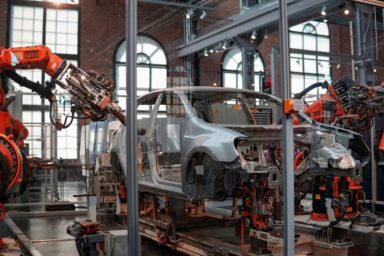
Judah Levine of Freightos is blunt: “The US-Israel strikes on Iran and subsequent Iranian retaliation are driving significant logistics disruptions in the region which could start to be felt more broadly if the conflict stretches on.” Rerouting diverts roughly three per cent of global container capacity, yet margins for just-in-time factories are wafer-thin. European carmakers warn of parts shortages within weeks if the Suez and Hormuz lanes both remain risky.
Air cargo is no escape valve. The closure of Gulf airspace has cut belly-hold capacity on Asia-Europe routes by 26 per cent, according to Flexport. Forwarders are chartering direct flights at prices last seen during the pandemic, lifting the cost of electronics, medical devices and fast fashion. Reuters estimates that non-energy imported-goods inflation could add 0.3-0.5 percentage points to the consumer-price index if the conflict drags into the summer. Tourism is losing over half a billion euros every day of the war.
The outbreak of war in Iran introduces upside risks to eurozone inflation through two channels: energy prices and exchange rates. — Martina Daga, AcomeA
Financial markets have reacted with a familiar flight to safety. The euro has fallen almost two per cent against the dollar since late February, and the forint and zloty have fared even worse. Corporate-bond spreads in the euro area have widened by 20-30 basis points. Short-dated German Bunds now yield 2.35 per cent, nine points higher than before the latest volley of missiles, as traders recalibrate interest-rate expectations.
Inflation’s second round
An energy price bump is tolerable if it fades quickly. Morningstar notes that energy makes up only nine per cent of the eurozone’s CPI basket. The bigger danger lies in second-round effects. “After the shock of 2022, businesses and workers could react more quickly by adjusting expectations, prices, and wage demands,” says Ms Daga.
Massimo Spagnol of Generali Asset Management sees markets taking note. “At the close of trading on Tuesday, March 3, the eurozone interest rate market was pricing in a 33 per cent probability of a 25 basis point policy rate hike in December 2026,” the analyst wrote.
Peter Kazimir of the European Central Bank’s Governing Council sounds equally wary. “For the time being, we need to stay calm,” he says, even though “I’d say a reaction by the ECB is potentially closer than many people think.”
The stagflation scare
The ECB’s December projections pencilled in inflation at 1.9 per cent in 2026, 1.8 per cent in 2027 and exactly two per cent in 2028. Officials modelled a 14.2 per cent rise in oil and a 20 per cent rise in gas lifting inflation by only half a point.

That calculation did not include logistics snarls or a weaker euro. Oliver Rakau of Oxford Economics now judges that “Europe’s depleted gas stores and reliance on transport routes via the Middle East point to heightened risks of a larger inflationary supply shock.” He expects headline inflation to settle 0.3-0.5 percentage points higher this year.
The prospect of sustained higher energy pricing and deteriorating sentiment has renewed concerns around stagflation risks. — Henry Cook, MUFG Bank
Tweaking monetary policy is tricky. The ECB can slow demand but cannot reopen Hormuz. If wage settlements remain restrained, the bank may “look through” the shock. Should core inflation outrun forecasts, one or two quarter-point hikes—in the second half of 2026, as Goldman Sachs predicts—would be on the table. Either way, uncertainty will blunt investment.
Counting the drag
Chatham House calculates that logistics and confidence channels alone could trim euro-area GDP by 0.2-0.4 points if shipping snarls last a quarter. A longer closure of Hormuz, combined with oil prices above $100, would roughly double the hit and add 0.5 points to inflation beyond the direct energy effect. That would leave growth near 1.0 per cent, barely above stall speed.
The pain will not be spread evenly. Germany, whose gas storage sits at a worrying 21.6 per cent of capacity, faces the risk of winter shortages if flows from Qatar remain blocked and Asia bids higher for LNG cargoes. Italy relies on Suez for machinery exports to Asia and Africa. Benelux ports handle the bulk of rerouted containers, but congestion is rising as ships arrive off-schedule. Southern and eastern member states with fragile currencies confront imported inflation and higher financing costs.

The European Union learned hard lessons in 2022. It now has a menu of tools—fiscal, regulatory, security and monetary—to cushion shocks. Many are ready for rapid deployment; others need political will. These levers differ in speed, reach and political cost. Some can be pulled within days, others require treaty-level unanimity.
Policy armoury
Security of sea lanes is immediate. Extending Aspides to Hormuz escorts combats the insurance shock that has paralysed shipping. A Council decision—by qualified majority—would suffice. France and Italy have warships in the region; Germany can offer logistics. Critics fear escalation, but without escorts Europe may face rolling shortages of everything from ammonia to helium, not just oil.
Logistics fixes come next. Brussels can offset emergency surcharges for medical devices and electric-vehicle batteries under the Crisis Response Regulation, funded by the EU budget’s contingency margin. Speed trumps perfection: the cost would run to perhaps €4bn, but the alternative is factory downtime. A temporary waiver of cabotage and driver-hour rules would shift some Asia-bound freight onto European roads and rails, albeit at a carbon cost.
Trade disruption rather than lost production is currently the primary concern. — Bridget Payne, Oxford Economics
Monetary clarity is vital. The ECB must publish scenarios—short conflict, protracted stalemate—and spell out how it will treat a CPI bump that stems from imported energy rather than domestic wage excess. Targeted longer-term refinancing operations (TLTRO-plus) for firms with export orders stuck on laden ships would keep credit flowing without fuelling general demand.
Filling the gap
One lesson from 2022 is that Europe needs buffers. The proposed Single Market Emergency Instrument can subsidise inventories of chips, antibiotics and critical raw materials. An EIB credit line would finance ‘slow steaming‘ stock building, smoothing costs across a volatile year. Critics call it dirigisme, but reliance on just-in-time supplies from Asia is now a strategic liability.
Fiscal cushions must tread a fine line. Broad subsidies for household energy bills would repeat the mistakes of 2022, when price signals were blunted and consumption soared. Targeted vouchers for low-income families, funded by windfall taxes on energy profits, work better. State-aid rules already allow exceptions for firms facing input shocks; the Commission can process fast-track cases in weeks.
Beyond crisis response lies structural adaptation. Diversifying trade lanes via the South Caucasus rail corridor will take years but has begun under the Connecting Europe Facility. Embedding resilience stress tests for essential supply chains—much as banks undergo capital tests—can form part of the forthcoming Supply-Chain Act.
Longer horizons
Energy strategy also evolves. Replenishing gas storage after a mild winter proved easy when LNG flowed freely. Reliance on Qatari cargoes now looks rash. Accelerating the build-out of renewables, hydrogen corridors and north-south electricity interconnectors will cut exposure to Hormuz. These projects cost tens of billions yet yield strategic dividends.
Politics intrudes. Southern states welcome naval escorts; neutrals balk. Northern hawks back fiscal restraint; debtor countries crave flexibility. Eastern members fret over Russian windfalls from $100 oil. Consensus is possible but fragile, and monetary guardians sit uncomfortably. If inflation expectations stay anchored, a hiatus in rate cuts may suffice. Should wage bargaining shift, the EBC may hike even as growth slows.
The logistics disruptions in the (Gulf) region could start to be felt more broadly if the conflict stretches on. — Judah Levine, Freightos
Goldman Sachs models two 25-point rises in a severe case. ECB’s Peter Kazimir admits that “a reaction by the central bank is potentially closer than many people think.” Yet tightening into a supply shock risks choking investment. The bank must weigh credibility against growth.
Wider ripples
Financial-stability tools remain the backstop. The Stability and Growth Pact escape clause—revived briefly for covid—could extend through 2026 for members hit by spread widening. An ESM precautionary line tailored to geopolitical shocks would reassure markets that Italy or Greece will not face a replay of 2012.

Europe is not alone. Asia, more reliant on Gulf crude, has pressed Washington to broker safe passage. The United States, now a net energy exporter, gains terms-of-trade benefits, but its allies suffer. Russia reaps windfalls from higher prices, prompting talk in Brussels of stronger sanctions enforcement. President Vladimir Putin cautions Russian firms that “the current high commodity prices are certainly temporary,” but extra cash still flows to his war chest.
Global helium and ammonia shortages could lift prices for semiconductor fabs and fertiliser plants. Qatar’s 40 per cent share of world helium exports is stuck behind Hormuz. Fertiliser costs feed into food inflation, already sensitive in Europe’s voter mood.
A fragile balance
The clock is ticking. Europe’s gas storage is only 30 per cent full, and the refilling season starts in April. If LNG routes remain constrained, buyers from Tokyo to Taipei will outbid Europe for spot cargoes. Memories of the 2022 scramble are fresh.
Europe’s depleted gas stores and reliance on transport routes via the Middle East point to heightened risks of a larger inflationary supply shock. — Oliver Rakau, Oxford Economics
Neil Shearing of Chatham House reminds that the Gulf economies account for just 2-3 per cent of global GDP. “The heaviest burden will inevitably fall on the region itself,” he writes. Yet he also warns that “Crises such as this have a habit of revealing chokepoints that were previously hidden.” Europe is discovering those chokepoints in shipping, finance and policy.
Output losses may be modest in arithmetic terms, but politics magnifies pain. A 0.4-point GDP hit can decide elections when living costs are rising. Stagflation frightens central bankers who remember the 1970s. Investors who placed bets on a smooth European rebound in 2026 are reassessing.
Policy recommendations
The following is a compilation of policy recommendations suggested since the beginning of the war by CEP, Chatham House, CEPS, Morningstar, Oxford Economics, Goldman Sachs, and Bloomberg.
1. Escalate Operation Aspides to cover Hormuz and fund naval escorts in the Gulf and Red Sea, in coordination with US and UK forces.
2. Subsidise emergency Cape-route surcharges for critical imports.
3. Activate the Single Market Emergency Instrument to co-finance strategic stockpiles of semiconductors, medicines and critical minerals.
4. Grant temporary state-aid flexibility and REPowerEU-style grants to freight-exposed SMEs.
5. Issue clear ECB guidance with multi-scenario inflation paths and targeted refinancing for supply-chain credit.
6. Apply Stability and Growth Pact escape clauses early; prepare ESM precautionary credit lines for members facing spread spikes.
7. Accelerate the Middle Corridor rail link via the South Caucasus and Black Sea.
8. Fast-track EU-GCC energy deals to diversify energy sourcing.
9. Embed resilience stress tests for essential supply chains in forthcoming legislation.
Europe has faced worse. The Ukraine energy shock of 2022 cut pipeline gas overnight; the pandemic closed borders. Institutions improvised then and can do so again. But complacency would be costly. Quick, targeted measures—escorts, subsidies, credit lines—can ease the immediate pain. Clear monetary guidance and fiscal flexibility can anchor expectations. Structural investments in routes, stocks and renewables will blunt the next shock.
Output will dip, prices will rise and voters will grumble. Yet with nimble policymaking the damage can be contained. Stagflation is a risk, not a destiny. In the words of Oxford Economics’ Ms Payne, “Trade disruption rather than lost production is currently the primary concern.” Keep trade flowing and Europe may yet turn the crisis into another lesson in resilience.