A coalition of countries is trying to further re-wire Europe’s green-motoring rulebook. On 17 March a joint ‘non-paper’ circulated in Brussels by the Czech Republic, Hungary, Italy, Poland and Slovakia set out a plan for what they call Technological Neutrality and Industrial Security in the Decarbonization of Road Transport in Europe.
The authors complain that present rules tilt too far towards batteries. “The proposed revision of the CO₂ standards for cars largely maintains the current tailpipe-based framework,” they write referring to the softening proposed by the European Commission in December of last year. As a result, “even after 2035, battery electric vehicles remain the only fully compliant technology, while alternative solutions remain limited in scope.”
Their remedy is to restore what they call a “Technologically neutral approach that safeguards Europe’s industrial capacity, prevents new strategic dependencies on external supply chains, and strengthens the Union’s resilience in a complex geopolitical context.”
Risk and reward
Though unsigned and unofficial, such documents often shape Council positions. A non-paper is an agenda-setting memo that carries no letterhead or formal authorship yet signals where governments hope to land when the real bargaining begins. Non-papers thus matter as they let governments test ideas without binding commitments, smoke out allies and signal red lines early. In the EU’s labyrinth that soft power can prove rather hard.
At the heart of the paper is a demand to legitimise combustion engines running solely on certified CO₂-neutral fuels. The governments insist that “Flexibility and ambition can coexist.” They propose creating a new vehicle category counted as “0 g CO₂/km” if it burns e-fuels, advanced biofuels or recycled-carbon fuels. Such cars would qualify for super-credits and generous averaging rules, easing fleet targets for manufacturers that keep piston engines alive.
The drafters warn that the present trajectory could gut Europe’s engine clusters. “There is a risk that the transition may not fully valorise the contribution of all low-emission solutions, with potential impacts on competitiveness, skilled employment, industrial capacity, and innovation.”
They fret, too, about energy security. A single-minded battery push, they argue, “may increase dependence on a single energy vector”. By contrast, “Maintaining a diversified portfolio of low-emission solutions—electricity, hydrogen, and sustainable liquid fuels—instead strengthens resilience and reduces geopolitical risk exposure.”
A blocking minority?
To keep the system honest they call for strict policing. Emission cuts must rest on “clear, harmonised and enforceable Monitoring, Reporting and Verification criteria and lifecycle rules, including traceability and anti-double-counting provisions.” They also lean on an earlier concession won by Germany in 2023: “Recital 11 of Regulation ( EU) 2023/851” already allows engines on CO₂-neutral fuels beyond 2035. The new text laments that this carve-out “is not reflected in the current proposal” from the European Commission.
Together the five signatories command over 65 million citizens, enough to mount a blocking minority under the EU’s weighted-vote system if they rope in a couple of extra allies. Their paper sketches the price of consent. They want the Commission’s February draft on car-and-van CO₂ standards rewritten to add the e-fuel category, scrap the three-per-cent cap on fuel credits and bring the next review forward to 2030. Van targets should fall; plug-in hybrids should keep their favourable ‘Utility Factor’. Emergency fleets should escape the rules altogether.
Maintaining a diversified portfolio of low-emission solutions strengthens resilience and reduces geopolitical risk exposure. — Non-paper on technological neutrality and industrial security in the decarbonisation of road transport in Europe
That list overlaps with other legislation. The non-paper urges “coherence across the automotive package”, including Euro 7 durability rules and the Clean Corporate Fleets proposal. It even wants aluminium counted in material-based credit schemes, not just low-carbon steel.
Industrial tribes
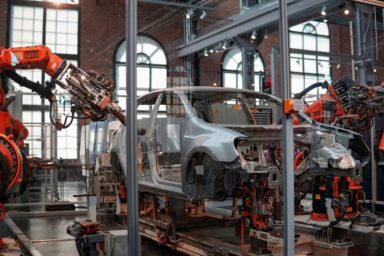
Why these countries? Each hosts big engine plants or parts suppliers. The memo vows to “safeguard the European industrial value chain… preserve logistics infrastructure for liquid fuels”. Italy worries about Ferrari and Maserati; the Visegrád states about Volkswagen, Suzuki and scores of component SMEs. All share scepticism of a battery-only future in regions where grids are weak and electricity costly. Their farmers, meanwhile, see income in advanced biofuels. Political logic and agro-lobbying thus meet in a call for “diversification of energy carriers”.
The group dresses its case in treaty language. A multi-technology regime, it says, “strengthens the internal market, prevents national fragmentation, and ensures a level playing field” under Article 114 of the Treaty on the Functioning of the European Union. Article 192, governing environment policy, supposedly backs outcome-based targets rather than prescribing means. Legal foundations matter: the authors know the Commission hates proposals that invite court fights.
For carmakers the prize is time. Extending averaging periods from three to five years, lowering van targets and freezing plug-in-hybrid factors would postpone costly battery investment. Fuel suppliers, too, spy upside. Activating the credit mechanism on day one would generate bankable demand for e-fuel and advanced-biofuel producers. This, in turn, would nudge investors towards final-investment decisions for European plants.
Knobs to turn
Consumer gains are hazier. Post-2035 motorists would enjoy three compliant options: battery, fuel-cell or e-fuel-ICE. Yet synthetic petrol will cost more than electrons for years. The non-paper acknowledges price gaps only obliquely, stressing instead the rural appeal of long-range refuelling and winter reliability. Critics will counter that scarce renewables should power grids, not tailpipes.
Where does this leave the legislative convoy? Council working parties are already dissecting the Commission’s February text. The non-paper aims to create a blocking-minority template, warns one annex, meaning drafts may stall until e-fuel language appears. Euro 7 acts, a clean-fleets bill and tweaks to the Renewable Energy Directive could all be held hostage in the process. That would delay formal trilogues with the European Parliament and push final rules into late 2026.
Emission cuts must rest on “clear, harmonised and enforceable Monitoring, Reporting and Verification criteria and lifecycle rules, including traceability and anti-double-counting provisions. — Non-paper on technological neutrality and industrial security in the decarbonisation of road transport in Europe
The five capitals insist they are not weakening climate aims. “The objective is not lower climate ambition, but more to ensure greater flexibility in the instruments used to achieve the Union’s agreed targets,” they write. They also claim to protect critical infrastructure. A sudden fall in petrol demand could, they argue, “undermine supply chains required for hard-to-electrify sectors and lead to the dismantling of strategic industrial assets”.
Next junction
The Commission will tut that CO₂ is CO₂ whatever the powertrain. Officials note that life-cycle accounting already features in the carbon-border mechanism and fuel-quality laws; adding it to car standards risks double-counting. Green groups will warn that loopholes loom. Measuring real-world compliance for thousands of small fuel producers is harder than logging electrons at a plug.
Yet recent events have forced open a debate many thought closed when ministers endorsed the 2035 zero-emission goal.
The next weeks bring budget rows and fresh farmer protests. If the battery lobby falters, so may the consensus. If the Commission concedes too much ground it risks fracturing its own Green Deal. The eventual compromise may let niche e-fuel cars survive while keeping mass-market bans intact.