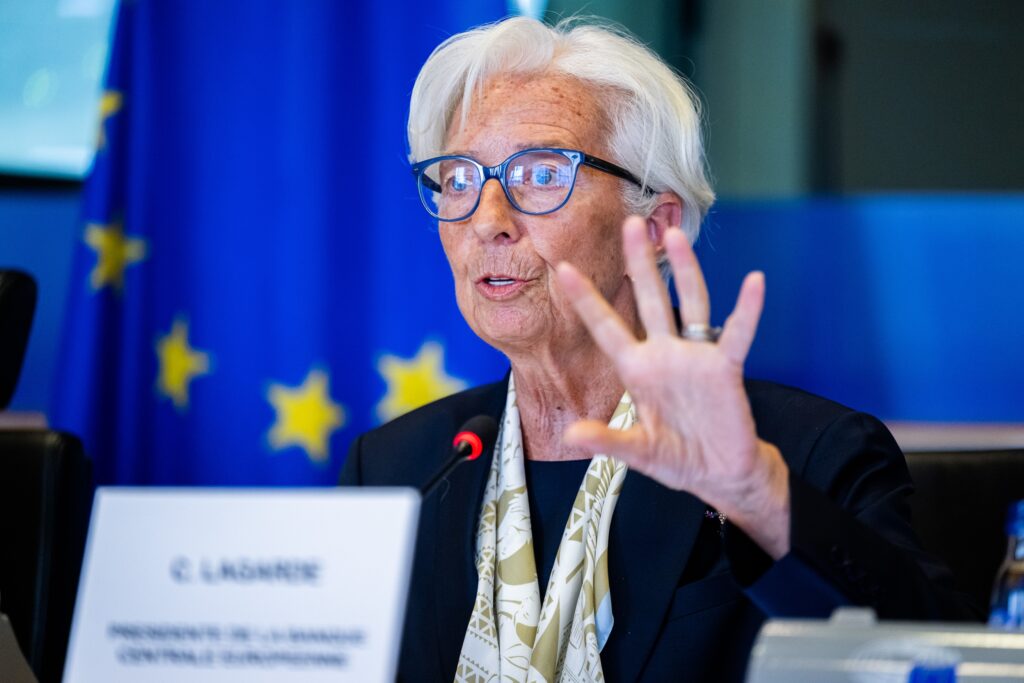
European Central Bank left interest rates untouched on 19 March while Christine Lagarde, the institution’s president, warned that the war in the Middle East risks pushing inflation higher and growth lower.
The governing council held the deposit rate at two per cent, the refinancing rate at 2.5 per cent and the marginal-lending rate at 2.75 per cent. “We are determined to ensure that inflation stabilizes at our 2% target in the medium term,” Ms Lagarde told reporters after the meeting.
She said the council had stuck to its meeting-by-meeting, data-driven approach and judged that the current stance remains restrictive enough. “Our decision was unanimous,” she added. Energy prices, jolted by conflict, have already nudged headline inflation from 1.7 per cent in January to 1.9 per cent in February, and Ms Lagarde admitted that the near-term path now looks steeper.
Elevated downside risks
Several factors threaten the region. “The war in the Middle East is a downside risk to the euro area economy, adding to the volatile global policy environment,” Ms Lagarde warned. “It has made the outlook significantly more uncertain, creating upside risks for inflation and downside risk for economic growth,” she cautioned. A prolonged conflict could keep oil and gas prices high for longer and hit business and consumer confidence. Households may cut spending. Firms may delay investment.
Additionally, financial markets could tighten further and weigh on demand if sentiment sours. Additional trade frictions could obstruct supply chains, dent exports and slow growth. Ms Lagarde also flagged that “Other geopolitical tensions, in particular Russia’s unjustified war against Ukraine, remain a major source of uncertainty.” A sudden shock in any of these areas could push growth below baseline projections.
The new baseline foresees consumer-price growth averaging 2.6 per cent in 2026, before dipping to two per cent in 2027 and edging up to 2.1 per cent in 2028. “Inflation has been revised up compared with the December projections, especially for 26. And this is because energy prices will be higher owing to the war in the Middle East,” Ms Lagarde said. Core inflation follows a similar path, staying just above target through the horizon.
On activity, staff now pencil in output growth of 0.9 per cent next year, 1.3 per cent in 2027 and 1.4 per cent in 2028—a downgrade that Ms Lagarde blamed on the squeeze to real incomes, weaker confidence and costlier inputs. Still, she argued that low unemployment, sturdy household balance-sheets and higher public spending on defence and infrastructure should cushion the blow.
Adverse and severe
The bank also unveiled two ‘adverse’ and ‘severe’ scenarios. In the latter, energy prices climb higher and stay elevated for longer, pushing inflation further above baseline and cutting growth more sharply. Detailed numbers will appear alongside the staff projections, but Ms Lagarde stressed that the exercise assumes no additional policy response.
Pressed on what would trigger action, Ms Lagarde replied: “We will be particularly attentive to developments in all commodity markets… to selling price expectations of firms… to all demand indicators… [and] to wage trackers.” Any sign that higher energy costs are leaking into broader prices through second-round effects would force a rethink.
The war in the Middle East is a downside risk to the euro area economy, adding to the volatile global policy environment. — ECB President Christine Lagarde
Market players eager for a timetable received none. “We are not pre-committing to a particular rate path,” she said. After an unusually long briefing by experts—including a defence analyst—council members felt “calm, determined and laser focused on the information”. That mood, plus anchored long-run expectations, persuaded them that patience is safest for now.
Calm but vigilant
The president also argued that the bank starts from “a good position”, pointing to two per cent inflation expectations and roughly neutral real rates. Lessons from 2022, she said, have sharpened the institution’s models and scenario work, improving its grip on indirect and second-round dynamics.
The balance of risks to prices remains tilted upward. A wider or longer conflict would lift energy costs again, perhaps spilling into wages and core prices. By contrast, Ms Lagarde allowed that inflation could undershoot if the shock fades quickly or if weaker demand offsets higher costs.
Fiscal policy must help rather than hinder. The council urged governments to keep any relief “temporary, targeted and tailored”, and repeated the call for structural reforms, deeper capital markets and faster green investment. Completing the single market for savings and the digital euro, Ms Lagarde argued, would raise productivity and resilience.
For the moment, though, the bank is on hold. Its next move—up or down—depends on commodity markets, wage bargaining and the durability of today’s calm. Until the data shift, the message is clear: rates stay where they are, and the ECB will watch, wait and be ready.