A new anti-fur campaign collapses the distance between luxury and reality. Shot by photographer Fro Rojas, the Humane World for Animals Europe campaign places fur-clad models in fashion-style imagery, then projects footage from European fur farms directly onto the garments themselves. The result is deliberately jarring: glamour becomes a surface for suffering, forcing viewers to confront what the product conceals.
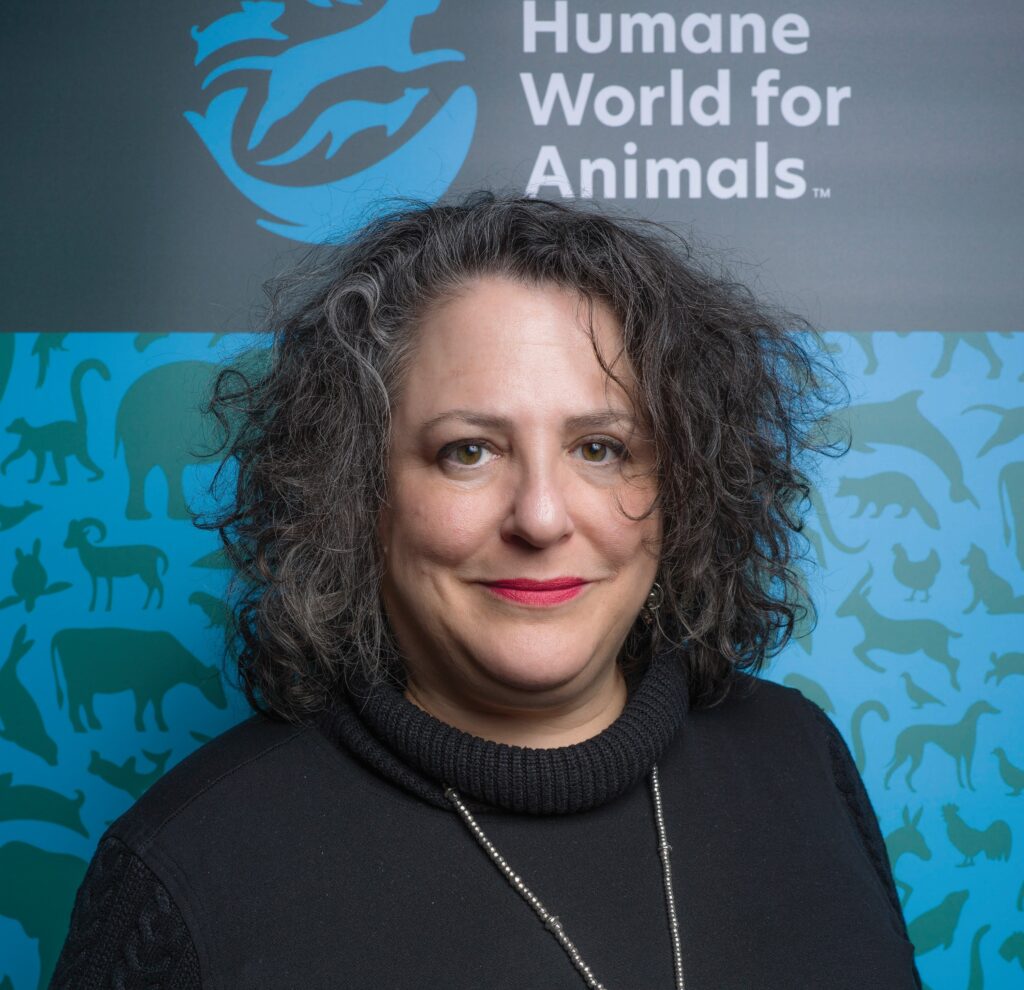
Joanna Swabe, senior director of public affairs for Humane World for Animals Europe, says the impact lies in that collision. “I think it works because it is reality projected. You’ve got the combination of glamorous models and real fur, and then suddenly, with all the sounds — you have to listen to it with the sound on — that you’re actually seeing what lies behind that suffering.”
A long decline, accelerated
The campaign lands at a moment when the industry it targets is already in retreat. Demand has been falling for years, as anti-fur sentiment hardened, past campaigns reshaped public perception, and designers and retailers moved away from fur products. The trade adapted, however, by shifting from full-length coats to fur trim, says Swabe — smaller details that often escaped consumer scrutiny.
That said, the overall trajectory did not change, and the COVID pandemic accelerated it. Outbreaks on mink farms in the Netherlands and Denmark exposed fur farming not only as an animal welfare issue, but as a zoonotic risk. “Suddenly people thought, hold on a second. There’s more going on here. This could actually pose a risk to human health as well,” Joanna Swabe explains.
Under the current circumstances of production, of keeping animals, intensively confining them to the kind of wire cages that there are, it is impossible to actually make any meaningful improvement.—Joanna Swabe, senior director of public affairs for Humane World for Animals Europe
A shrinking map of production
Across much of Europe, that shift has already translated into policy. Fur farming has been banned, phased out or never established in a majority of member states. Denmark — once the world’s largest producer — culled its entire mink population during the pandemic and has only seen limited attempts to restart. What remains is a small group of countries where production persists, including Finland, Greece, Spain, and Hungary, with Poland having moved to ban the practice and Sweden effectively exiting.
The European Commission now faces mounting pressure to act. More than 80,000 citizens have written to Commissioner Olivér Várhelyi calling for a ban, building on the Fur Free Europe initiative that gathered more than 1.5 million validated signatures. The Commission has asked the European Food Safety Authority to assess the issue. Politico reported recently it had seen evidence the Commission is paradoxically leaning towards improving welfare and conditions for the beleaguered animals, something experts say is not realistic in the least.
Science without a way forward
Dr Swabe agrees, saying that scientific assessment does not point to reform, but only to a dead end. The evidence shows that the current cage system cannot meet animals’ basic welfare needs. There is no established, scientifically validated alternative, she says, that could.
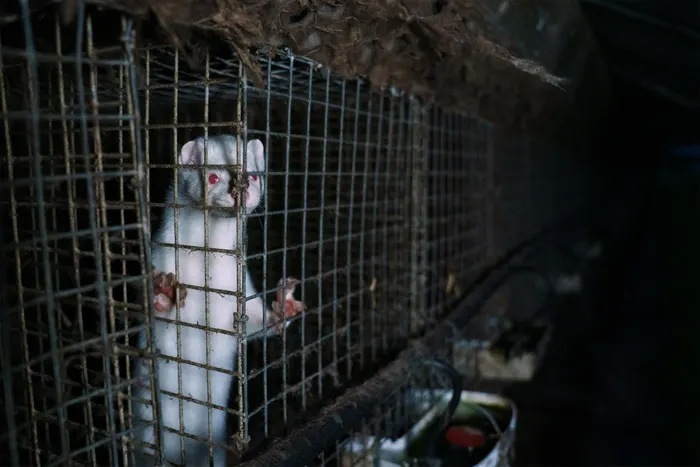
“Under the current circumstances of production, of keeping animals, intensively confining them to the kind of wire cages that there are, it is impossible to actually make any meaningful improvement in their welfare. It just is not possible within the current production system.”
That leaves, in her view, a straightforward policy choice. “There are essentially two policy options. One would be to deliver a full ban on fur farming together with a phase-out. Let’s ensure a fair transition for those people that are currently farming animals for fur.”
A narrowing political choice
The alternative — minimum welfare standards — would not resolve the underlying problem. “If you introduce any kind of welfare standards for fur animals, you’re actually saying publicly that this is a legitimate activity, to keep animals for the production of fur.”
With public pressure rising, the industry shrinking and the science offering no credible path to reform, the Commission’s room for manoeuvre is arguably narrowing. Ms Swabe is certain that the contradiction is clear. When the EU has committed to phasing out cage systems in other sectors, including egg-laying hens or pigs, maintaining fur farming would be indefensible, as she puts it: “It would be absurd to phase out cage confinement for food-producing animals, but still keep mink and foxes in small wire cages.”
The Commission is due to address the public initiative in the coming days. In the event of half-measures that resolve little at all, activists plan to intensify their campaign, buoyed by the conviction that they have the majority of the public on their side — and that fur farming’s days are over. Should the Commission decide to prolong the practice, many – including ordinary people who made their voices heard – are convinced it will yet another own goal and a glaring mistake.