European drivers are paying sharply more at the pump following the latest Middle East conflict. But for oil companies, it’s a golden moment. New analysis suggests the surge in fuel prices could translate into tens of billions of euros in windfall profits.
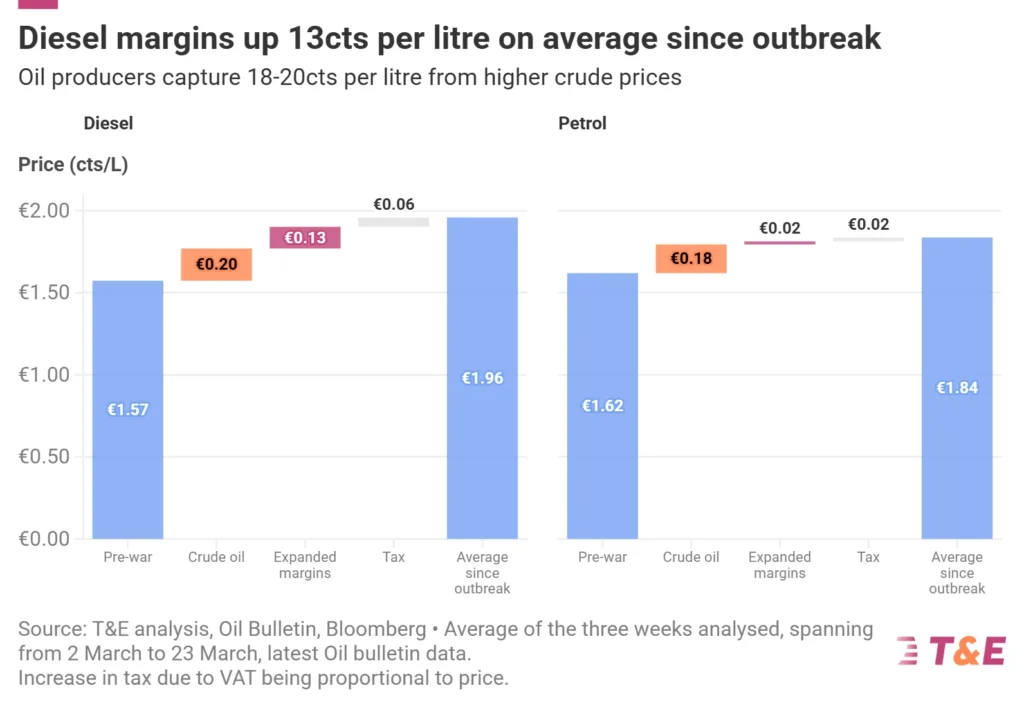
Following the US-Israeli airstrikes in Iran on 28 February, fuel prices have grown rapidly across Europe. By 23 March, the average EU diesel price had climbed to €2.06 per litre, a €0.49 rise compared to February. Petrol reached €1.89 per litre, up €0.27 over the previous month. Filling a 55-litre diesel car tank cost nearly €27 more than before the conflict. A comparable petrol car cost about €15 more.
“Once again drivers’ pain is oil companies’ gain. They have every incentive to keep Europe hooked on fossil fuels, as they’re the ones benefiting from price spikes,” Daniel Quiggin, senior policy advisor at the NGO Transport & Environment (T&E), said.
To break the cycle
Oil companies are set to make €24 billion in excess profits from European drivers this year, according to a new tracker published by T&E. They have already made an extra €1.3 billion, the analysis indicates. Mr Quiggin calls for the EU to put a tax on the windfall profits and use the revenue to invest in the electrification and renewables. That would “finally break the cycle” and help Europeans shield themselves from future oil price shocks.
In the past, the EU already introduced a 33 per cent tax on fossil fuel companies’ excess profits. This applied to profits more than 20 per cent above the average from 2018 to 2021. T&E estimates the measure raised €28 billion for EU governments in 2022 and 2023. The NGO argues that a similar mechanism could be introduced again.
Structural factors shape profits
Diesel refining margins in Europe have been particularly strong due to tight local refining capacity. Gasoline margins have lagged due to high inventories in the US and Europe despite stronger-than-average demand.
Petrol imports to the EU are lower in diesel content. One-fifth of the diesel consumed in Europe is imported. Consequently, excess profits can easily be moved outside the EU, meaning a windfall tax would have only a limited impact.