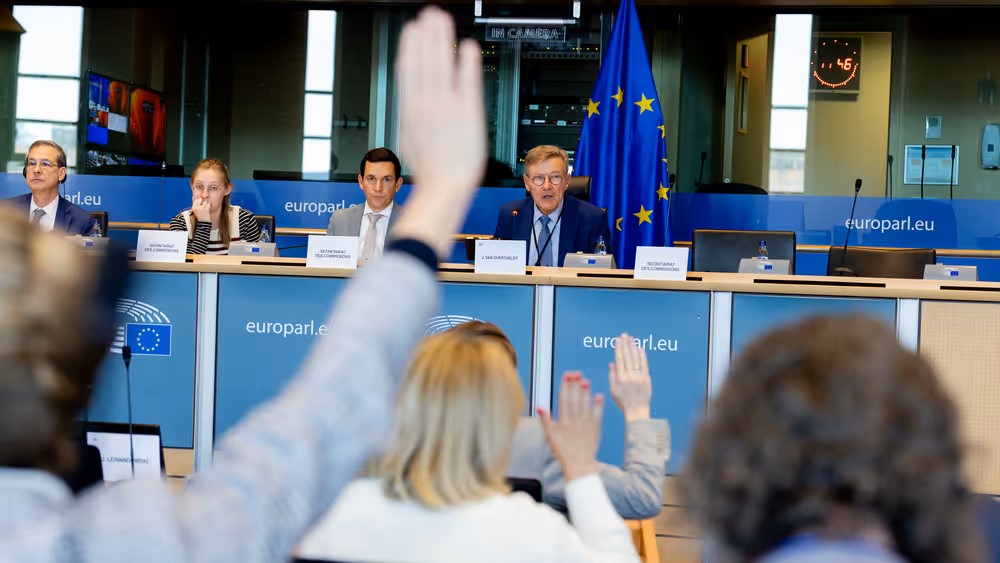
The EU is heading into its next long-term budget fight with an unusually bold demand: more money for everything, and no clear trade-offs. MEPs have voted on their position on the proposal, calling for higher spending on farms, regions, defence and innovation, all at the same time.
The Budget Committee of the European Parliament has set its negotiating position on the EU’s 2028–2034 long-term budget (MFF). They backed a 10 per cent increase in overall funding in what can be described as an ‘ambition without trade-offs’ approach.
“New challenges cannot erase responsibilities. Common Agricultural Policy, Cohesion Fund, the European Social Fund – these are not relics of the past. They are the backbone of European solidarity,” said Carla Tavares (S&D/PRT), co-rapporteur on the file.
MEPs propose the post-2027 EU budget at 1.27 per cent of EU Gross National Income (GNI). That would maket it both “sufficient and predictable for beneficiaries, addressing the shortcomings of the Commission’s initial proposal”, said Siegfried Mureşan (EPP/RO), co-rapporteur.
Unlike the Commission, Parliament does not want the EU budget to cover repayment of the EU’s post-pandemic recovery borrowing. MEPs argue that including these costs risks creating a real-terms investment freeze. “NextGenerationEU debt must be repaid above the budget ceilings. Not at the expense of farmers, SMEs, researchers or Erasmus students,” said Mr Mureşan.
Reinforcing core EU priorities
Parliament further calls for spreading funding increases across all major areas, including agriculture, cohesion, competitiveness, and external action. MEPs support new priorities such as defence and the digital transition. But at the same time they don’t want these to come at the expense of traditional policies.
At the heart of it is protecting key programmes like the Common Agricultural Policy, cohesion policy, and the European Social Fund. “We call for reinforced, dedicated funding for farmers and regions, firmly rejecting any attempt to merge or dilute these core priorities,” Ms Tavares noted.
MEPs also firmly oppose any attempt to shift more control of the EU budget back to national governments. They warn that the Commission’s ‘one plan per country’ could weaken transparency and EU-wide policy coherence.
Competitiveness and flagship programmes
MEPs welcome the Commission’s intention to boost funding for competitiveness, innovation, infrastructure, and the green and digital transitions. However, it is still not enough, they say.
They call for increased funding for programmes including Horizon Europe (€25bn increase), Erasmus+ (€6.56bn), the Connecting Europe Facility (€9.86bn), the European Competitiveness Fund (€30.05bn), AgoraEU (€2.14bn), and EU civil protection and health preparedness (€1.74bn).
On the revenue side, MEPs back the Commission’s “basket approach” for new own resources. That means a package of several different EU-level revenue sources introduced together rather than relying on a single tax or levy. It should raise around €60 billion annually.
Proposed options include a digital services levy, an online gambling levy, an expanded Carbon Border Adjustment Mechanism (CBAM), or a levy on crypto-asset capital gains. If some proposals are dropped—since some are still controversial for member states—new sources of funding will be needed to avoid financing gaps.
The Budget Committee adopted the position with 26 votes in favour, 9 against, and 5 abstentions. It wil now go to a broader vote in plenary session in Strasbourg later this month. After that, Parliament will be ready to start talks with the Council on the 2028–2034 MFF. Trilogue with member states and the Commission can be expected at the end of the year.