A politically sensitive debate over windfall taxes is once again on the table. While some member states are pushing to bring it in, the European Commission, in its AccelerateEU plan, is cautiously encouraging governments to consider this option. The wavering shows that the EU is still unsure how to deal with high energy prices.
The AccelerateEU recommendations, designed to tackle rising energy prices, are expected to spark debate during the upcoming informal European Council meeting in Cyprus. Government leaders will convene to address the geopolitical situation and Europe’s response. One topic is not on the official agenda, but is dominating political discussions: additional taxes on oil and gas companies.
At the beginning of April, energy ministers from five EU countries called on the Commission to introduce such windfall taxes. “It would make it possible to finance temporary relief, especially for consumers, and curb rising inflation, without placing additional burdens on public budgets,” the ministers wrote.
Cautious encouragement
Windfall taxes can be imposed by a government on companies that earn unexpected, unusually large profits, often due to external events rather than their own efforts or investments. After Russia’s invasion of Ukraine in 2022, the EU agreed on a temporary windfall tax on fossil fuel companies.
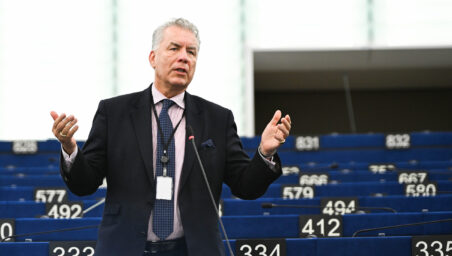
Those who have profited the most from this crisis—particularly in the oil and gas sector—must also contribute through a fair windfall levy. — Mohammed Chahim (S&D/NLD)
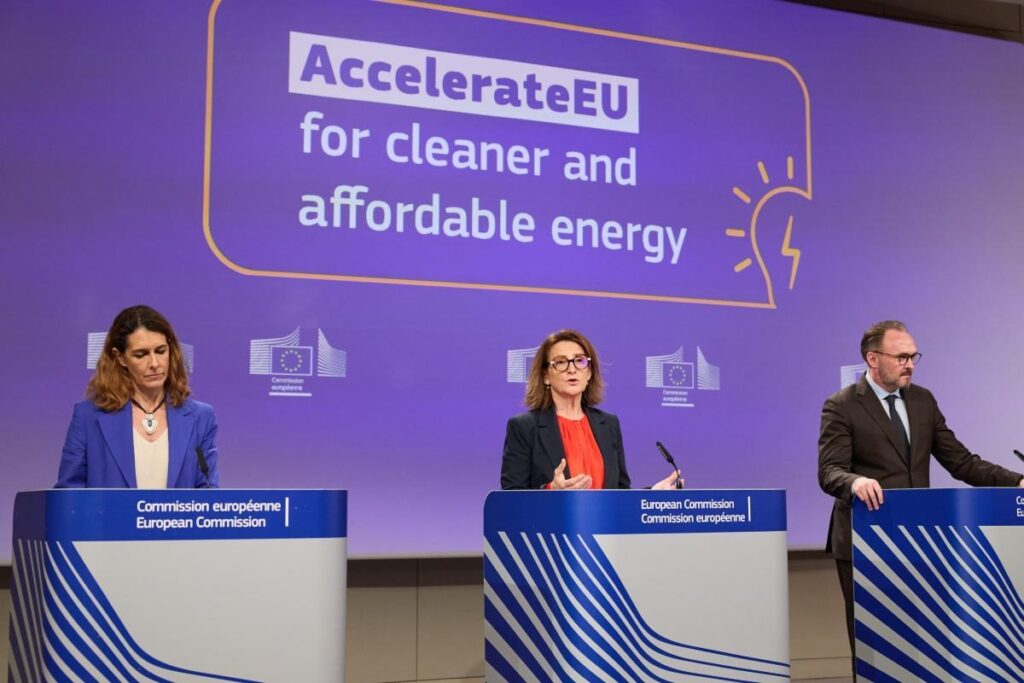
In the AccelerateEU plan, introduced on Wednesday, there is one mention of windfall taxes. “Member states can also take measures on the taxation of windfall profits to ensure social fairness. The Commission will respect member states’ decisions and assist and provide best practices on national measures as well as assess their impact on the single market,” the communication reads.
The Commission also urged member states to support citizens with energy vouchers, income support and social tariffs. It plans to coordinate with EU governments to tackle looming jet fuel shortages.
“Likely to fail”
Commissioner for Competition Teresa Ribera argued that taxing fossil fuel companies would require unanimity. According to her, it would be a complex process likely to fail this time round. Ms Ribera did encourage EU countries willing to impose such taxes to do so unilaterally.
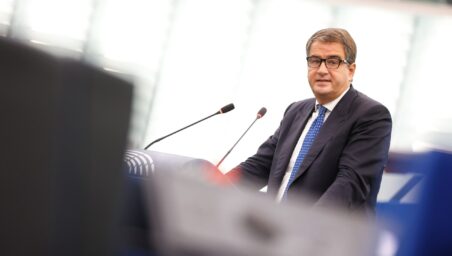
Dutch MEP Mohammed Chahim, vice-president of the S&D Group, also touched on the politically sensitive topic. “Those who have profited the most from this crisis – particularly in the oil and gas sector – must also contribute through a fair windfall levy.” He added that “windfall tax measures must strictly target the fossil fuel sector and channel into social support for consumers”.
However, even in Chahim’s home country the policy has already faced significant pushback from major energy companies. Currently, large energy companies in the Netherlands are lodging a series of objections against the 2022 decision. According to the parliamentary briefing, a total of 33 objections were filed against the one-off levy. Energy companies such as Shell and ExxonMobil want €2.7 billion of the €3.2 billion the government requested to be returned.
Who benefits?
The S&D politician can count on backing from both academic and environmental circles. “It’s absolutely unacceptable that the citizens have to pay for privatised super profits of oil majors,” Adel El Gammal, secretary general of the European Energy Research Alliance (EERA), said. “From a logical and ethical point of view it’s essential that we succeed in taxing these windfall profits of higher fossil fuel prices.”
Luke Haywood, head of climate and energy at EEB, echoed these concerns. “While oil and gas companies continue to profit from high prices in absence of windfall profit taxes, too many governments are still opting for diesel and gas tax breaks to soften high prices,” Mr Haywood said. He argues this approach is “expensive, not socially targeted and that will not help us reduce fossil fuel consumption”.
Isabelle Brachet of Climate Action Network (CAN) Europe also struck a critical tone. “The Commission’s reluctance to tax fossil fuel profits raises a fundamental question: whose interests are being prioritized—Europeans or large polluting companies and their shareholders?”
The debate highlights a familiar EU dilemma: there is strong political support for taxing excess energy profits, but doubts remain over how workable such measures are. As discussions approach, it is unclear whether the EU will be able to find a common position.