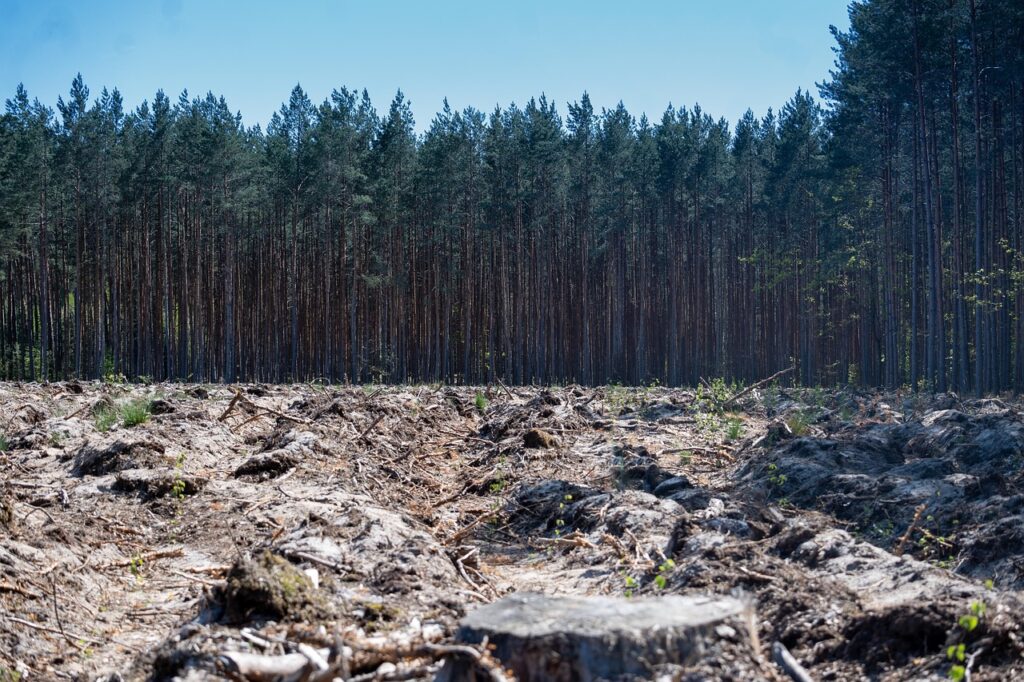
The EU’s landmark deforestation law has survived two years of political pressure, industry lobbying, and transatlantic friction. The European Commission has now published its long-awaited simplification review of the EU Deforestation Regulation and held the line. Despite US pushback and calls to scale back the rules, the review proposes no delays and no significant reduction in scope.
Parliament and Council mandated the review as part of their December 2025 agreement on a targeted revision of the regulation. The EUDR has been in force since 2023. According to the Commission, the simplification measures taken since then have cut annual compliance costs by around 75 per cent.
The package also adjusts the scope. Out go leather and retreaded tyres. In come soluble coffee and certain palm oil derivatives. The law is set to apply from 30 December 2026 for large and medium companies, and from 30 June 2027 for smaller operators.
Green Deal’s regulatory alphabet
After adopting the European Green Deal in 2020, the EU passed a series of regulations aimed at addressing climate change through the actions of businesses. The Corporate Sustainability Reporting Directive, the Corporate Sustainability Due Diligence Directive, and the Taxonomy focused on companies’ overall environmental footprint. The EU significantly reduced the scope of all three in 2025 as part of a broader ‘simplification’ drive to ease the burden on businesses.
Other Green Deal rules targeted specific industries, each acquiring its own acronym. The EU adopted the Deforestation Regulation (EUDR) in 2023. It requires key commodities on the EU market not to contribute to deforestation or forest degradation. The aim is to cut emissions and protect biodiversity.
Strict requirements for key commodities
The EUDR covers seven commodity groups: cattle, wood, cocoa, soy, palm oil, coffee, and rubber, along with some of their derived products. Companies placing these goods on the EU market must prove they do not originate from land deforested after 31 December 2020. They verify this through due diligence reporting and geolocation data.
As part of the December 2025 agreement, Parliament and Council tasked the Commission with submitting the simplification report by 30 April. The Commission published it four days late, on 4 May. The accompanying draft delegated act, which adjusts the regulation’s product scope, is open for public feedback until 1 June 2026.
We all now need to work towards a successful entry into application of the law by the end of 2026 and keep in mind its important objective of reducing deforestation globally.
— Jessika Roswall, Commissioner for Environment, Water Resilience and a Competitive Circular Economy
Commissioner for Environment Jessika Roswall welcomed the package. “Our efforts are fully focused on facilitating implementation in the most efficient way,” she said. “We all now need to work towards a successful entry into application of the law by the end of 2026 and keep in mind its important objective of reducing deforestation globally.”
The regulation has survived years of delays and political pressure. Whether it survives contact with reality will become clear by December.