After more than a decade of isolation, a quiet but significant shift is under way. The EU is lifting restrictions that for years kept Syria on the sidelines of international trade, restoring its cooperation agreement with Damascus. The move signals a notable change in Europe’s approach to a country that has been long synonymous with civil war and international isolation.
The EU is returning to fuller engagement with Syria after years of cautious distance. The Council of the EU has decided to end the partial suspension of the Cooperation Agreement between the European Economic Community and the Syrian Arab Republic, originally concluded in 1977.
Fifteen years ago, when protests against Bashar al-Assad’s regime erupted in Syria, the EU responded with economic pressure. This included restrictions of some of the agreement’s trade provisions — particularly those relating to the free import of selected Syrian commodities such as oil, precious metals, and diamonds. The aim was to weaken the regime’s economic base amid allegations of serious human rights violations.
These restrictions remained in place for more than a decade, becoming one of the tools through which the EU sought to respond to the conflict and isolate Syria’s leadership at the time. Over time, however, circumstances began to change.
Post-Assad reintegration
A turning point came in December 2024 with the collapse of Assad’s regime. The EU began reassessing its policy towards Syria. In 2025, it lifted most of its economic sanctions — with the exception of those linked to security. Officials began to speak of supporting the country’s reconstruction and its reintegration into international economic structures.
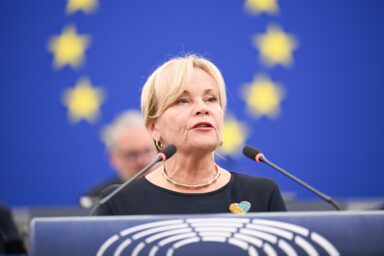
For over a decade, the EU and its member states have stood resolutely by the Syrian people, delivering more than €41 billion in critical assistance. Now it is time to move from crisis to socio-economic recovery and reconstruction. — Dubravka Šuica, Commissioner for the Mediterranean
The Council’s latest decision builds on this shift. The EU now considers that the reasons for the suspension no longer apply, and has ended it. The agreement is therefore returning to full operation, paving the way for efforts to rebuild trade relations and put economic cooperation between the EU and Syria on a more stable footing.
Syria Partnership Coordination Forum
The EU’s new approach to Syria is also reflected in broader political and economic engagement. In Brussels, the Syria Partnership Coordination Forum brought together the European Union and Syrian transitional authorities. It aims to better coordinate international aid, reconstruction efforts and economic recovery in line with Syria’s own priorities.
“For over a decade, the EU and its member states have stood resolutely by the Syrian people, delivering more than €41 billion in critical assistance. Now it is time to move from crisis to socio-economic recovery and reconstruction,” said Dubravka Šuica, the European Commissioner for the Mediterranean. She added that the EU wants to work with Syrian authorities to rebuild trust, strengthen institutions and support a stable and inclusive future for the country.
The effort is also backed by concrete financial initiatives. The EU is preparing to establish a €15m technical assistance hub aimed at strengthening the capacity of Syrian public institutions, while also announcing €14m for the rehabilitation of the Al-Rastan hospital in Homs. These projects form part of a broader package designed to support Syria’s gradual economic stabilisation and reconstruction after years of war.
Politically, the move sends a clear signal: the EU aims to re-engage Syria, albeit conditionally — with an emphasis on stabilisation, respect for human rights, and the gradual reconstruction of a country emerging from years of war. The decision is likely to have wider implications, from international trade and commodity prices to Europe’s broader approach to resolving conflicts in its neighbourhood.