Recurring shortages of antibiotics, insulin and other essential medicines have pushed the lawmakers to rethink how drugs are produced and purchased. The EU has reached a political deal on the Critical Medicines Act, a law designed to boost manufacturing in Europe and make supply chains more resilient.
EU negotiators reached a provisional agreement on a key piece of legislation in Brussels’ push to strengthen the bloc’s medicines security. The legislation aims to tackle recurring shortages of critical medicines such as antibiotics, insulin and painkillers that have affected European healthcare systems in recent years.
The deal between the Cyprus presidency of the Council and the European Parliament sets out new rules aimed at shifting parts of pharmaceutical production back to Europe. It also seeks to make it easier for member states to jointly procure medicines through the Commission. At the same time, it embeds resilience requirements directly into national procurement systems.
EU officials increasingly view the issue not only as a health policy challenge but also as part of the bloc’s broader economic security and industrial strategy.
The missing piece
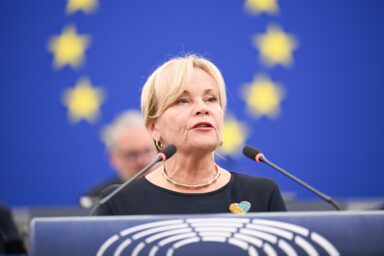
European Parliament Public Health Committee Chair Adam Jarubas (EPP/POL) described the legislation as the “missing piece” of Europe’s response to medicine shortages, following the creation of the critical medicines list and the Critical Medicines Alliance.
It means greater medicines security for the Europeans, but it will also be an essential support for EU’s reindustrialisation and competitiveness. — Adam Jarubas (EPP/POL)
“It implements the Pharmaceutical Strategy for Europe and marks a milestone for the European Health Union. It means greater medicines security for the Europeans, but it will also be an essential support for EU’s reindustrialisation and competitiveness,” he said.
The legislation reflects growing concern in Brussels over Europe’s reliance on non-EU suppliers for critical medicines and pharmaceutical ingredients.
Almost half from China
A 2021 European Commission study warned that 80 per cent of imported pharmaceutical ingredients came from only five countries, China, the United States, the United Kingdom, Indonesia and India. China alone accounted for 45 per cent.
The shortages exposed during the COVID-19 pandemic, and the disruptions that followed, accelerated concerns about Europe’s dependence on fragile global supply chains. Healthcare systems rely on many of the medicines affected to function properly.
The European Medicines Agency defines critical medicines according to the seriousness of the diseases they treat and the availability of alternative treatments. They include antibiotics, insulin, vaccines and medicines used to treat cancer, heart disease and diabetes.
Procurement rules shift toward resilience
One of the most consequential elements of the agreement requires governments to apply mandatory resilience-related requirements in public procurement procedures for critical medicines.
The new rules will allow governments to apply flexible ‘EU preference’ measures that incentivise pharmaceutical production within Europe. Particularly for medicines heavily dependent on third-country suppliers. Contracting authorities will be able to reward suppliers according to the share of medicines and active pharmaceutical ingredients manufactured inside the EU.
Companies that produce medicines in Europe will be favoured in procurement procedures. — Tomislav Sokol (EPP/HRV), Rapporteur of the Critical Medicines Act in the European Parliament’s SANT committee
The legislation also creates a framework for industrial ‘strategic projects’. These projects aim to create, modernise and expand pharmaceutical manufacturing capacity across Europe. Companies receiving EU or national funding support will face obligations, including prioritising supply to the European market.
Closer to home
The political signal behind the legislation is increasingly explicit. Europe wants more medicine production brought closer to home, even if resilience comes at a higher price.
The Council’s negotiating position had already pushed for resilience and security of supply to take precedence over price in procurement evaluations for critical medicines. It marked a significant shift after years in which medicine purchasing focused heavily on cost containment.
According to rapporteur Tomislav Sokol (EPP/HRV), the agreement is sending a clear signal that Europe is committed to strengthening its pharmaceutical manufacturing base. “We are placing patients’ interests firmly at the centre. (…) Companies that produce medicines in Europe will be favoured in procurement procedures. Strategic projects will benefit from access to national and EU funding and from faster and more efficient permitting procedures,” he stated.
Lower threshold for joint procurement
The legislation also expands the EU’s ability to organise collaborative procurement of critical medicines and medicines of common interest. Under the compromise, lawmakers lowered the threshold for member states to request Commission-led procurement from nine countries to five.
The change makes it easier for governments to pool purchasing power during shortages or supply crises. The Commission will also be expected to launch procurement procedures on behalf of member states. It would only be able to refuse by providing substantiated reasons.
The legislation is designed not only to improve access to medicines. It also aims to strengthen Europe’s collective leverage in pharmaceutical purchasing and reduce fragmentation between national healthcare systems.
Contingency stocks and solidarity mechanisms
Another politically sensitive aspect of the negotiations concerned contingency medicine stocks. The Commission’s original proposal sought to ensure that national stockpiling measures would not undermine supply in other member states. It also aimed to prevent distortions to the EU internal market.
The final compromise maintains that objective while adding new transparency and solidarity requirements. Under the agreement, member states will be expected to exchange information on contingency stock requirements. They will also be required to respect principles of solidarity and proportionality when implementing stockpiling measures.
The legislation also clarifies the use of the existing voluntary solidarity mechanism. It allows member states to exchange information and voluntarily reallocate critical medicines between countries during shortages if necessary.
Rare disease medicines included
During negotiations, lawmakers also expanded parts of the regulation to include medicinal products used to treat rare diseases. Under the compromise, so-called orphan medicines will be eligible for strategic projects and collaborative procurement mechanisms.
Strategic projects involving orphan medicines will benefit from faster permitting procedures. However, they will be excluded from some financial and regulatory support measures.
The provisional agreement must now be formally approved by both the European Parliament and the Council. Only then can the legislation enter into force.