London and Paris secured a 51-nation backing to design a naval escort mission for the Strait of Hormuz. It signals Europe’s intent to safeguard vital Gulf oil traffic without US command — if the Americans handle the actual fighting.
Britain and France have undertaken to run Europe’s defence agenda together. On 12 May they did just that, chairing a virtual conclave of defence representatives from 51 countries. The meeting, co-hosted by United Kingdom Defence Secretary John Healey and French Armed-Forces Minister Catherine Vautrin, agreed the scaffolding of a new naval coalition for the Strait of Hormuz.
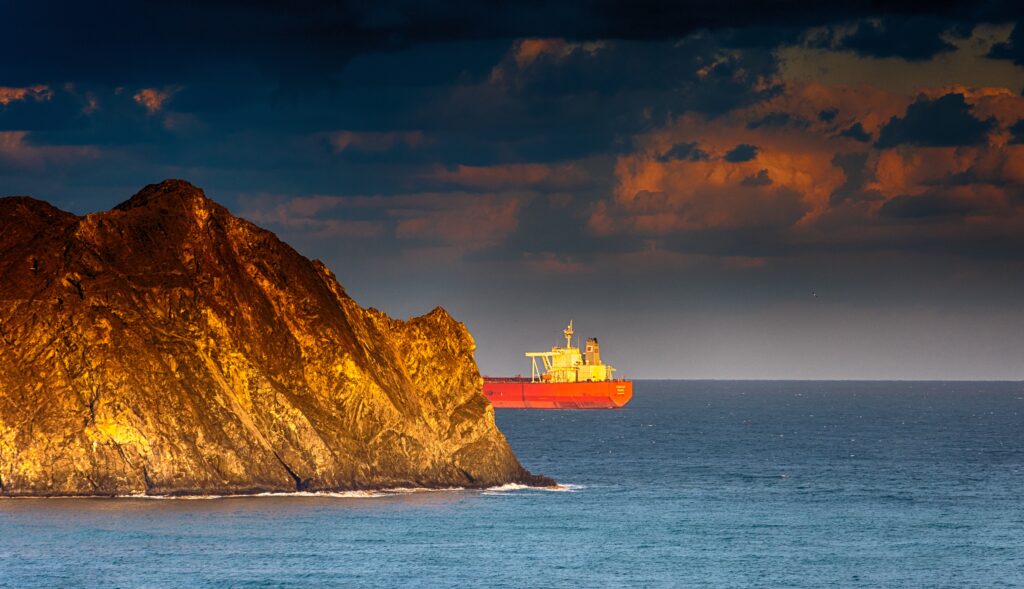
Under normal circumstances, the strait funnels one-fifth of global seaborne oil. Iran’s closure earlier this year spooked markets and exposed the European Union’s dependence on imported energy. The online gathering pressed ahead with as concrete pledges as one can expect from such an event.
A two-tier arrangement, again?
Mr Healey promised the air-defence destroyer HMS Dragon, a flight of RAF Typhoon jets and a clutch of autonomous mine-hunting drones, all backed by £115 m of fresh funding. “With our allies, this multinational mission will be defensive, independent, and credible,” said Mr Healey.
France will dispatch staff officers and keep the carrier Charles-de-Gaulle strike group on station to provide air cover — once shooting stops. The proposed presence of French forces only in strictly non-combat environment, naysayers might be tempted to remark, is to reduce the risk they would use the occasion to deploy the favourite part of their strategic arsenal, i.e., capitulation.
London and Paris also set out a joint planning cell that will thrash out rules of engagement and force-generation tables before a follow-up summit later this year. Lithuania, Bahrain, Japan, Canada, and numerous others signalled smaller but useful bits—mine-counter-measure craft, logistics vessels and cash—offering a semblance of burden-sharing.
French President Emmanuel Macron used a joint press moment to broaden the tent: “I want to thank German Chancellor Friedrich Merz and Italian Prime Minister Giorgia Meloni for being alongside us and for the chance for all four of us to speak to you now.” That nudge matters. Germany’s coalition government supports freedom of navigation but baulks at deploying frigates without an EU legal cloak; Italy prefers a multilateral flag too. If Berlin and Rome still dither by the autumn London summit, the Franco-British duo may conclude that a two-tier arrangement—core contributors at sea, cheque-writers on shore—is the best that Europe can muster.
Iran is ready for more
A warning shot soon arrived from Tehran. “Warships of Britain and France or those of any other country would meet a decisive and immediate response,” said Iran’s Deputy Prime Minister Kazem Gharibabad even before the meeting kicked off.
Iranian naval drills near Mahshahr port and the stealthy repositioning of aircraft to Pakistan and Afghanistan suggest that Iran is preparing for trouble. Its leaders keep demanding formal recognition of sovereignty over the strait, something no outsider will concede.
I want to thank German Chancellor Friedrich Merz and Italian Prime Minister Giorgia Meloni for being alongside us and for the chance for all four of us to speak to you now. — France’s President Emmanuel Macron
For the European Union, whose tankers and insurers ply the Gulf, the stakes are legislative as well as naval. Brussels, keen to prove “strategic autonomy”, must decide whether to graft its existing Operation Aspides in the Red Sea onto the Anglo-French project or to run a separate EU-flagged effort.
European Parliament chews the cud
Kaja Kallas, the EU’s top diplomat, told foreign ministers on 6 May that the bloc is “looking at reinforcing Operation Aspides” and could fold it into the forthcoming coalition, bringing mine-warfare expertise and a watertight legal mandate. Her phrasing excited MEPs, who fret about duplication.
European Council conclusions of 19 March already urged member states to “explore ways to ensure freedom of navigation” but stopped short of ordering ships to sail. Legally, turning that political exhortation into binding deployment decisions would require either a Council decision under Article 42(2) of the EU Treaty or a swifter “coalition of the willing” modelled on Operation Aspides.
Warships of Britain and France or those of any other country would meet a decisive and immediate response. — Iran’s Deputy Prime Minister Kazem Gharibabad
Should the EU decide to subsume the mission, the off-budget European Peace Facility would foot the bill for escorts and tanker-deconfliction software. Some northern states think that pot is already over-stretched by Ukraine. Southern states, which import most of their crude through Hormuz, call such penny-pinching shortsighted.
The ticking clock
Iran’s rhetoric stiffens European nerves. Gulf oil exporters lobby hard. “The Arab Gulf states would like to see the EU or European states more broadly, commit themselves to a robust response to the current crisis in the Strait of Hormuz. Simple declarations of intent fall short,” said the Gulf Research Center, a think-tank. The centre warns that energy exporters lost one-third of Saudi crude flows and half of Emirati exports during the closure, hitting European refineries already recovering from an industrial energy crunch.
The Arab Gulf states would like to see the EU or European states more broadly, commit themselves to a robust response to the current crisis in the Strait of Hormuz. Simple declarations of intent fall short. — Gulf Research Center
The next milestone is planners’ huddle in London next week, Mr Starmer announced. There, admirals will draft rules of engagement that tiptoe between deterring Iran and avoiding escalation. Lawyers from the European External Action Service will insert references to the UN Convention on the Law of the Sea, hoping to fend off claims of an anti-Iran armada. Insurance brokers, jittery since missiles first flew in February, want clarity. Tanker rates trebled after the initial closure; shippers crave escorts and mine sweeps before renewing long-term charters.
Investors take heart from any sign of coordination. European petrol prices, up by a quarter since March, dipped after the meeting. Futures traders bet that escorts will flow before Iran’s next sabre-rattle. Mr Gharibabad’s threat may yet be tested. But Mr Healey and Ms Vautrin have thrust Europe into the Gulf’s choppy waters. If Brussels can stitch its legislative sails to the Franco-British mast, the mission might even make it out of dry dock.