Jet fuel is running short, gas prices are surging, and EU member states think they know the answer: drill. Ministers from Greece, Romania, Italy, and Poland gathered in Cyprus this week to push for expanded domestic gas exploration, with the Iran war driving the pressure. But the EU is already on course to source 80 per cent of its LNG from the United States. Its green ambitions are paying the price.
Heightened tensions in the Strait of Hormuz have compounded the pressure, disrupting global energy flows and pushing natural gas prices higher. The European Commission has repeatedly warned that the shocks will be long-lasting. It is against this backdrop that energy ministers gathered in Cyprus this week.
At the same time, Brussels has been accelerating efforts to advance its green transition ambitions. Last month, Energy Commissioner Dan Jørgensen unveiled the AccelerateEU strategy, designed to support member states in their electrification targets to strengthen energy independence and make the bloc less dependent on imported fossil fuels.
During the informal meeting of energy ministers in Cyprus this Wednesday, however, another topic dominated discussions: domestic gas exploration. While the EU is trying to move towards electrification, the current geopolitical context might force its member states’ hands.
Domestic drilling
Energy ministers considered opening gas projects in Greece, Romania, Italy, and Poland. Romania has been extracting gas from the Black Sea since March 2025 through its Neptun Deep project. Greece is expected to start drilling in the Ionian Sea from 2027 onwards. Italy is also considering reviving offshore oil and gas exploration projects that the country shut down in 2019.
“We have gas reserves and we just need to make sure that we use those gas reserves in the next few decades,” Michael Damianos, Cyprus’s energy minister said ahead of the meeting. “There’s no doubt that we will need fossil fuels and that natural gas is better than anything else. It’s greener than anything else and we do have some reserves.”
The general idea is to try and get out as much as we can of our own natural resources at this point in time.
— Michael Damianos, energy minister of Cyprus
Cyprus is working to open a large gas field under the Aphrodite exploration project. According to Mr Damianos, gas extractions is expected to begin in 2030. “The general idea is to try and get out as much as we can of our own natural resources at this point in time,” Mr Damianos said. “Relying on US capabilities is probably a must. But I think it’s more important that we actually get out of the EU what we can.”
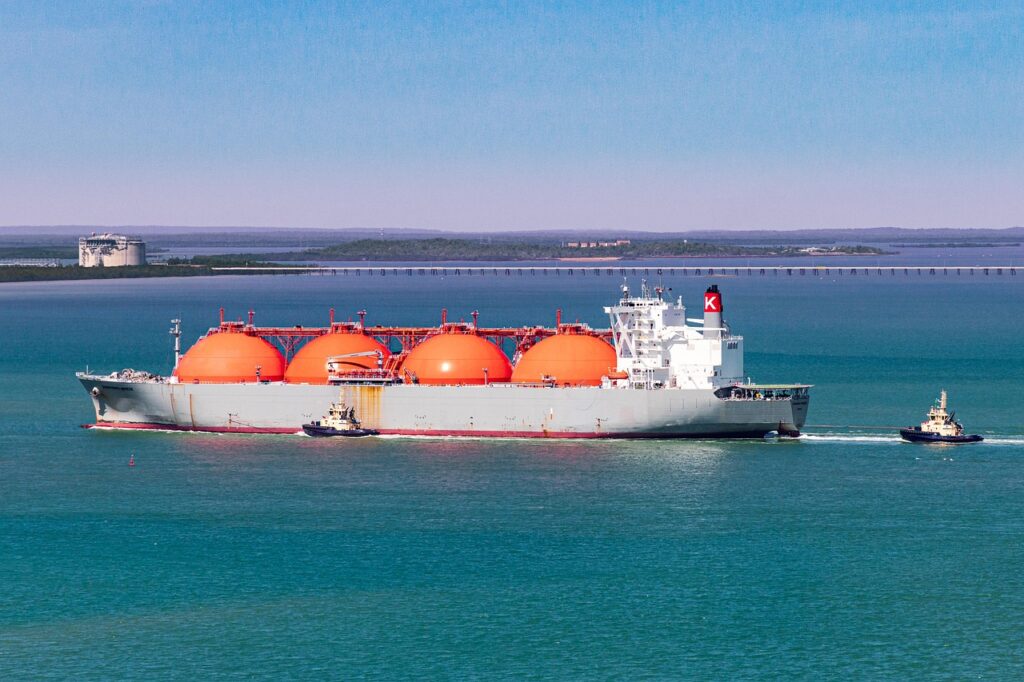
After the invasion of Ukraine, the EU managed to mostly cut its dependency on Russian gas imports. Today, the ongoing energy crisis has increased Europe’s reliance on liquefied natural gas (LNG) from the US. According to a recent study, the EU could source up to 80 per cent of its LNG from the US by 2028.
Energy ministers argued that US imports and domestic drilling might both prove unavoidable in the short term. “Of course we need to diversify our sources, but once again if we need natural gas, the United States can provide us with natural gas,” Romania’s Secretary of State Cristian Bușoi said. “It’s a more reliable partner than many others now. Russia will not be a partner anymore. Here the decision is clear,” Mr Bușoi said, referring to the deadlines under RepowerEU to completely phase out Russian gas imports by 2027.
Staying the course
Climate Action Network (CAN) Europe sent a letter to energy ministers ahead of the meeting. It argued against using fossil fuels to combat the energy crisis. It argued against using fossil fuels to combat the energy crisis. “The EU must move beyond recognising fossil fuel dependency and establish a clear and coordinated roadmap to phase out fossil fuels, starting with fossil gas,” the letter said.
Eurogas, an association representing gaseous energy in Europe, has argued the EU should scale up the domestic production of natural gas to reduce its dependency on imports. According to the association, natural gas exploitation should complement the EU’s electrification efforts.
European countries are moving to reopen natural gas fields and underline the importance of US imports. But Energy Commissioner Dan Jørgensen called for the EU to “stay the course” on the EU’s methane regulation. The legislation requires importers to monitor, report, and eventually reduce methane emissions across the gas supply chain. It has become a point of tension as Europe scrambles to secure alternative supplies after cutting dependence on Russian energy.
“We need to remember in all of this, the prices are high, yes. We have security of supply issues looming in the future, possibly, yes. But these are things that we will solve. These are things that will go away. The climate crisis will not go away,” Mr Jørgensen said at the press conference after the meeting.