Europe risks splitting into “territories with a future and territories without one” unless the EU rethinks how it invests across regions, warns Kata Tüttő of Committee of the Regions. In an exclusive interview with EU Perspectives, she argues that the bloc must move beyond celebrating freedom of movement and start guaranteeing something equally important: the freedom for Europeans to stay and build a future where they live.
Across Europe, many regions are facing depopulation as people — particularly younger generations — leave in search of education, jobs and services that are no longer available locally. In some areas, entire communities are shrinking as the opportunities gradually concentrate elsewhere.
The new Right to Stay Strategy, launched last week, is intended to respond to this widening territorial imbalance. Although still in its early stages within the European policy process, it is already emerging as one of the EU’s next major political battles.
Solidarity is not a charity: it is the structural recognition that in an interconnected system, the stability of each depends on the stability of all.
The European Commission has opened a call for evidence and it’s still uncertain what concrete proposal will follow — how binding it will be or how strongly it will be connected to the future EU budget and investment policies.
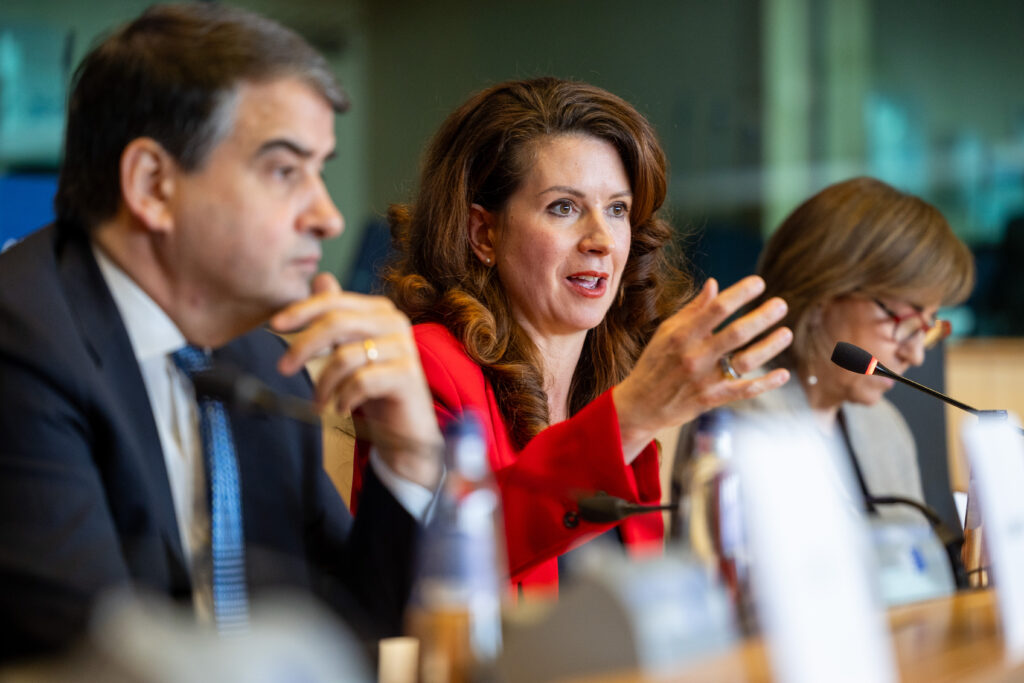
At the centre of the debate is Kata Tüttő, President of the European Committee of the Regions, representing local and regional governments across the EU. “Europe cannot build its future around only a few hyper-concentrated economic centres. Territorial diversity and resilient local economies may become strategic strengths in an increasingly uncertain world,” she told EU Perspectives.
What happens if the EU fails to protect people’s right to stay in their regions?
It’s difficult to predict the future. But what local and regional leaders fear is that if public investment begins following the same logic as private investment — if cohesion is sacrificed in the name of overall competitiveness then Europe risks splitting into territories with a future and territories without one. And this would ultimately weaken the European Union itself.
Solidarity is not charity: it is the structural recognition that in an interconnected system, the stability of each depends on the stability of all.
Without strong territorial, social and economic cohesion, divergence will deepen further. Some regions will continue accumulating investment, talent and innovation, while others face depopulation, ageing, declining public services and economic stagnation.
When people feel abandoned by economic transformation, disconnected from opportunity, or invisible in political decision-making, distrust grows. And where distrust grows, polarisation and anti-European sentiment can grow as well.
This is why cohesion is not a secondary issue in Europe. It is one of the conditions for keeping Europe stable, democratic and united.
What challenges are EU regions facing right now?
Many regions are facing several transitions simultaneously: demographic ageing, youth emigration, housing pressure, climate adaptation, industrial transformation, digitalisation and rising inequalities.
And these transitions do not affect all territories equally. Some metropolitan regions continue attracting talent, investment and innovation at accelerating speed. Meanwhile other territories risk losing precisely the people they need most to sustain local economies and public life.
For decades, the EU celebrated the freedom of movement as one of its greatest achievements. And it is. But true freedom is not only the possibility to leave. True freedom is also the possibility to stay.
There is a natural tendency in globalised economies toward concentration. Capital, infrastructure, research ecosystems and highly skilled labour tend to cluster together. This may be economically efficient in the short term — but politically and socially dangerous if left unmanaged.
A Europe where only a few metropolitan centres thrive while entire regions empty out is not a resilient Europe. It is a fragile Europe.
This is why social, economic and territorial cohesion matters so much. Cohesion Policy is one of the stabilisation mechanisms of the European project itself. Because once people lose the feeling that their region has a future, democratic trust also begins to erode.
What would it take to guarantee the Right to Stay for citizens?
For decades, the EU celebrated the freedom of movement as one of its greatest achievements. And it is. But true freedom is not only the possibility to leave. True freedom is also the possibility to stay, and return — the possibility for people not only to have a past in a place, but also to imagine a future there.
Today, many Europeans — especially in rural regions, shrinking industrial areas, islands or border territories — do not move because they freely choose a new adventure, but because of economic necessity. This reveals a structural imbalance inside European integration itself.
The Single Market naturally creates concentration. Stronger regions attract talent, investment, innovation and jobs. Meanwhile weaker regions can enter a downward spiral: losing young people, workforce, local businesses and tax revenues, eventually weakening public services and community life itself.
This is why Cohesion Policy was created together with the Single Market. It was designed as a reinvestment mechanism — to ensure that European integration would not become a process of extraction, where growth concentrates only in a few places while others are left behind. Private capital naturally follows efficiency and concentration.
The Right to Stay means ensuring that every territory — urban, rural, mountainous, island, border or remote — has the possibility to imagine a future. Access to quality jobs, housing, education, healthcare, transport, digital infrastructure and public services are all part of this.
When people feel abandoned by economic transformation, disconnected from opportunity, or invisible in political decision-making, distrust grows. And where distrust grows, polarisation and anti-European sentiment can grow as well.
This cannot be designed only from Brussels or national capitals. Local leaders matter enormously here. Mayors and regional leaders are not passive administrators of decline. They are the people most motivated to redesign a future for their communities.
Freedom to Stay is not about preventing movement. Mobility is part of Europe’s strength. It is about ensuring that mobility becomes a genuine choice rather than an economic necessity.
Money can help, but cannot solve everything. What matters most in the Strategy?
The most important aspect is setting a direction for public investment. Money is not everything, but it can buy distance from suffering.
Still, money alone is never enough. We need active and motivated local leaders who want to fight for the future of their communities, lead change, attract talent back, rebuild confidence and rewrite the story of their territories in a changing world — not passively manage decline.
If the “efficiency myth” becomes Europe’s only compass, and we reward only speed, concentration and short-term growth, then territorial divergence will accelerate further. But if we want a resilient Europe, capable of navigating climate change, technological disruption, ageing societies and geopolitical instability, then we need a more balanced territorial model.
The future of territorial development will not only revolve around traditional industrial jobs. We are entering a different era shaped by ageing populations, remote work, artificial intelligence, climate adaptation and changing lifestyles.
This also creates opportunities to reinvent smaller cities, rural areas and regional economies in new ways. But this reinvention requires public investment, long-term thinking and local leadership.
How do housing and jobs fit into the Strategy?
Better-paid jobs and economic necessity remain some of the strongest drivers of movement across Europe, creating increasing housing pressure in already concentrated urban centres. At the same time, Europe is facing a growing affordable housing crisis driven by multiple factors: urbanisation, concentration of economic activity, market failures and deep social change.
Freedom to Stay is not about preventing movement. Mobility is part of Europe’s strength. It is about ensuring that mobility becomes a genuine choice rather than an economic necessity.
One of the most under-discussed drivers is household fragmentation. Europeans increasingly live in smaller household units, meaning housing demand grows even without significant population growth. The housing crisis is therefore not only a market failure; it is also connected to broader changes in how Europeans live, age, form families and organise community life.
But the goal cannot simply be to build housing units quickly, disconnected from public transport, healthcare, water infrastructure, schools or workplaces. We do not only need to build housing. We need to build functioning communities and liveable cities.
This is where territorial planning becomes essential. The green and digital transitions must create opportunities beyond already prosperous metropolitan areas. Otherwise Europe risks deepening the divide between winning and losing territories.
We are also entering a period of enormous uncertainty about the future of work itself. Artificial intelligence, automation, climate transition, ageing societies and digitalisation will fundamentally reshape how and where people work.
This is why Europe cannot build its future around only a few hyper-concentrated economic centres. Territorial diversity and resilient local economies may become strategic strengths in an increasingly uncertain world.