A Chinese assault on Taiwan would jolt Europe within days—halting semiconductor flows, rerouting world trade and pushing energy prices higher—while an America-sized gap in NATO would force European treasuries and arsenals to stretch beyond imagination.
Shells crash into the breakwaters of Kaohsiung before dawn. Fishing trawlers burn at their moorings as People’s Liberation Army landing craft nose through the smoke. Taiwanese coast-guard cutters answer with 40-millimetre cannon fire, buying minutes for the island’s air-defence network to switch from peacetime ‘monitor’ to wartime ‘engage’. Farther north, cruise missiles arc above the Taiwan Strait in disciplined salvos, punching holes into Chiayi’s runways and slicing the data cables that snake down the island’s western plains.
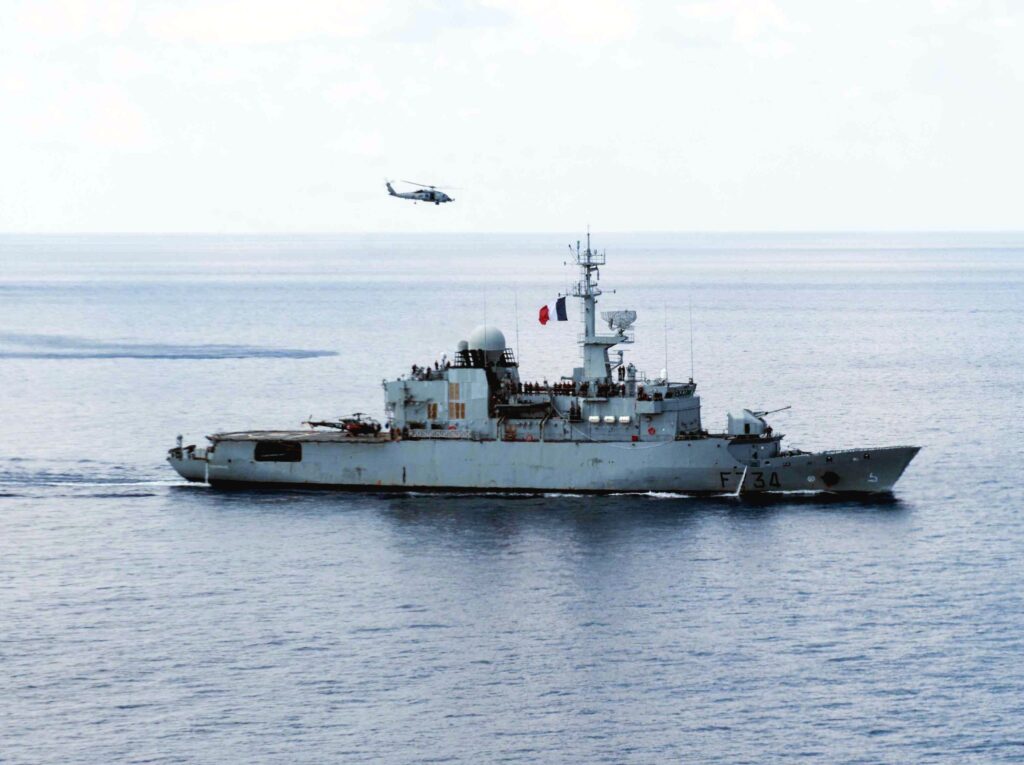
Over the horizon, two American destroyers steer hard to keep outside the first concentric ring of Chinese anti-ship missiles. A French frigate, the Vendémiaire, diverts south toward the Bashi Channel, ordered to shepherd outbound container traffic whose insurers have not yet cancelled cover. In Brussels, officials blink at screens that map each weapon’s flash, and know the world’s trade heart has just skipped a beat.
Troubled waters
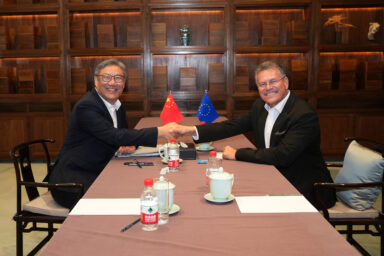
The scene is, for now, fiction. Yet each month the risk grows less fanciful. During Donald Trump’s state visit to Beijing this week, China’s president Xi Jinping issued a widely quoted warning that mishandling Taiwan could bring “clashes and even conflicts”. The South China Morning Post quoted a Chinese official summarising Mr Xi’s position: “Politically, the message was unequivocal: everything begins with Taiwan.” Those words have tightened the focus of strategists worldwide; they ask what such a war would do to their lands. Europe is no exception.
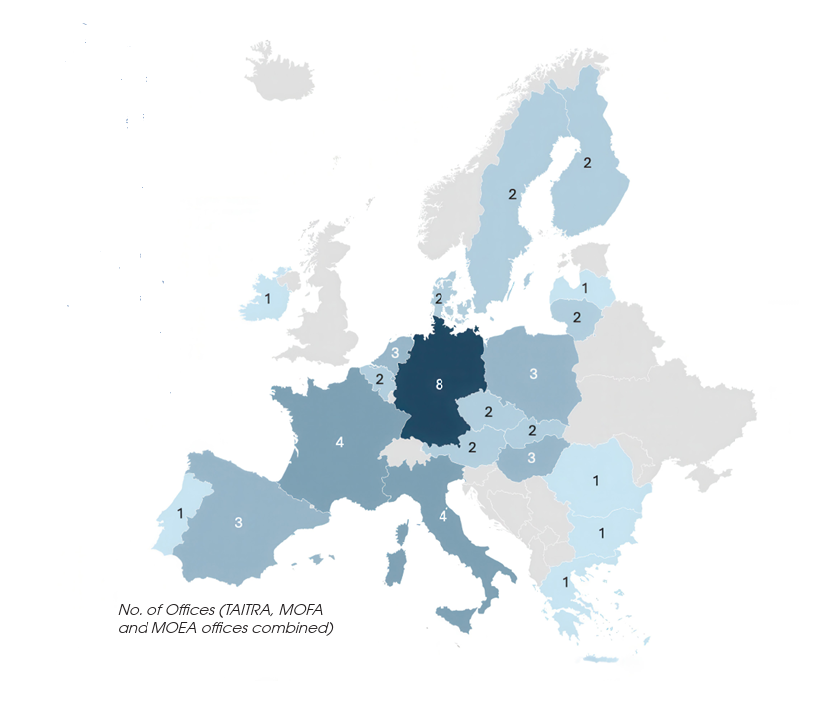
Mr Xi paired reassurances to American business with an uncompromising stance on the island. Europe therefore faces an uncomfortable counter-factual. The Centre for Security, Diplomacy and Strategy (CSDS) notes that only two countries dominate EU trade with Taiwan, while most of the bloc depends far more on China. “Dependence on China is concentrated among various member states, while the EU’s trade with Taiwan is driven primarily by Germany and the Netherlands,” the think-tank wrote. But any shooting war would invert normal risk calculations.
European navies already stage occasional freedom-of-navigation patrols. War would stretch these into semi-permanent deployments around the Philippine Sea and the Malacca Strait, argues the International Crisis Group. France, Germany and the Netherlands would protect Europe-bound shipping and relieve American escorts.
Should Washington pull forces from Europe, NATO’s eastern flank would need extra European troops. The European Council on Foreign Relations reckons that such back-filling would push average defence spending above two per cent of GDP by 2028.
Circuits and sea-lanes
Hybrid blows would follow. The same CSDS paper warns that Beijing could lash out with cyber-attacks on European ports and satellites, tactics rehearsed during smaller crises. Brussels would accelerate joint ammunition and fuel stockpiles, along with semiconductor reserves, to cushion supply shocks.
That cushioning will be thin. More than 90 per cent of leading-edge chips come from Taiwan. “Automotive, industrial automation and defence-electronics lines across the EU stop within weeks,” predicts a study by Istituto Affari Internazionali. The first European foundry capable of churning out decent substitutes, in Dresden, starts only in 2027. Even then the EU will still import more than half its advanced logic by 2031.
The Chinese are very good at observing other actors’ actions, if not always at learning the right lessons. — Gen Mick Ryan, Australian military strategist
Shipping disruptions bite much sooner. About 21 per cent of world trade passes through the Taiwan Strait. Rerouting half of that volume south of the Philippines would add nine to 14 days to transit and lift freight costs by up to 20 per cent, says a paper by the International Crisis Group. Insurance premia will spike — and so will prices in European shops.
Energy shock
Europe buys a third of its gas as liquefied cargoes. A Pacific war would divert flexible tankers eastward, leaving Europe to outbid Asia. Kpler, a data firm, projects a risk premium of $3–4 per million British thermal units on Dutch TTF prices. The International Energy Agency notes that even Middle East scares without physical loss lifted TTF by 18 per cent in 2025. Oil markets would feel a $10–15 per barrel fear premium until new routing contracts settle.
Elevated fuel costs will slow the Green Deal. Some utilities will extend coal units; defence ministries will burn jet fuel at prodigious rates. The European Defence Agency’s 2030 emission pledges will need rewriting.
Trade patterns will contort. China–EU goods flows, amounting to €732bn in 2024, could tumble by a quarter once dual-use export controls and boycotts kick in, warns the ECFR. Beijing already brands the European Parliament’s activism on Taiwan as “value-driven interference that jeopardises EU–China economic ties”. Retaliation could range from luxury levies to selective customs delays.
Middle-distance horizon
Some member states may balk. Baltic and Nordic governments would favour strong sanctions. Southern economies, wrestling with youth joblessness, might resent higher import prices. Populists would exploit chip-shortage layoffs in Bavaria and Piedmont. Yet the crisis would also embolden voices for strategic autonomy. Brussels would pump more cash into the Chips Act and Net-Zero Industry Act.
Within three years the first EU-based 28-nanometre plant will ease the crunch. Defence spending will average 2.1 per cent of GDP. A joint EU-NATO naval mission, Operation Strait Safe, will have matured. Gas demand will dip eight per cent as efficiency schemes bite.
By 2031 advanced-node self-sufficiency will still elude Europe, but East-African and Middle-Eastern routes will steady freight. EU–China trade could recover to three-quarters of its pre-war value, weighted toward green-tech parts. Climate legislation will regain lost time, though cumulative emissions stay one per cent above the no-war baseline.
Summit sidelines
Five years after the first missile strike the Union will look sterner, more armed and slightly poorer. The CSDS chapter on EU–Taiwan commerce predicts that while most members cut exposure to China, some will deepen ties with Taipei. Such divergence could strain decision-making. Yet the strategic shock will also weld a consensus that technological dependence on single nodes, whether in Russia for gas or Taiwan for chips, is unacceptable.
In the end Europe’s fate may pivot less on flashy carrier battles than on tricky domestic maths: how fast to duplicate chip fabs, how deep to draw fiscal lines of defence, how far public opinion will follow. The fictional night in Kaohsiung reminds policymakers that they must solve those equations before the first shell lands.
Still, the May summit yielded, along with thinly veiled sabre-rattling, glimmers of co-operation. Mr Trump said, “President Xi would like to see a deal made,” referring to Iran and the Strait of Hormuz. Beijing promised to resume beef imports and to buy 200 Boeing jets, a sweetener for rust-belt voters. Both parties floated a “Board of Trade” to soothe tariff rows. But Europe should bank none of it. The Global Times already urges Brussels to “refrain from protectionism”.
Beyond repair?
Other strands from the Trump–Xi meeting frame this outlook. Bloomberg reminds readers of Mr Trump’s claim that Mr Xi “understands what will happen” if an invasion goes ahead. Australian military strategist Gen Mick Ryan told Geopolitical Futures this week that “the Chinese are very good at observing other actors’ actions, if not always at learning the right lessons”.
This means that Mr Xi and his team are well aware of the asymmetric nature modern warfare adopts. Ukraine defends itself against the Russian invasion, Iran stands its ground facing US onslaught. The question nobody can answer is what Mr Xi’s judgment is of the developments.
Politically, the message was unequivocal: everything begins with Taiwan. — A Chinese official for SCMP
He may come to the conclusion that taking on relatively small targets, such as Taiwan, comes at too heavy a price even for advanced militaries. But he may as well think that the current US administration—featuring a volatile president and a patently inept Pentagon boss—has weakened Washington’s hand beyond quick repair. If that is the case, Beijing’s best chance of taking Taiwan by force will surely come at some point between now and January 2029.
Domino effect
This text focuses on the immediate impact of such a hypothetical scenario. But should the Chinese president decide for the latter, a domino effect is bound to apply. With Americans distracted by—and perhaps some European capabilities diverted towards—Taiwan, other warmongering leaders worldwide will feel emboldened. Actions that are deemed ludicrous today may seem just plausible tomorrow.
Europeans know what that means for them. But, as it has become the norm, they have little say in it.