A drone approaching from Belarus forced Vilnius residents into shelters, closed the airspace above the capital’s airport, and sent Lithuania’s president and prime minister to safe locations on Wednesday. NATO fighters scrambled to intercept the intruder but failed to locate it, leaving its fate unclear. European Commission President Ursula von der Leyen responded with her strongest language yet: a threat against one member state is a threat against the entire Union.
The drone was heading toward Lentvaris, a town a few dozen kilometres from the Belarusian border, when Lithuanian authorities issued the alert. Authorities moved President Gitanas Nausėda and Prime Minister Inga Ruginienė to safe locations. Lithuanian authorities temporarily closed the airspace over Vilnius Airport before the all-clear came roughly an hour later, without the army confirming whether the drone had crashed, turned back, or been destroyed.
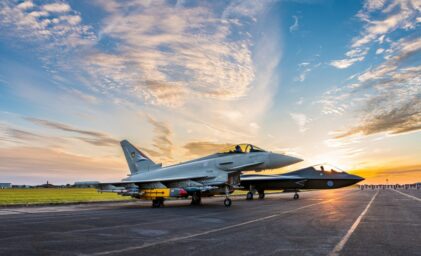
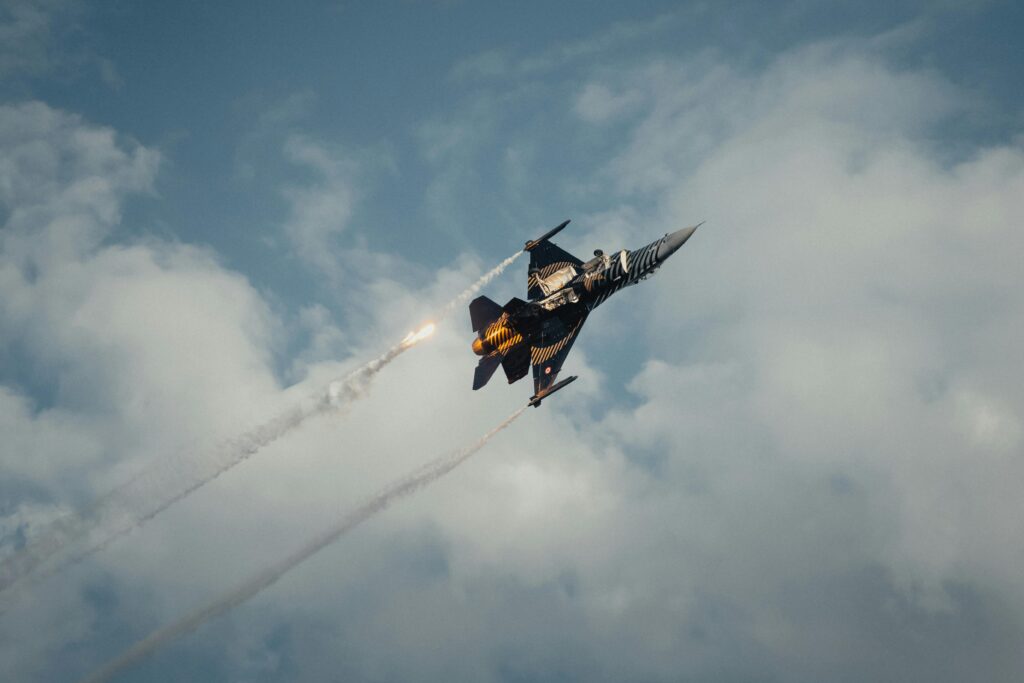
Wednesday’s incident came a day after a NATO fighter jet shot down a drone over Estonia as part of the Baltic Air Policing mission. Estonian authorities said the aircraft was likely Ukrainian, heading for targets in Russia, and had gone off course. Latvia issued its own airspace warning on the same day.
A line in the sky
Von der Leyen went further than the usual diplomatic language in a statement on social media. “Russia’s public threats against our Baltic States are completely unacceptable,” she wrote. “Russia and Belarus bear direct responsibility for drones endangering the lives and security of people on our Eastern flank. Europe will respond with unity and strength.”
Lithuanian Foreign Minister Kęstutis Budrys thanked the Commission president for her solidarity. “Europe’s security is indivisible,” he wrote. “EU’s strength lies in its unity and our adversaries know that.”
NATO Secretary General Mark Rutte dismissed Russian accusations that Baltic states were opening their airspace to Ukrainian drones. “The Russian claim is totally ridiculous, and Russia knows it,” he told reporters in Brussels. The drones were present in Baltic airspace, he said, “because of the reckless, illegal, full-scale attack of Russia,” not because Ukraine was deliberately targeting the region.
A deepening pattern
Since March, several incidents have seen Ukrainian drones targeting positions in northwestern Russia veer off course and enter the airspace of Finland, Latvia, Lithuania, and Estonia, all of which are NATO members bordering Russia or Belarus. Last week, Latvia’s government collapsed in part over the way it had handled these cases. The incidents have accelerated work on the Commission’s Action Plan on Drone and Counter-Drone Security, published in February, which sets out a coordinated EU-wide response to malicious drone threats.
The Kremlin offered a different reading of events. Spokesman Dmitry Peskov said Russia’s military was monitoring the situation and formulating “the necessary response.” Moscow has accused the Baltic states of allowing Ukraine to use their airspace for attacks on Russian territory. Kyiv says Russian jamming is redirecting its drones off course.
Let there be no doubt: a threat against one Member State is a threat against our entire Union.
— Ursula von der Leyen, President, European Commission
Von der Leyen’s statement carried a message directed as much at Moscow as at European capitals. “Let there be no doubt: a threat against one Member State is a threat against our entire Union,” she wrote. Her pledge that the Union would stand behind its easternmost members comes at a moment when Washington’s commitment to the alliance remains uncertain, and when drone incursions are becoming a near-weekly feature of life on NATO’s eastern flank.