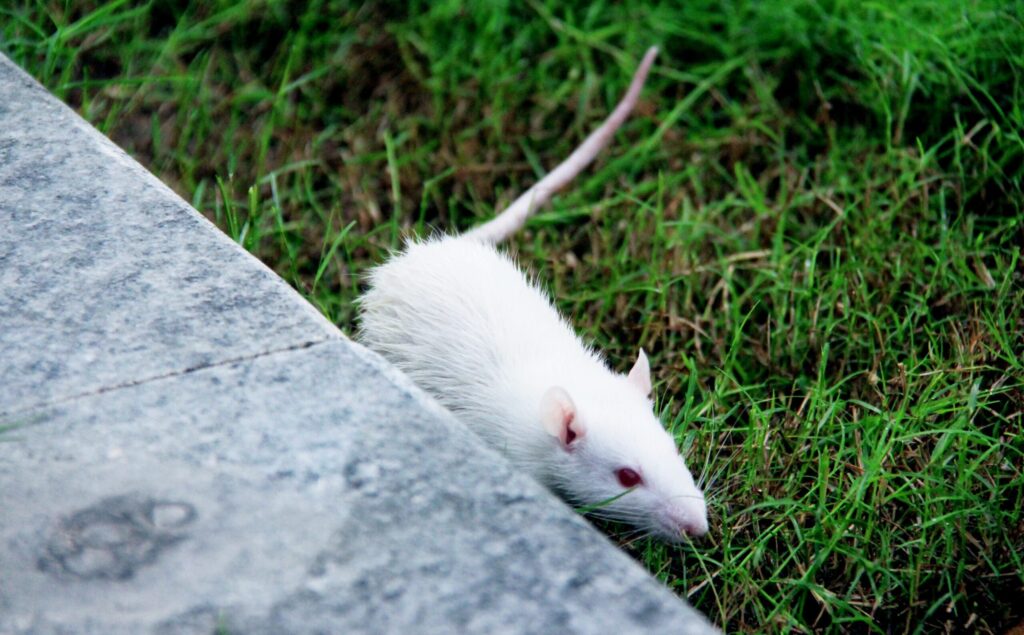
No cloned monkeys or purposely damaged dogs‘ mouths in the name of science: the European Commission makes a move to ban the mutilating of lab animals.
Animal testing is on the way out in Europe. Responding to a European Citizens’ Initiative, Save Cruelty-Free Cosmetics – Commit to a Europe Without Animal Testing, the European Commission gives a concrete deliverable shape under the 2025 Chemicals Action Plan.
On 1 June 2026, the Commission presented a roadmap to phase out animal testing for chemical safety assessments. The plan covers 15 legislative domains from industrial chemicals and pesticides to pharmaceuticals and food additives. It sets out 22 actions under three pillars and promises a high-level review conference by 2029.
Three pillars, 22 actions
Chemical safety assessments still rely largely on animal testing. New alternative methods are enabling a gradual shift, offering faster, cheaper and more innovation-friendly solutions. The roadmap aims to accelerate that shift without compromising the integrity of safety evaluations.
The first pillar focuses on making the transition happen. It outlines over 30 targeted recommendations to replace, reduce or refine animal testing for both human health and environmental safety assessments. Short-term actions are to enter legislation and guidance by 2029.
The second pillar aims to keep Europe at the forefront of research and innovation. It includes leveraging artificial intelligence and large data sets for method development. The Commission will accelerate the development of AI-based tools for knowledge discovery, evidence synthesis, and predictive modelling for health and environmental applications.
The third pillar covers collaboration both within the EU and with third countries. It envisages a framework involving all relevant stakeholders and regulatory co-operation at international level, including co-leading the revision of OECD Guidance Document 34 on the validation of non-animal methods.
What the plan actually does
Implementation begins immediately. A Roadmap Steering Team and an Inter-Agency Working Group will oversee progress. The Commission will work with member states and EU agencies such as the European Medicines Agency, the European Food Safety Authority and the European Chemicals Agency. A public dashboard will track the status of actions on an ongoing basis.
Key near-term steps include setting up an efficient organisational structure to steer implementation in 2026, establishing a mechanism to identify regulatory needs with EU agencies and member states, and publishing an EU report on key areas of regulatory needs for alternatives to animal testing by 2027. By 2028, the Commission will produce a report on animal use for chemical safety assessments outside the EU, as required by existing EU legislation.
The EU Reference Laboratory for alternatives to animal testing—EURL ECVAM—will provide access to experimental facilities and expertise in support of the transition. The Commission will also support the elaboration and update of European standards in the life sciences and provide information on funding options for the validation and standardisation of non-animal approaches.
A triple win, in theory
Executive Vice-President for Prosperity and Industrial Strategy Stéphane Séjourné struck an ambitious tone. “The publication of this roadmap marks a pivotal step towards modernising chemical safety assessments while reinforcing Europe’s leadership in innovation,” he said. “By phasing out animal testing, we are not only upholding higher ethical standards but also strengthening our competitiveness through cutting-edge, non-animal alternative technologies.”
Today is a good day for animals and shows that Europe cares.
— Jessika Roswall, European commissioner for environment, water resilience and a competitive circular economy
Commissioner for Environment, Water Resilience and a Competitive Circular Economy Jessika Roswall was more direct. “Today is a good day for animals and shows that Europe cares,” she said. “After decades of animal testing, we are taking concrete steps to end this.” Ms Roswall framed the ambition in practical terms.
“Phasing out animal testing for chemical safety assessments based on innovation will be a triple win for animals, the environment and companies,” the commissioner added. “We will now build on this collective momentum to implement the roadmap actions. This will speed up progress towards a new scientific framework that no longer relies on animal testing.”
In for a long haul
The roadmap supports and strengthens REACH, the EU’s existing chemicals legislation. Its scope is broad. Yet the plan is a roadmap, not a regulation. Its targets are indicative; its timeline stretches to 2029 and beyond. The Commission acknowledges that some actions are short-term, others long-term.
Whether the ambition survives contact with 27 member states, multiple EU agencies and powerful industrial lobbies remains to be seen. Europe now has a plan; delivering on it is another matter.