It has been 100 days since the outbreak of the Middle East conflict that has shaken global energy markets. Europe’s energy system, however, has held up surprisingly well. While the crisis has triggered a sharp price shock—feeding through into higher import costs and pressure on public finances—there has been no disruption to supply and no shortage of oil or gas.
According to the European Commission, the additional cost of importing fossil fuels since the start of the conflict has reached €47 billion. “This is the price that we pay. With not a single molecule of energy in addition,” said Commission spokesperson Eva Hrnčířová. In other words, Europe is paying tens of billions more for the same amount of energy as before the crisis. “But what is important to say is that we haven’t suffered any disruptions. The security of supply is ensured,” Ms Hrnčířová added.
The conflict escalated at the end of February 2026, when the United States under President Donald Trump, together with Israel, struck Iranian military and strategic targets. Iran responded with retaliatory measures, including restrictions on maritime traffic in the Persian Gulf.
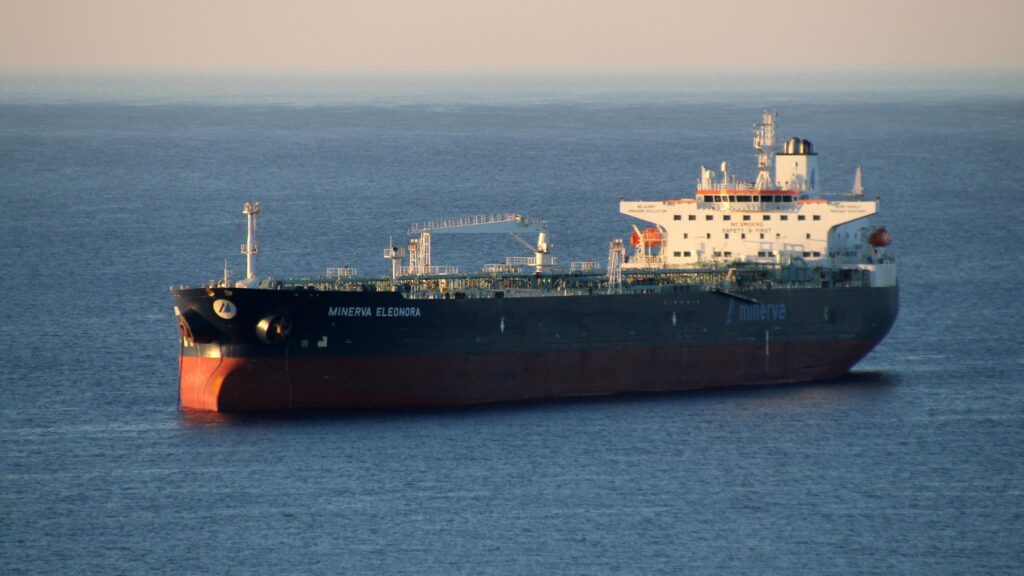
At the heart of the tensions lies the Strait of Hormuz — the narrow waterway between Iran and Oman through which roughly a fifth of global oil supplies and a significant share of LNG pass under normal conditions. Any disruption to this route has an immediate impact on global prices, as even short-lived risks to transit push up insurance costs, shipping rates and commodity prices themselves.
Prices one-third higher
Since the start of the conflict, Brent crude—the global benchmark for oil prices and the main reference for European imports—has climbed from around $70–75 per barrel to roughly $90–97. Gas traded on the TTF hub has risen from about €32–35 per MWh to €45–48.
This underlines that Europe is entering the current geopolitical turbulence in a far stronger position than during previous crises. Markets are being driven mainly by a risk premium linked to the conflict and uncertainty over key transit routes, while actual energy flows remain intact for now.
Since the last major energy crisis—particularly following Russia’s full-scale invasion of Ukraine in 2022—the EU has fundamentally reshaped its energy policy. It now rests on three pillars: diversification of suppliers, a higher share of domestic energy sources, and reduced consumption through efficiency gains.
Ending dependence on Russia
Diversification, especially the shift away from Russian fossil fuels, has increased flexibility in replacing individual supply sources, particularly in LNG and oil markets. At the same time, the share of renewables in the energy mix has grown, reducing structural dependence on any single dominant supplier.
Energy efficiency has also played a key role. Lower gas demand in both industry and households in recent years has eased pressure on markets at a moment when global prices are once again rising.
In response to earlier crises, the EU and its member states have introduced a range of measures designed to prevent a repeat of the 2021–2022 energy shock. A central tool is the requirement for gas storage to be filled to 90 per cent ahead of winter, significantly strengthening resilience against short-term disruptions — although it can also add upward pressure on prices during the filling period.
Other measures include joint gas purchasing mechanisms, which strengthen the EU’s bargaining power vis-à-vis global suppliers. The REPowerEU programme further supports investment in renewables, infrastructure and energy savings. Governments have also deployed targeted support schemes for households and businesses, favouring selective aid over broad price caps.
Costs of someone else’s war
Beyond the price shock itself, attention is increasingly turning to the fiscal impact. The European Commission estimates additional import costs at around €47 billion since the start of the conflict. The Jacques Delors Institute puts the overall impact higher, at roughly €60 billion. The difference lies in methodology: the Commission figure captures only the rise in import prices, while the broader estimate also includes public spending on compensation, subsidies and other stabilisation measures.
The institute argues that a large share of the response has gone into short-term measures, rather than addressing the underlying structural dependence on fossil fuels. Only a small fraction—less than 5 per cent—is directed towards electrification and longer-term transformation of the energy system, while the vast majority is absorbed by temporary compensation schemes. “Europe is bearing the costs of a war it neither initiated nor joined, while continuing to spend billions to offset the fiscal burden of fossil-fuel dependence. This is not sustainable,” the institute concludes in its analysis.
European energy security has broadly been maintained. But only at the cost of significantly higher prices feeding through into both private sector costs and public budgets. The trajectory from here will depend above all on the duration of the conflict and the ability of global markets to maintain their fragile equilibrium.