As Brussels considers hosting talks with Taliban represenatives on migrant returns, 47 MEPs have implored Belgian Foreign Minister Maxime Prévot to deny them visas. The lawmakers say such contacts send the wrong signal by legitimising the oppressive Afghan regime.
In a letter sent on 8 June, lawmakers from five political groups—Greens-EFA, The Left, S&D, Renew and EPP—expressed “deep concern” over plans to host the Taliban. They argue that such a move would amount to an “extremely worrying” political signal at a time when the group’s human rights record remains under intense international scrutiny.
“The Taliban regime is responsible for massive and systematic human rights violations, particularly against women, girls, journalists, human rights defenders and minorities,” the letter says.
The planned meeting is part of ongoing European efforts to discuss the return of Afghan nationals whose asylum applications have been rejected. The initiative is being coordinated with Sweden at the request of several member states.
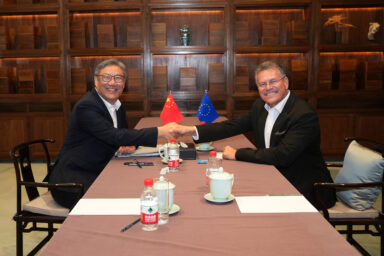
The European Commission and the Swedish Justice Ministry reached out to Afghanistan’s de facto authorities about a possible technical-level meeting in Brussels, Commission spokesperson Markus Lammert confirmed in May. The talks would build on contacts established during discussions between EU officials and Taliban representatives in Kabul in January.
Dispute over diplomatic recognition
Western countries have so far refused to formally recognise the Taliban government since it returned to power in 2021. EU officials insist that participation in technical discussions does not mean diplomatic recognition.
The MEPs disagree. “We fear that allowing Taliban representatives to obtain visas to travel to Belgium could be perceived as a form of political recognition, incompatible with the positions defended by the European institutions themselves,” says Saskia Bricmont (Greens-EFA/BEL) who was the first to sign the letter.
The letter points to what the MEPs describe as an increasingly repressive legal framework imposed by the Taliban authorities. They cite the recent adoption of legislation that they say legalises the marriage of girls from the age of nine, arguing that such developments make engagement with the regime unacceptable.
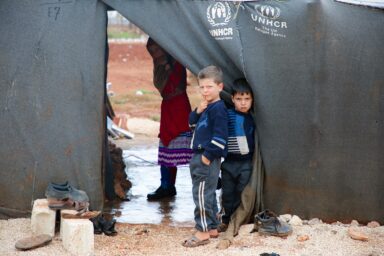
“Under these circumstances, there can be no question of negotiating with a regime that oppresses its own people, nor of returning refugees who have fled it, let alone Afghan girls who will be forced into marriage,” the letter reads. According to Mr Lammert, however, the return policy should target people who “pose a security threat” to Europe.
EU should stand by its position
The MEPs insist that any engagement with the Taliban must remain consistent with the European Parliament’s own positions. Pointing to a resolution adopted by Parliament on 21 May 2026, the lawmakers warned against “any normalisation or implicit legitimisation of the Taliban regime as long as it continues to systematically violate human rights and international law”. They argue that allowing the Taliban representatives to obtain visas to travel to Belgium could be seen as such recognition.
The signatories are calling on the Belgian government to refuse visas to Taliban representatives, and reject negotiations with the regime on migration or other issues. They also urge the EU to withdraw any invitation extended to Taliban officials, and uphold international obligations, including the principle of non-refoulement.
“Belgium has always affirmed its commitment to human rights, the rule of law and the protection of persons at risk,” the letter concludes — and it is essential that consequently, it adopts “a clear and consistent stance towards a regime that continues to deny the most fundamental freedoms”.