A decade ago, EU argued over whether renewables or nuclear should power the future. Today, former energy commissioners agree the continent may need both — and much stronger power grids to make it all work.
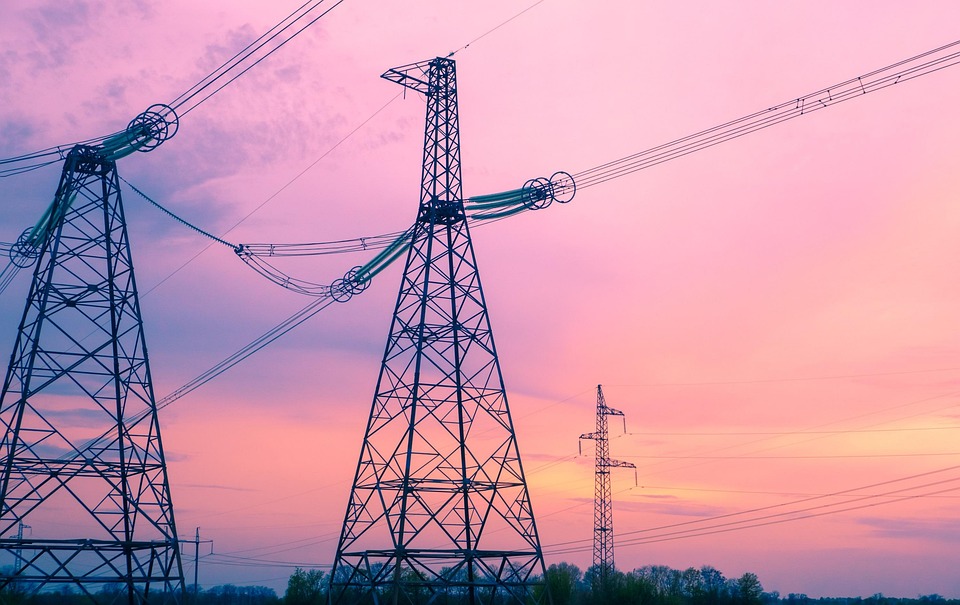
Europe has spent the past decade rapidly expanding renewable energy. But former and current energy commissioners agree that the next phase of the transition will depend on a less visible challenge. Speaking at the European Sustainable Energy Week in Brussels, they warned that inadequate electricity grids risk becoming the biggest obstacle to achieving the EU’s energy goals.
Commissioner Dan Jørgensen identified grid expansion as one of the EU’s most urgent priorities. “The biggest danger I see for the transition in Europe in the years and decades to come is if our grids are not able to follow that transition,” Jørgensen said.
According to the commissioner, renewable electricity projects are already facing delays because transmission infrastructure cannot keep pace with deployment. He pointed to Germany, which he said loses around €4bn annually due to curtailment — situations in which renewable electricity cannot be transported to consumers because grid capacity is insufficient.
The biggest danger I see for the transition in Europe in the years and decades to come is if our grids are not able to follow that transition. — Energy Commissioner Dan Jørgensen
“So our electrification, our change away from black molecules to green electrons really is dependent on us becoming more interconnected,” he argued, describing Europe’s electricity system as a “jigsaw puzzle” that requires both European coordination and local implementation.
Mr Jørgensen also defended the Commission’s recently proposed Grids Package, which aims to accelerate permitting procedures and facilitate investments in electricity infrastructure. Cutting permitting times,he suggested, will be crucial if Europe wants to achieve its energy and climate objectives.
Integrated, competitive, decarbonised
For Miguel Arias Cañete, who oversaw much of the EU’s climate and energy policy during the latter half of the 2010s, the overarching objective remains unchanged. “The most important policy we should have is having an integrated, competitive, decarbonised energy system built upon clean electricity,” he said. “That means completing the Energy Union.”
That goal, first launched in 2015, featured prominently throughout the discussion. Speakers repeatedly stressed that building renewable energy capacity alone will not be enough. Europe must also invest in the networks needed to transport and store that energy.
Former Commissioner Günther Oettinger, who served during the years when the EU strengthened its Emissions Trading System (ETS), argued that power grids have become one of the most critical issues facing policymakers. “Power grids are more than ever important,” he said, warning that Europe once again finds itself confronting gas-related vulnerabilities amid geopolitical instability.
Ambitious climate goals
While infrastructure dominated much of the conversation, the panel also reflected on how Europe’s energy landscape has changed over the past two decades. Former Commissioner Andris Piebalgs said he was impressed by Europe’s ability to manage the energy transition so far, particularly when it comes to electrification. “The level of management is definitely impressive,” he said. “The drive for electrification […] is very much manageable because we have very good track records.”
At the same time, he acknowledged that some challenges have proven more persistent than expected. High electricity prices and the impact of carbon pricing on energy-intensive industries remain unresolved concerns, particularly as Europe seeks to maintain industrial competitiveness while pursuing ambitious climate goals.
So we have to accept that we invest in nuclear, maybe fusion, or fission, or SMR, whatever else, or to prolong existing nuclear power plants. — Former Energy Commissioner Günther Oettinger
Those tensions resurfaced when the discussion turned to nuclear energy. Mr Oettinger argued that Europe should remain open to both extending the lifetime of existing nuclear reactors and investing in new technologies. “So we have to accept that we invest in nuclear, maybe fusion, or fission, or SMR, whatever else, or to prolong existing nuclear power plants,” he said, citing Belgium as an example.
Looking ahead, he urged policymakers to answer fundamental questions about Europe’s future energy needs and the role that technologies such as small modular reactors (SMRs), conventional nuclear power and even fusion energy might play alongside renewables.
Russian gas
The conversation inevitably returned to geopolitics. Several speakers reflected on the lessons learned from Russia’s full-scale invasion of Ukraine, which forced Europe to rapidly reduce its dependence on Russian fossil fuels.
Kadri Simson, who served as Energy Commissioner during the height of the crisis, recalled the speed with which the EU adopted emergency legislation. “Some of the files we managed to negotiate within six days,” she said, pushing back against criticism that Brussels is incapable of acting quickly during emergencies.
For Mr Jørgensen, the next major step is clear: ending the EU’s remaining dependence on Russian gas. “The most important decision is that we finally say ‘stop’ to Russian gas,” he said. “This is a ban. We will stop the import of Russian gas.”
Yet he cautioned that new geopolitical shocks could quickly reshape Europe’s priorities. Escalating tensions in the Middle East, he warned, could once again trigger supply concerns and expose the continent’s continued vulnerability to external energy disruptions.
Despite those risks, the mood among the panel remained broadly optimistic. The former commissioners largely agreed that Europe has repeatedly demonstrated its ability to adapt to crises and chart a common course. As Mr Piebalgs put it: “If you follow common sense, you come to the same type of conclusions. So that really demonstrates where Europe actually is strong.”