The European Union has blacklisted dozens of new targets, from drone factories in the Urals to oil tankers sailing under flags of convenience. The list also names officials the EU blames for poisoning Kremlin critic Alexei Navalny. Together, the additions tighten the noose around Moscow’s war economy.
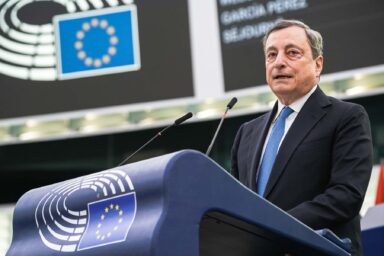
The Council of the EU has adopted a sweeping round of new sanctions against Russia. It adds 34 individuals and 47 companies and organisations to the bloc’s blacklist in one go, one of the largest single batches since the full-scale invasion began. The war is now entering its fifth year. As Kaja Kallas, the EU’s High Representative for Foreign Affairs and Security Policy, put it: “These measures strike at the heart of Russia’s military-industrial complex, its shadow fleet, and the networks that fuel Moscow’s hybrid attacks against Europe.”
Most of the new names, nine people and 45 companies, fall under the EU’s long-standing asset-freeze and travel-ban regime for Ukraine, the same legal basis it has used since 2014. That is a separate track from the EU’s numbered economic sanctions packages. A 21st such package, covering broader trade and financial measures, is still being negotiated.
Russia’s drone pipeline
One company on the new list, ASFPV, can produce up to 10,000 first-person-view drones a month. Its ‘Veterok’ models, along with detection equipment and fibre-optic cable spools, go straight to the Russian armed forces. The EU has also blacklisted another manufacturer, IONOS, whose ‘Alyosha’ drones have flown reconnaissance, strike, and kamikaze missions over Ukraine.
Behind the drones sits a wider web of suppliers. The new package sanctions two more executives at Rostec, the state conglomerate that brings together most of Russia’s defence industry. One is its long-serving executive director. The other is a senior adviser who also sits on the board of United Shipbuilding Corporation, Russia’s main naval shipbuilder. A separate listing targets the owner of Rustakt LLC, which assembles VT-40 drones used against Ukraine.
The list also reaches beyond Russia’s borders. The EU has named a Chinese company, Shenzhen Minghuaxin, for supplying components to Rustakt. It has also sanctioned Xinxiang Richful Lubricant Additive Company, one of China’s largest lubricant-additive makers, for supplying the Russian military. Brussels has so far focused most of its drone-related measures on Russian and Iranian firms. The addition of Chinese suppliers marks a widening front.
Other new entries show how deeply militarised Russia’s civilian-looking institutions have become. ERA Military Innovation Technopolis, a state research hub on the Black Sea coast, developed the ‘Boomerang’ drone now used by Russian forces. The Foundation for Advanced Studies, which funds unmanned-systems projects, and its director also made the list. So did several firms producing components ranging from missile-guidance sensors to capacitors used in the ‘Banderol’ cruise missile.
The shadow fleet
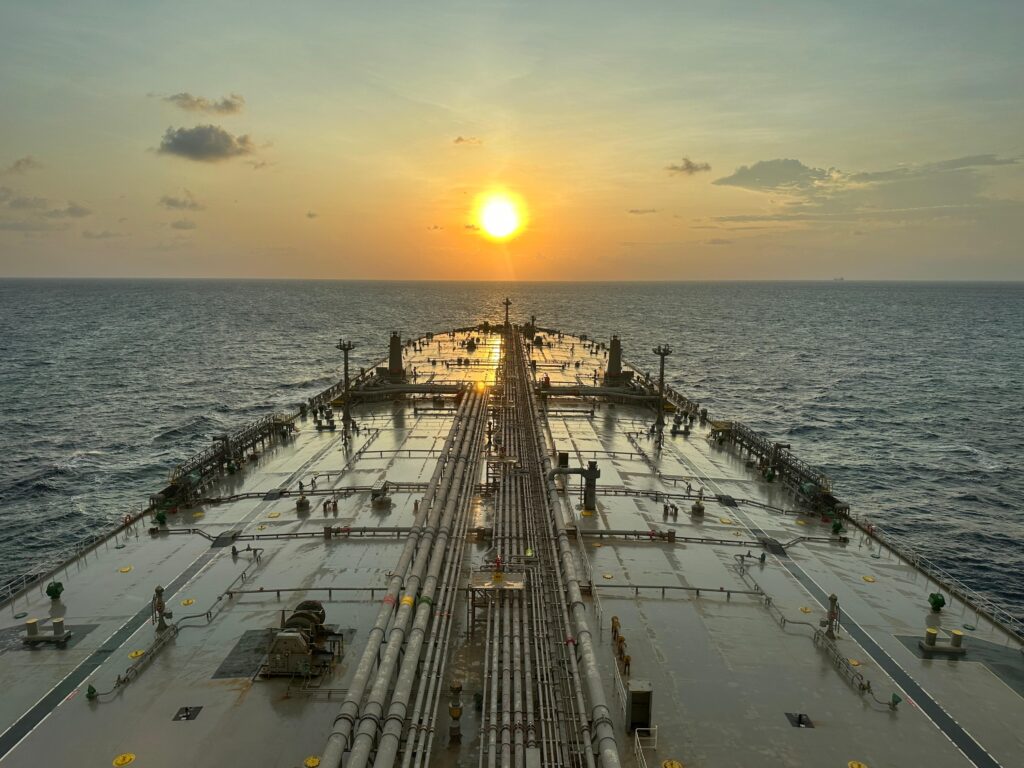
The second front targets the so-called shadow fleet: a patchwork of ageing tankers and shell companies that lets Russia keep selling oil despite Western price caps. Many of the vessels fly flags from registries such as Gabon, Panama, or the Cook Islands, hopping between them whenever one comes under pressure. The EU has sanctioned 24 entities, mostly registered in Russia, Türkiye, Hong Kong, and the United Arab Emirates, for operating or managing vessels that lack proper insurance and routinely switch off or fake their tracking signals.
These are not abstract breaches. Ships that hide their position and skip insurance are also the ones most likely to cause an oil spill. The Baltic and the Mediterranean, seas that millions of Europeans rely on for fishing and tourism, are among those most at risk.
Two individuals sit at the centre of that network. Tahir Garayev, an Azerbaijani businessman based in Geneva, built the company group now known as 2Rivers, which controls a large share of the shadow fleet’s vessels. Konstantin Rogach, a maritime insurance broker, used a web of shell companies to provide cover for tankers carrying Russian oil. Energy still earns Russia more money than almost any other sector, which is why the EU keeps returning to this part of the war economy.
Propaganda and accountability
A separate set of measures targets Russia’s information war. The EU has sanctioned 10 individuals and one organisation for spreading disinformation that dehumanises Ukrainians and justifies the invasion. They include prominent pro-Kremlin commentators, a newspaper editor in occupied Crimea, and a foundation created by decree of President Vladimir Putin.
Brick by brick, we are collapsing the foundations of Russia’s war economy.
— Kaja Kallas, High Representative for Foreign Affairs and Security Policy
A further 15 people are sanctioned over the poisoning and death of opposition leader Alexei Navalny in February 2024, among them judges, prosecutors, and members of Russia’s security and medical services. The EU also blacklisted a company that built a facial-recognition tool used to track protesters who supported him. Separately, the Council renewed, for another year, its refusal to recognise the annexation of Crimea and Sevastopol.
The sanctions adopted since 2022 have already cost Russia an estimated total of between €1tn and €1.3tn, according to Ms Kallas. “Brick by brick”, she said, “we are collapsing the foundations of Russia’s war economy.”