Your profession is in short supply two countries over. You just do not know it yet. A new European Labour Authority report reveals that the continent’s jobs crisis is not about a lack of workers but about a failure to connect them with the right places.
In the Netherlands, hospitals are turning away patients. There are simply not enough nurses. Meanwhile, in Latvia, nurses cannot find enough shifts. This is happening across Europe, in nearly every profession, right now. According to the annual EURES report on labour shortages and surpluses, published on 11 June, 98 per cent of occupations facing shortages in one country have a surplus somewhere else on the continent.
The numbers are striking. Across EURES countries, 2,617 shortages were recorded in 2025. Bulgaria, Italy, and the Netherlands have the most. Surpluses pile up in Latvia, Austria, and Finland, often in office jobs and creative fields like graphic design. More than half of all shortages are medium or high severity.
Where the gap is widest
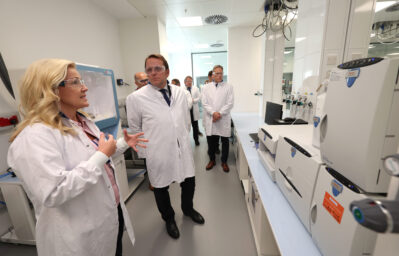
Health and care is the worst-affected sector. It employs around 25 million people across Europe and faces critical shortages of doctors, nurses, and care workers almost everywhere. Not a single country has a surplus. An ageing population keeps pushing demand up. At the same time, gruelling hours, low pay, and burnout keep pushing workers out.
The green transition is creating its own shortages. Retrofitting buildings and rolling out renewable energy requires electricians, plumbers, and roofers. These trades take years to master and the work is hard. Europe wants to go green faster than it can train the people to get there.
Women are under-represented in shortage occupations and over-represented in surplus ones. The report links this to occupational segregation that has proved stubbornly difficult to shift. Older workers feature heavily on both sides, a sign of a big wave of retirements coming that will deepen the shortages further.
So why do workers not simply move to where the jobs are? Many do not know the opportunities exist. Others face bureaucratic walls: qualifications earned in one country are not always recognised in another. Language barriers and lower wages abroad keep people at home even when work is available.
A political choice, not just an economic one
“We support mobility as a free choice,” said Tea Jarc, Confederal Secretary of the European Trade Union Confederation, at the report’s launch in Bucharest. “But let’s make sure that this mobility is genuine, a result of a person’s wishes and desires, not because of necessity, because they lack opportunities where they live.”
Labour shortages in Europe are no longer simply about a lack of people. In many cases, they reflect deeper mismatches between skills and job requirements.
— Cosmin Boiangiu, Executive Director, European Labour Authority
The report is clear that mobility alone will not fix this. Wages and working conditions need to improve. Qualification recognition needs to get simpler. Training pipelines need to expand, especially in health, construction, and the green economy.
“Labour shortages in Europe are no longer simply about a lack of people,” said Cosmin Boiangiu, Executive Director of the European Labour Authority. “In many cases, they reflect deeper mismatches between skills and job requirements, and between where workers are and where jobs are available.”
The mismatch, in other words, is a political failure as much as an economic one. The workers exist. The jobs exist. Europe has so far struggled to bring them together.