European leaders have welcomed the agreement between the United States and Iran aimed at ending the current crisis and restoring full traffic through the Strait of Hormuz. Markets reacted immediately, with oil prices falling and stocks rallying.
But Europe’s relief is about more than a diplomatic breakthrough. While the EU is not directly dependent on energy supplies passing through Hormuz, any prolonged disruption there would weigh more heavily on the European economy than on that of the United States.
European Commission President Ursula von der Leyen described the agreement as essential for regional stability and the global economy. “Freedom of navigation must be restored toll-free,” she stressed.
European Council President António Costa struck a similar tone, saying he was looking forward to “an end to this costly war”. EU foreign policy chief Kaja Kallas called the agreement a “potential breakthrough”. “Once implemented, the deal should also ease the global energy crisis,” she wrote.
The EU has long warned that any further escalation of tensions in the Middle East could have serious consequences not only for regional security but also for global trade and energy markets.
What’s in the deal?
Washington and Tehran have agreed to halt hostilities and restore safe passage through the Strait of Hormuz. The framework agreement also includes the gradual removal of US restrictions on maritime traffic in the area and the launch of further negotiations on Iran’s nuclear programme and sanctions policy.
“The Deal with the Islamic Republic of Iran is now complete,” US President Donald Trump wrote on his Truth Social platform. He subsequently warned that military strikes against Iran could resume if Tehran failed to agree to a final settlement on its nuclear programme.
The memorandum of understanding is due to be signed in Switzerland on Friday. Under its terms, the suspension of tolls in the Strait of Hormuz will initially last for only 60 days, after which further regional-level negotiations are expected.
Although many other details have yet to be disclosed, the announcement alone was enough to calm financial markets, which in recent weeks had been pricing in the risk of a prolonged disruption to shipping in the Persian Gulf.
Markets react instantly
The price of Brent crude fell to its lowest level since March following the announcement of the deal. Overnight, it dropped 4.1 per cent to $83.75 a barrel. US benchmark West Texas Intermediate (WTI) crude fell 4.72 per cent to $80.87 a barrel.
European equities surged to a record high. The pan-European STOXX Europe 600 index gained more than 1 per cent shortly after trading opened, pushing above the 640-point mark.
Among the biggest winners were airlines, transport companies and other businesses highly sensitive to energy costs. Investors are betting that the reopening of the Strait of Hormuz will reduce the risk of a sharp rise in oil and natural gas prices.
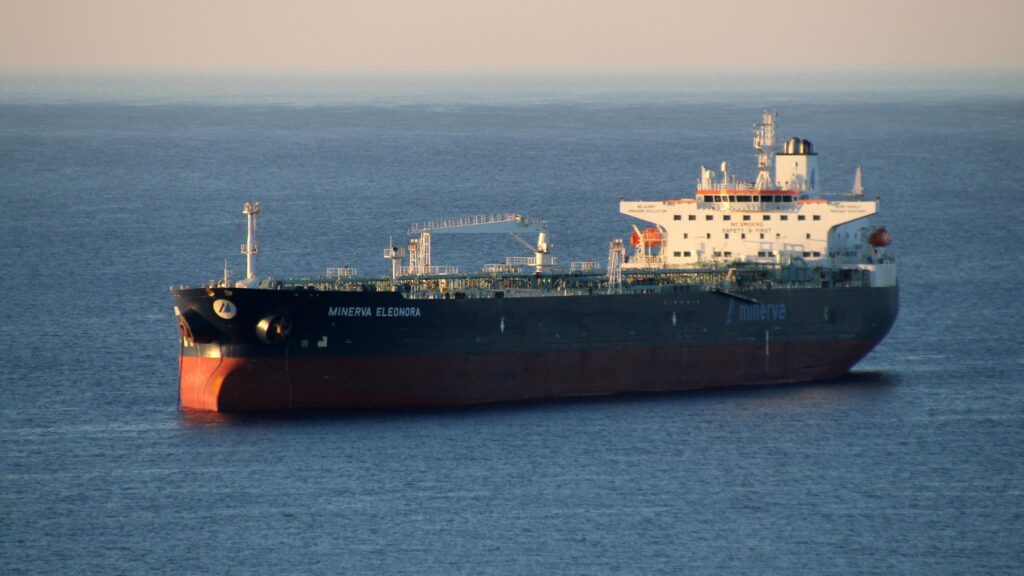
The Strait of Hormuz is one of the world’s most important trade routes. Roughly one-fifth of global oil trade passes through the narrow shipping corridor between Oman and Iran, along with a significant share of worldwide liquefied natural gas (LNG) supplies.
Any disruption to traffic therefore has an immediate impact on energy prices across global markets. Even countries that do not directly import oil or gas from the Persian Gulf cannot escape the consequences. Higher energy prices eventually feed through into transport, industrial production, agriculture and consumer prices.
Europe is more vulnerable than the US
The economies most directly exposed to supplies passing through Hormuz are in Asia, particularly China, India, Japan and South Korea. These countries would be the first to feel the impact of a prolonged closure through physical shortages of supply.
Europe’s position is different. The EU is no longer critically dependent on energy imports from the Persian Gulf and sources most of its supplies from a diverse range of providers. That does not mean, however, that it is immune to the effects of a crisis.
The European economy remains highly sensitive to rising energy prices. More expensive oil and gas quickly translate into higher costs for industry, transport and households, fuelling inflation in the process. That is especially problematic at a time when Europe’s economy is still struggling to regain stronger growth momentum.
The United States also faces higher oil prices when global markets tighten. However, it benefits from extensive domestic oil and gas production and is itself a major energy exporter. As a result, it is far better placed than European countries to absorb part of the economic shock.
Cutting energy dependence further
That is precisely why European capitals have been watching developments around the Strait of Hormuz so closely. The concern has not primarily been about running out of energy supplies, but rather about the risk of a fresh price shock spilling out of the Middle East and into the wider global economy.
Von der Leyen stressed the need to continue diversifying supply routes and developing alternative export corridors in order to reduce dependence on the Strait of Hormuz as a critical chokepoint. “Once again, energy dependencies have been weaponised,” she said.
According to von der Leyen, these issues will be high on the agenda when G7 leaders meet this week with partners from the Gulf states and the wider Middle East at a three-day gathering in Évian, France.