Europe is rewiring its energy system — nearly half of all electricity generated now comes from renewable sources. The shift away from fossil dependence is giving rise to a new reality in which wind, water and sunshine are no longer a green backdrop, but the backbone of the power system itself. In an era of geopolitical shocks, clean domestic energy is emerging not only as an environmental choice, but as an economic anchor, helping Europeans save millions.
Renewable sources generated 45.5% of all electricity produced in the European Union during the first quarter of this year. A year earlier, the figure stood at 42.7%. The share of renewable electricity continues to grow, making renewables an increasingly important part of Europe’s energy mix.
Behind the EU average, however, lies a much more varied picture. While some member states generate most of their electricity from clean sources, others are still only beginning to tap into their potential.
Front-runners and those still catching up
Denmark leads Europe by a wide margin. Renewables account for 90% of the country’s electricity generation, with wind power doing most of the heavy lifting. Portugal ranks second, generating 82.9% of its electricity from renewables, largely thanks to hydropower. Lithuania comes third with 75.7%, again driven mainly by wind.
At the other end of the table sit Czechia (12.7%), Malta (13.0%) and Slovakia (17.2%). These differences reflect not only geography and natural conditions, but also different energy systems and different levels of investment in renewable technologies.
The biggest renewable source? Wind
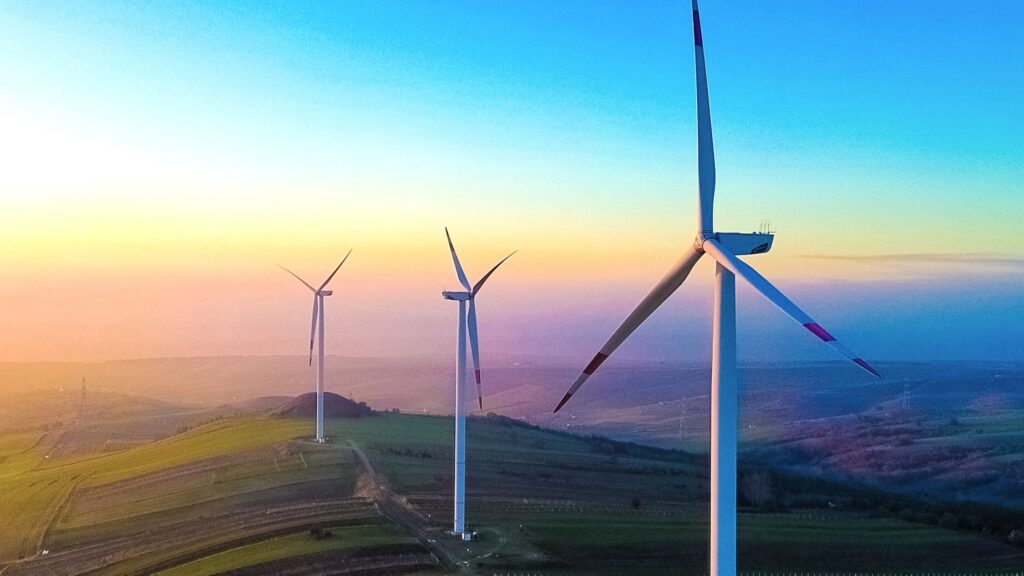
When people think of renewable energy, solar panels often spring to mind. Europe’s latest figures tell a different story. Wind power now accounts for 44.9% of all renewable electricity generated across the EU. Its role continues to grow, up from 42.3% a year earlier.
Hydropower ranks second with a 28% share, followed by solar energy at 17.3%. Renewable fuels, including biomass, contribute 9.4%, while geothermal and other renewable sources make up the remaining 0.4%.
When events on the other side of the world matter
Renewables are often discussed in the context of cutting greenhouse gas emissions. Increasingly, though, they also play another role: strengthening Europe’s energy security and making it less vulnerable to swings in fossil fuel prices.
Europe’s energy system remains sensitive to events far beyond the EU’s borders. Russia’s war against Ukraine and the recent tensions around the Strait of Hormuz have shown how quickly geopolitical crises can disrupt fossil fuel supplies and push up energy prices. That is one reason why domestically generated renewable electricity has become increasingly important: it helps reduce Europe’s dependence on imported energy.
The European Environment Agency (EEA) notes that the EU still imports around 85% of the natural gas it consumes and 97% of its oil products. As a result, price movements on global energy markets quickly ripple through the European economy.
“Global gas price spikes this year cost the European Union an additional €13 billion by mid-April, while renewables saved €29 billion. This means renewable energy sources are already shielding Europe from price shocks, acting as a powerful buffer against gas price volatility,” the agency said.
The EEA’s modelling suggests that expanding renewable energy more rapidly, alongside the necessary investment in electricity grids and energy storage, could prevent wholesale electricity prices from rising by as much as 125% by 2030.
Grids, storage and flexibility
The EEA also stresses that expanding renewable electricity generation alone will not be enough. To deliver lasting benefits, investment in wind and solar power must go hand in hand with modern electricity grids, greater energy storage capacity and more flexible demand.
The figures for the first quarter of this year tell a story that goes beyond another increase in the share of renewable electricity. They point to a gradual transformation of Europe’s energy system. Alongside their role in tackling climate change, renewables are becoming increasingly important for Europe’s stability, competitiveness and energy resilience.