Complex European military projects are to take off. Together, they will cost up to quarter of a trillion euros over almost two decades.
The European Commission on Friday, 3 July proposed five large-scale defence projects. The are to deepen EU military cooperation and strengthen Europe’s industrial base. The plans cover drones and counter-drones, maritime and seabed defence, space, air and missile defence including early warning, and security on the EU’s eastern flank. The Council must still formally approve them before they can receive funding.
The Commission wants to build capabilities that are too large or too complex for any one country to develop alone. It said the schemes would help member states work together over the long term, reducing fragmentation. They should also improve the EU’s ability to respond to shared security threats, in line with NATO capability priorities.
Participation includes Kyiv
The package sits inside the European Defence Industry Programme (EDIP), a €1.5bn fund. The Commission has set aside €325m for the establishment and deployment of the European Defence Projects of Common Interest (EDPCIs), after publishing the relevant work programme on 30 March 2026.
The Commission said the projects drew wide participation. On average, 18 member states take part in each one, and Ukraine participates in four of the five. The Commission expects to contribute directly, provide financing, and monitor progress against agreed milestones to support timely delivery.
The five proposed projects are: DECODER (Drone and Counter-Drone European Resolve, with expected costs of up to €5bn by 2033); Integrated Maritime and Seabed Defence (€72bn by 2045); SPACE (€24bn by 2034); EU Federated Integrated Air and Missile Defence Including Early Warning (€80bn by 2040); and Eastern Flank Watch (€100bn by 2036).
The proposals reflect a more explicit industrial logic in EU defence policy. Once the Council formally approves the list, the projects become eligible for EDIP funding. They may later draw on the European Competitiveness Fund as well, though that remains a possibility rather than a commitment.
Matching words with action
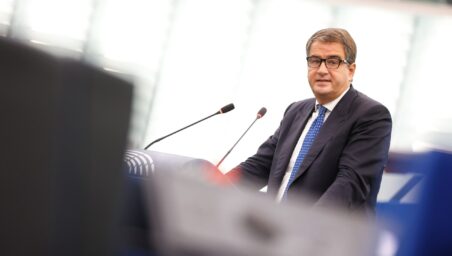
Henna Virkkunen, executive vice-president for tech sovereignty, security and democracy said: “Through these flagship joint defence projects, we are strengthening Europe’s security and defence capabilities. These initiatives reinforce our capacity to safeguard our sovereignty under all circumstances and deepen European defence cooperation.”
The commission VP went on: “We need to move faster, produce more together and invest in our security and that is exactly what we are doing. We are also supporting Ukraine. The EDPCIs will help us deliver more effectively, reinforce our industrial base, and show that Europe stands ready to match its words with action.”
We need to move faster, produce more together and invest in our security and that is exactly what we are doing. — Henna Virkkunen, European Commission executive vice-president
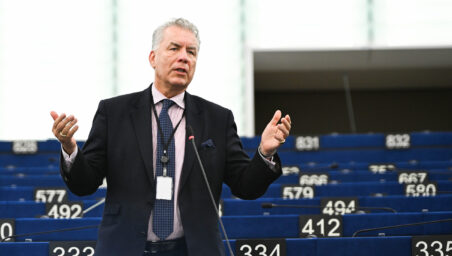
Andrius Kubilius, commissioner for defence and space said: “These new, ambitious, and long-term defence projects will act as key initiatives to strengthen EU defence readiness and bolster our strategic autonomy. The EDPCIs we are proposing today will make a direct contribution to the development of a European Air, Maritime and Space Shield, enhanced Drone and Counter-Drone Capabilities, and securing the Eastern Flank Watch. With a combined funding ambition of around €190bn by 2036, they will play a key role in strengthening the Member States’ capabilities and keep Europe and Europeans safe.”
The institutional backdrop
The policy backdrop is the EDIP Regulation, adopted on 16 December 2025. It seeks to modernise Europe’s defence industry, secure advanced technology, expand production capacity, support common procurement, and reinforce supply chains. It also opens collaborative industrial projects to Norway and Ukraine, beyond EU member states.
The process now shifts to the Council. Member states must formally establish the projects, define their objectives, identify participants, and assess the investment each is expected to generate. Only then can the schemes move into deployment and draw on EU funding.
The Commission said it will continue supporting member states in coordinating implementation and will monitor progress against agreed milestones. The EDPCIs are also expected to lay the foundation for possible further funding through the upcoming European Competitiveness Fund.