The modernised EU-Mexico trade agreement passed by a landslide on Wednesday. The accompanying resolution, though, nearly doubled the abstentions, laying bare deep unease over Mexico’s human rights record.
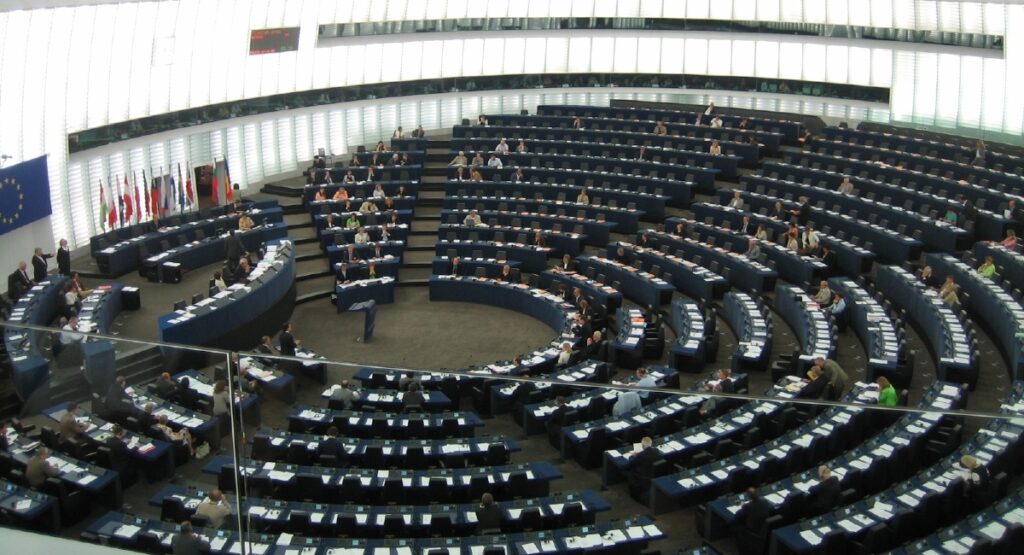
MEPs approved the modernised EU-Mexico partnership on Wednesday, with comfortable margins. The Modernised Global Agreement (MGA) passed by 479 votes to 119 with 65 abstentions. The interim Trade Agreement passed by 474 to 131 with 60 abstentions. The accompanying resolution, however, passed with nearly double the abstentions — 388 to 161, with 120 abstentions.
“With today’s vote, the European Parliament supports closer ties between Mexico and the European Union,” said MEP David McAllister (EPP/DEU), chair of the Foreign Affairs Committee. “Our cooperation is built on shared support for multilateralism, human rights and the rule of law.”
Human rights concerns
The vote itself was binary. MEPs could approve the agreement or sink it. The accompanying resolution offered a place to register a position on Mexico’s judicial overhaul, its disappeared, or its murdered journalists. It did this without torching a decade of negotiation. It drew 317 amendments running to 181 pages at committee stage, according to Proceso. The roll-call will show who among the 120 abstained; their reasons, only insofar as MEPs choose to explain their votes.
The 2024 judicial overhaul made judges at every level stand for popular election. The resolution notes the 13 per cent turnout in the June 2025 judicial elections. It also flags alleged links between some elected candidates and organised crime. It links the Agreement’s good functioning to continued progress on the rule of law, judicial independence and the separation of powers.
The resolution describes the more than 125,000 disappeared persons, around 90 murders per day. It also cites 94.8 per cent of known crimes unresolved, roughly 10 women and girls killed daily, and nine journalists killed in 2025.
MEP Anna Cavazzini (Greens/EFA/DEU) supported the agreement. She took issue with the disproportionate power she says it grants fossil-fuel investors, and with the absence of a sustainability chapter. MEP Enikő Győri (Patriots for Europe/HUN) accused the Commission of silence on the erosion of Mexican democracy under President Claudia Sheinbaum.
The three things that made Mexico so attractive are no longer there. You don’t have legal security, you don’t have security, and access to the American market is no longer clear.
— Dr Lorena Ruano Gómez, professor of international relations, Universidad Complutense de Madrid
The deal arrives as much of the context has already changed. “The three things that made Mexico so attractive are no longer there. You don’t have legal security, you don’t have security, and access to the American market is no longer clear,” said Dr Lorena Ruano Gómez, professor of international relations at Universidad Complutense de Madrid.
The economics
The economics of the deal are strong but not monumental. “Mexico will remove 95 per cent of remaining high tariffs on EU imports, saving up to €100m per year,” said INTA rapporteur Borja Giménez Larraz (EPP/ESP). He cited a 148 per cent increase in bilateral trade in goods since the first Global Agreement. Trade Commissioner Maroš Šefčovič put agri-food liberalisation at 99 per cent of trade in the sector. He also pointed to simplified rules of origin, critical raw materials cooperation, and access to public tenders.
Trade between the two regions has nearly doubled over the past decade, from €43.6bn in 2014 to €82.3bn in 2024. Brussels ran a goods surplus of close to €24bn in 2024. Mexico’s Economy Ministry projects the deal could lift Mexican exports to the EU from around €21bn a year to €36bn by 2030.
And yet, the impact is limited. The EU accounts for only 7.4% of Mexico’s trade, behind China at 11.5% and far behind the United States at 60.8%.
Why now?
The deal had sat idle for the better part of a decade. It became useful due to the instability the second Trump administration has injected into the global economy. Mexico sends roughly 80 per cent of its exports to the United States and is locked in a fraught renegotiation of the USMCA. The EU, meanwhile, has spent the past year absorbing tariff threats from the administration. On the day of the vote, Trump threatened at the NATO summit in Ankara that the US would cut off all trade with Spain.
“The behaviour of the US is driving many partners to seek reliable alternatives,” said INTA chair Bernd Lange (S&D/DEU). “The EU offers a fair alternative model and the past few months show that this offer is being gratefully accepted.”
The agreement’s value now is in its signal. With Mercosur provisionally in force, the EU holds trade agreements with virtually all of Latin America, Cuba and Venezuela the clearest exceptions. The United States does not.
Rapporteur Javi López (S&D/ESP), who co-led the file, described Mexico as “one of our most reliable allies in the region guided by a progressive government that pushes for reform and builds a progressive agenda together.”
What’s next
EU ambassadors are expected to endorse the agreement on Friday, with ministers giving final approval at the General Affairs Council on 14 July. The tariff cuts arrive by early 2027.
Once the MGA is in force, it replaces the 14 bilateral investment treaties Mexico still holds with EU member states. But provisional application of the investment protection provisions can suspend those treaties earlier, a decision taken by the Council via Commission proposal. Whether this changes investment flows is another question. Moody’s cut Mexico’s credit rating to Baa3 in May, the lowest rung of investment grade.
The human rights commitments wait on 27 national parliaments and the Mexican Senate, which will likely take years.
Mexico and the EU’s modernised trade agreement is moving forward in a strong signal, with some economic wins, but also looks past concerns over human rights and the rule of law in Mexico.