Ireland has set itself one of the toughest tasks in Brussels: securing an agreement on the European Union’s next seven-year budget before its Council presidency ends in December. The pressure is heightened by France’s presidential election next spring. A change of leadership in Paris could make a budget deal even harder to reach.
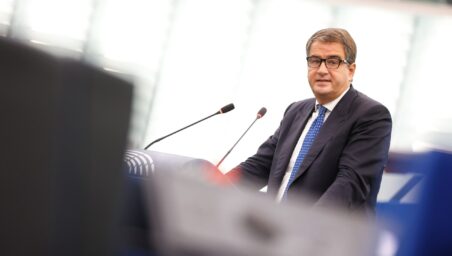
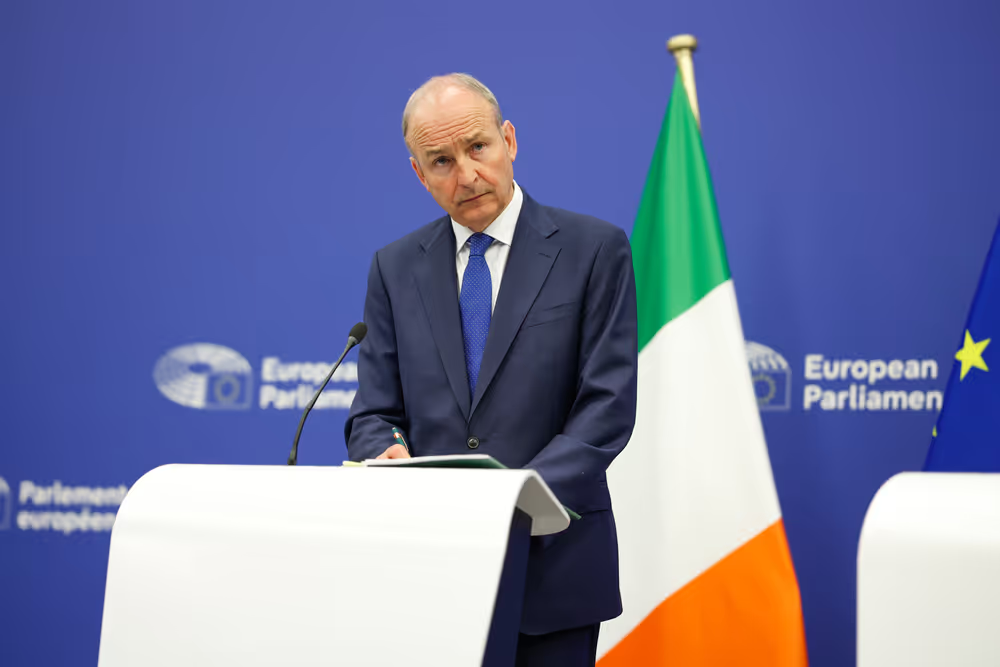
Irish Prime Minister Micheál Martin has expressed his hope that member states can reach an agreement on the 2028–2034 Multiannual Financial Framework (MFF) before the end of the year. “We need a budget that can match our ambitions,” he told the European Parliament, while pledging that Ireland would act as an “honest broker” to bridge divisions between capitals.
While there is broad political pressure to avoid dragging negotiations into 2027, previous MFF talks have repeatedly slipped beyond their intended deadlines. Whether Dublin can break that pattern will depend less on its own diplomacy than on member states’ willingness to compromise. The next budget may prove even more politically contentious.
“There appears to be a strong incentive to reach a final agreement before the French presidential election in April 2027,” Zsolt Darvas, a senior fellow at Bruegel, a Brussels-based economic think tank, who specialises in EU governance and macroeconomics, told EU Perspectives. “A new French president could introduce additional demands that would complicate efforts to secure a compromise.”
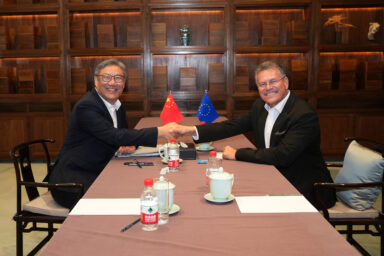
Still, Mr Darvas cautions that political incentives alone are no guarantee of success.
History offers reasons for caution
The EU has rarely agreed its long-term budget as early as intended.
The current 2021–2027 MFF was proposed by the European Commission in 2018. Leaders had hoped to conclude negotiations well before the start of the new budget period. But disagreements over spending levels, rebates and the Covid-19 recovery package delayed a political agreement until July 2020. The legislation was only formally adopted in December 2020, just weeks before it entered into force.
The previous budget followed a similar trajectory. The Commission tabled its proposal in 2011, but member states only reached a political agreement in February 2013 during Ireland’s previous Council presidency, after months of difficult negotiations and an all-night European Council summit.
“In previous MFF cycles, the intention was consistently to conclude negotiations well before the start of the new budget period,” Mr Darvas said. “In practice, however, agreements have repeatedly been reached only at the eleventh hour.”
That history makes Dublin’s objective far from guaranteed.
Time is short
The French presidential election gives member states an additional push to avoid drawn-out negotiations. With far-right leader Marine Le Pen leading in the polls, post-election France could become a significant political outlier, making the negotiations even more challenging.
Mr Darvas argues that if leaders want to finalise the budget before the political landscape in Paris potentially changes, they first need to secure a Council position well before the end of the year.
“Achieving this objective would require, at a minimum, agreement on a Council position well in advance,” he said. That would then need to be followed by negotiations with the European Parliament and a ratification process, both of which are likely to take considerable time.
For that reason, he believes reaching a Council agreement under the Irish presidency would already represent a significant success. “I fear that anything short of a Council compromise would put at risk the prospect of concluding a final agreement before the French presidential election.”
The familiar dividing lines
The biggest obstacle remains the same question that has dominated every previous MFF negotiation: Who pays, and what for?
According to Mr Darvas, the overall size of the budget remains one of the most contentious issues. Net contributor countries, led by Germany, are seeking deeper spending cuts than those proposed under the Cypriot presidency.
On the other side, the so-called Friends of Cohesion and Friends of Agriculture groups, supported by the European Parliament, argue that Europe’s growing ambitions require a larger budget. The debate is not just about how much money the EU should spend, but also where it should go.
Some governments want to protect traditional spending on cohesion policy and the Common Agricultural Policy, arguing they remain essential for regional development and rural communities. Others believe more resources should instead be redirected towards competitiveness, innovation, defence and other strategic priorities.
Another potentially difficult issue concerns the Commission’s proposal to abolish national budget rebates. Austria, Denmark, Germany, the Netherlands and Sweden currently benefit from correction mechanisms that reduce their net contributions. Mr Darvas expects these countries to resist losing those arrangements or seek alternative compensation.
Ireland’s role
The Irish prime-minister has repeatedly described Ireland as an “honest broker” capable of building consensus between member states. Mr Darvas is more cautious about attributing any particular advantage to Dublin itself.
“Any country holding the Council Presidency acts as an honest broker among the EU members,” he said. “I do not believe that any particular country enjoys a significant comparative advantage.” Instead, success depends less on the country holding the presidency than on its ability “to build trust, identify workable compromises, and navigate the political sensitivities of the negotiations”.
Ultimately, that may be the real measure of Ireland’s presidency. A fully concluded MFF before the end of the year would require member states to move faster than they have in previous budget cycles. Securing a Council compromise by December, however, would keep that ambition alive. And as Mr Darvas argues, may prove to be the most realistic benchmark of success.