China will supply both sides of the Russo-Ukrainian war after Brussels and Kyiv signed a landmark drone production agreement that includes Chinese components.
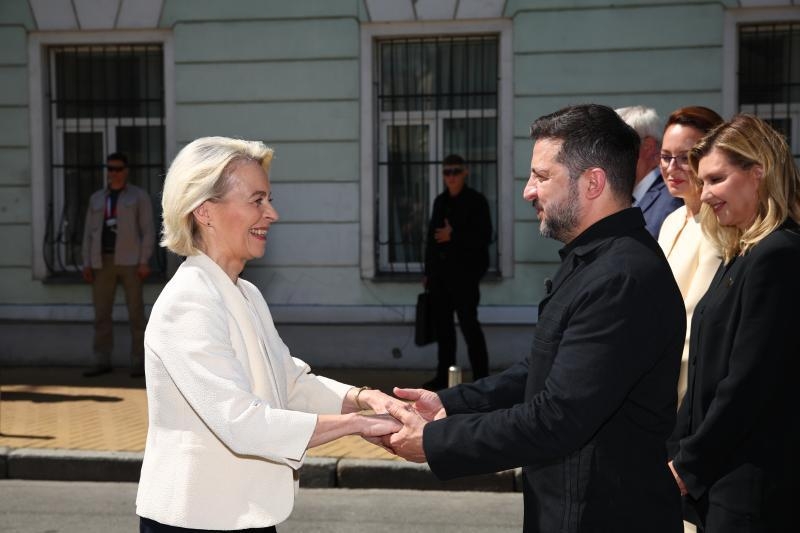
Going well beyond the individual deals several countries had already signed with Ukraine, European Commission President Ursula von der Leyen and Ukrainian President Volodymyr Zelenskyy signed an EU-Ukraine Defence Industrial Partnership in Kyiv on 15 July. The leaders announced the at the capital’s Saint Michael Square on Ukraine’s Statehood Day. It is to combine Europe’s industrial scale with Ukraine’s battlefield expertise. It also opens the partnership to all 27 EU member states.
Drones have reshaped the war. Ukraine has used them to offset its manpower disadvantage and to strike Russian oil refineries at long range, triggering a fuel crisis. Ukrainian officials say drones now account for about 80 per cent of Russian battlefield casualties. “We are making 10 million drones a year, 10 million. And it will be 20 million,” Mr Zelenskyy said at the ceremony. “For the first time, Ukraine has fundamentally changed the battlefield.”
Industry meets know-how
The scale of ambition is matched by the funding. Money will come from two EU sources: the €90bn Ukraine support loan and roughly €10bn still available in the SAFE defence programme. The first allocation, a €5.9bn tranche, is dedicated to drone procurement.
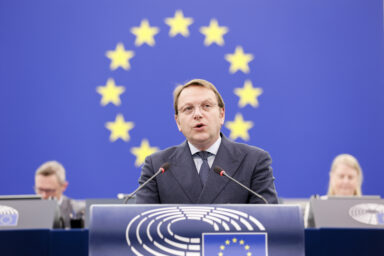
Ms von der Leyen enumerated what each side brings. “In Europe, we already have huge technological and industrial capacity that can be deployed. And we have safe and secure production sites that can help to scale up,” she said. “But we do not have that battle-tested knowledge and expertise that Ukraine has forged. So the point I am making is that we need to combine our strengths. Together, we can work on joint production.”
One practical innovation is the option to build and store drones across EU territory rather than in Ukraine, shielding them from Russian strikes. Storage will be short-term, however. After two to three months, the drones transfer to Ukraine or to member states keen to reinforce their capabilities, particularly on the EU’s eastern flank.
As a second step, the Commission intends to expand the partnership to ballistic and anti-ballistic missile systems, though that remains some way off. Ms von der Leyen then closed her speech with a clear call to action. “Now is the time to invest in Ukraine,” she said, “and to invest in our common security and common future.”
The Chinese conection
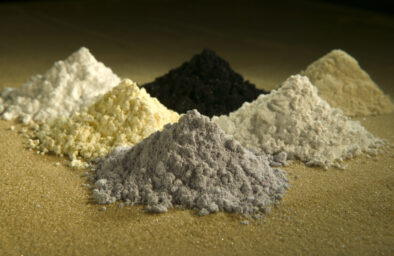
The deal’s most uncomfortable detail sits in its supply chain. Ukraine secured an exemption allowing it to spend part of the first €5.9bn tranche on Chinese drone components. This concerns parts that are not available quickly enough inside the EU or from approved partners. The funds mark the first allocation from the wider €60bn earmarked for defence procurement under the Ukraine support loan.
Under the loan’s standard rules, defence products must largely come from the EU single market, Ukraine, or approved partners such as Canada. Other allies can qualify by signing a security partnership with the EU, contributing to the scheme, and providing substantial support for Ukraine; the UK signed up on Monday. For suppliers outside those categories—no more than 35 per cent of a contract may consist of components from other countries—the regulation says arms purchases must not “contravene the security and defence interests” of the EU.
For the first time, Ukraine has fundamentally changed the battlefield. — Volodymyr Zelenskyy, Ukraine’s president
A Commission spokesperson said on Wednesday that “to respond as quickly as possible to the most urgent needs that Ukraine has . . . derogations are possible. These are granted in exceptionally rare cases.” Without naming China, the spokesperson added that the EU was working to expand Europe’s defence industry “with the aim of getting to a point very soon, as soon as possible, where we can produce these components within our own market, and then we don’t have to look at these derogations.”
Beijing’s dual role
The exemption lays bare a contradiction at the heart of EU policy. Brussels has accused Beijing of being “the key enabler of Russia’s war” against Ukraine, supplying Moscow’s military-industrial complex. At the same time, it acknowledges that Kyiv’s own arms industry depends on Chinese components. Both sides in the conflict, in other words, rely on the same supplier.
Ukraine has built one of Europe’s most innovative defence industries under Russian bombardment, outpacing traditional European arms companies in several areas. Yet its consumption of drones still outstrips its capacity, and that of its allies, to produce certain components. The gap is real and it is not closing fast enough for Brussels to ignore it.
Now is the time to invest in Ukraine, to invest in our common security and common future. — Ursula von der Leyen, European Commission president
The deal thus reflects where Europe actually is, not where it wants to be. The ambition is a self-sufficient, battle-ready EU defence industrial base. The reality is a €5.9bn drone programme that cannot yet be fulfilled without Chinese parts. “Now is the time to invest in Ukraine,” Ms von der Leyen said, and, implicitly, in the supply chains that Europe does not yet control. A Chinese-made drone (even if only partially) is better than no drone; call it the new realpolitik.