A Swedish startup’s $8,000 drone-killer could let defenders shoot down cheap Russian attack drones without bankrupting themselves in the process.
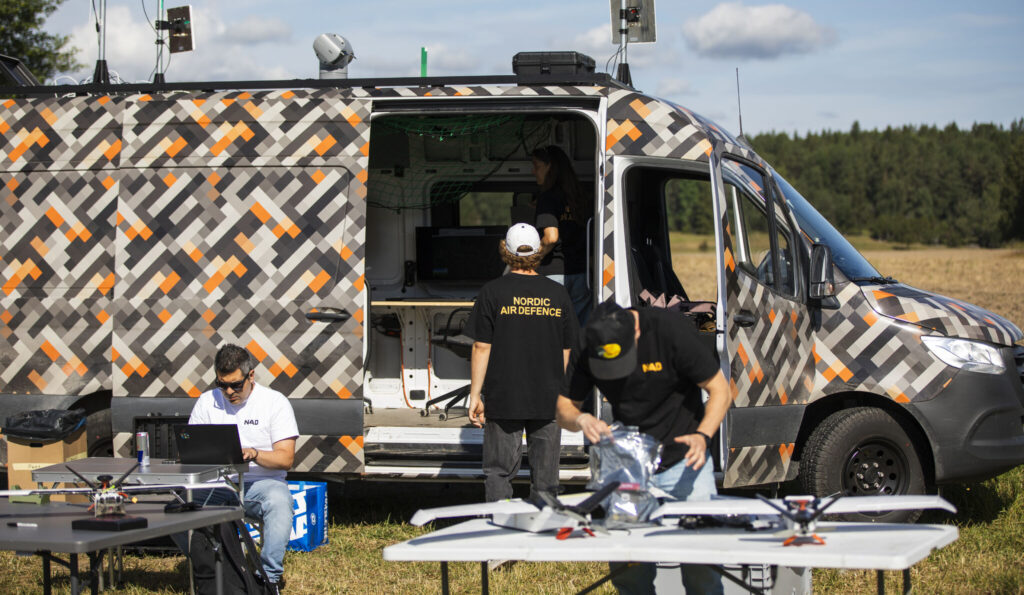
A small interceptor, roughly the size of a shoebox and fitted with an electric propeller, recently lifted off from a classified test site in rural Sweden. Engineers from Nordic Air Defence (NAD) watched a live feed from a nose-mounted camera as it closed on a dummy drone, corrected its course after an initial miss, and detonated a dummy warhead on the second pass. The Kreuger had done its job.
“In essence it’s a flying cellphone with a warhead,” Dominic Surano, an aerospace engineer at NAD, told to reporters. The unit cost is around $8,000. That figure is the whole point.
Solving the cost problem
Russia is manufacturing attack drones at industrial scale. NATO allies have been intercepting them with $1m fighter-jet missiles. Last September, around 20 Russian drones entered Polish airspace and the alliance scrambled fast jets to bring them down. The response cost orders of magnitude more than the threat it neutralised. The arithmetic is plainly unsustainable.
The economics of drone warfare have a simple logic. When an interceptor costs more than its target, the defender bleeds money faster than the attacker. NAD has built the Kreuger specifically to invert that ratio. A straightforward cost comparison illustrates the point: the Kreuger, at $8,000 per round, costs roughly 0.4 times the price of an Iranian-designed Shahed-136 loitering munition. Israel’s Tamir interceptor costs around $45,000. That is still more than twice the target’s value.
“I am certain we have the answer, because we have solved the cost-efficiency problem of air defence,” said Tobias Billström, the former Swedish foreign minister and NAD’s strategy director. Mr Billström estimated the per-unit cost below $10k, and noted that the system draws entirely on non-Chinese components — a deliberate choice to ensure supply-chain resilience in a crisis or conflict.
“Hobby-grade drones are amongst the biggest killers in war zones,” Mr Surano told The Telegraph. “We’re seeing $500 drones destroy tanks that cost $20m.”
Software rules
The Kreuger 100’s low price rests on a specific engineering decision: replace expensive onboard sensors and gimballed seekers with software-based flight control and advanced aerodynamics.
NAD developed the concept in collaboration with physicists at Sweden’s FOI Defence Research Agency. The latter helped validate the idea that control algorithms running on commercial-grade processors could do the work that costly mechanical components traditionally perform.
(Governments) may feel an element of danger as they wonder, will this company still be around in 10 years when we need spare parts?
— Ulrike Franke, European Council on Foreign Relations
The result is a battery-powered interceptor with an infrared tracking system capable of operating around the clock, through cloud cover and at night. It reaches speeds of up to 270 kilometres per hour in civil configurations, with higher speeds available in military variants.
Ukraine first
Its engagement envelope extends to under 10 kilometres, with a test ceiling goal of around 4,000 metres. It launches from a hand-held or portable tube, requiring only a two-person team, and can carry either a kinetic interceptor that destroys a drone’s propellers or a small proximity warhead. The design is modular. NAD claims production costs run at roughly one-tenth of a standard interceptor, and says output could scale to tens of thousands of units per month using Swedish automotive battery supply chains.
The project is protected by three pending patents. In November 2024, NAD secured a €1.2m investment led by Norway-based SNÖ Ventures to accelerate development and airborne testing. Additional investors included Jörgen Bladh, co-founder of Northzone; Jan Gurander, former Deputy CEO and CFO of Volvo Group; and Noam Perski, who joined as a strategic adviser.
Playing with fire
NAD’s near-term target is Ukraine. “We want to see the interceptor initially being used by the Ukrainian armed forces, and then extending it to the wider [European] family,” Mr Billström told British Telegraph. “We’re also looking at the next iteration of it, which would use an electromagnetic pulse blast to jam other drones.”
The Swedish Ministry of Defence plans to ship evaluation lots after domestic tests conclude. A first operational evaluation against Shahed-136 loitering munitions and Orlan-10 reconnaissance drones is planned for the 2026-27 winter.
An impatient market
The Kreuger’s potential reach extends beyond land warfare. James Heappey, Britain’s Armed Forces minister from 2020 to 2024, attended the Swedish test and pointed to naval applications. “If you look at the drones and missiles Iran launched on Israel, it was all designed to enter Israeli airspace at the same time for a layered challenge,” Mr Heappey said.
“Whether it be naval defences of the UK homeland or a task force at sea, an adversary is going to seek the same thing. The key principle is that the defender needs to be cheaper than the attacker,” the former minister said. “One way of doing that is directed energy [lasers], but that can’t be done everywhere. This is the next cheapest thing, and it can overcome drones designed to confuse and overwhelm.”
NAD is not without competition. Heckler & Koch is developing an AI-guided grenade launcher targeting the same threat. Rheinmetall’s Skynex system fires 1,000 smart bullets per minute. The American Coyote Block 3 costs an estimated $120k per round. Anduril’s Roadrunner-M is a reusable turbojet interceptor; more capable, but far more expensive and logistically demanding.
The 5 per cent gap
Governments, particularly Germany’s, have been slow to award contracts to AI-focused startups, favouring established primes such as Rheinmetall. “It’s not that the government doesn’t trust these companies, but there is this fear of whether they are buying the right thing,” said Ulrike Franke, a German drone warfare expert at the European Council on Foreign Relations. “They may also feel an element of danger as they wonder, will this company still be around in 10 years when we need spare parts?”
Ms Franke nonetheless argues that cheap, simple tools are essential for any credible long-term counter-drone posture. “What we’ve seen with the Iranian drone systems is they are unsophisticated but they are also good enough, and that’s what you want in war — there are no prizes for sophistication,” she said. “The most important challenge overall is being able to actually intercept them, but cost is also important. If you imagine a situation like Ukraine, where you have thousands coming, you risk going broke by defending yourself,” Ms Franke added.
I am certain we have (…) solved the cost-efficiency problem of air defence.
— Tobias Billström, Nordic Air Defence
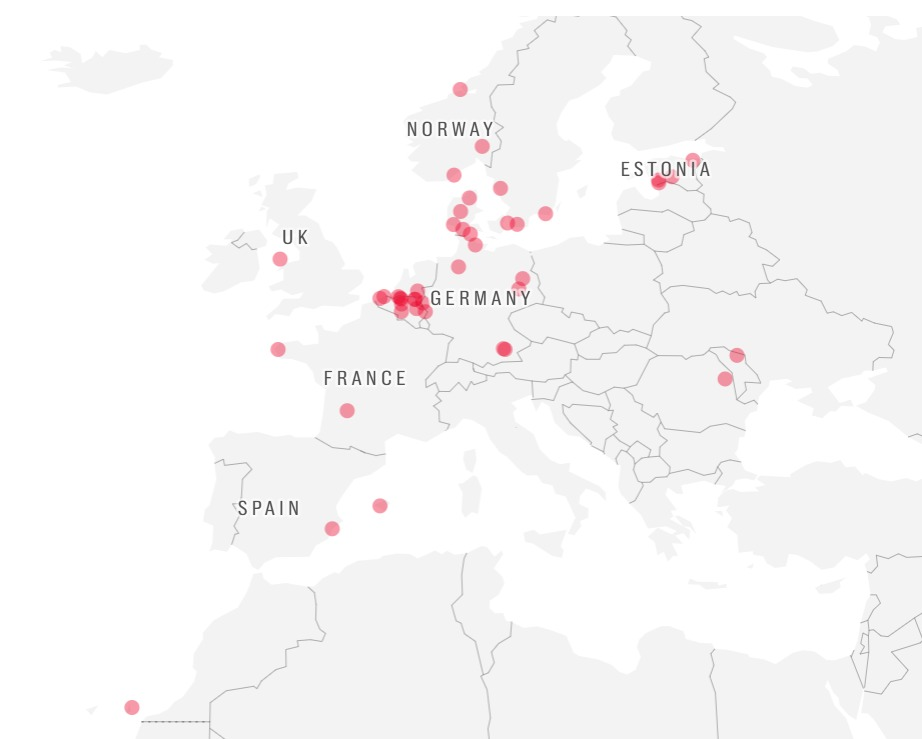
The threat is not confined to active war zones. Drone overflights disrupted airports in Germany and Spain earlier this year. The recent collapse of the Lithuanian government was partly driven by its failure to manage Russian drone incursions. NAD estimates that Sweden’s existing air defences cover only around 5 per cent of national territory, concentrated around military installations.
The pandemic model
Karl Rosander, NAD’s co-founder, has argued that Europe must stop depending on the US for its security. He pointed to US Vice President JD Vance’s address at the 2025 Munich Security Conference, where European leaders were told not to expect continued American military backing, as a moment of clarification.
Mr Rosander has called for ESG investment rules to be reformed so that defence technology firms can access mainstream funding, and has drawn a comparison with the speed of Covid-19 vaccine development as a model for what urgent public-private collaboration in defence could achieve.
The Kreuger 100 remains unproven in combat. Its forthcoming Ukrainian trials will be the first real test of whether its advertised performance holds under operational conditions. If it does, a battery-powered interceptor assembled from commercial components may turn out to be one of the more consequential weapon systems to emerge from Europe’s rearmament push.