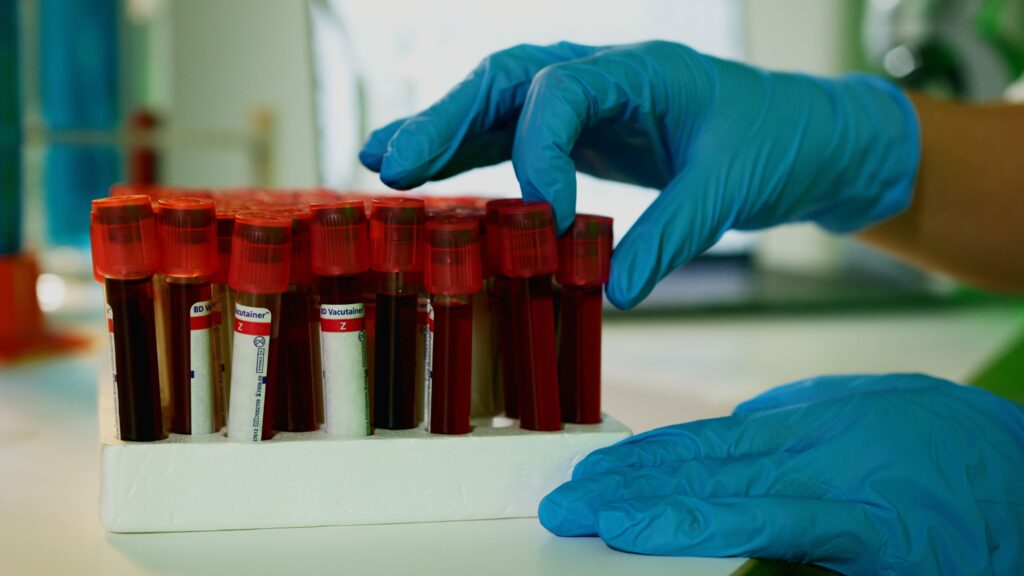
Somewhere in Europe today, someone will discover they have carried hepatitis for years without ever feeling sick. Yesterday’s World Hepatitis Day brought both good news and a warning: deaths from the disease have fallen to a record low, even as millions of Europeans still do not know they are infected.
Hepatitis often causes no pain and no warning signs. It can sit quietly in the liver for years before turning into cirrhosis or liver cancer, which is why doctors call it a silent disease. New figures from Eurostat show that fewer people in the EU are dying from it than at any point since records began in 2011. In 2023, 3,172 people died, down sharply from the year before and roughly half the toll recorded a decade earlier.
TThe disease does not affect everyone equally. Men make up the clear majority of hepatitis deaths. A striking share of victims are still of working age, cut down well before old age would otherwise catch up with them.
Southern Europe carries the heaviest toll
Italy has the highest hepatitis death rate in the EU, at 1.62 deaths per 100,000 people. Latvia follows at 1.54, and Austria at 1.02. Luxembourg, at the other extreme, recorded no hepatitis deaths at all last year, with Finland and Slovenia close behind as the safest countries in the bloc.
The pattern holds at the regional level too. Fifteen regions across the EU recorded at least 1.5 deaths per 100,000 inhabitants. Ten of them were in Italy alone; the rest were scattered across France, Austria, Romania, and Latvia.
France’s overseas territories fared worst of all. Mayotte recorded 4.86 deaths per 100,000 people, and Guyane 2.80, both far above the mainland average. Southern Italy and its islands followed close behind, led by Campania at 2.65 and Puglia at 2.58. The common thread is not that the virus behaves differently from place to place. It is that access to screening and treatment still varies enormously across the continent.
Eurostat timed the release to coincide with World Hepatitis Day, marked every 28 July. This year’s theme urges health systems to remove the barriers that keep people from getting tested in the first place.
The hidden epidemic behind the numbers
The improvement in survival sits next to a less comfortable trend: newly reported hepatitis infections have been rising since 2021. The European Centre for Disease Prevention and Control recorded 28,855 hepatitis B cases across the EU in 2022, climbing to 37,766 in 2023. Hepatitis C cases rose from 23,273 to 28,622 over the same period.
Regional health officials read that increase as encouraging rather than alarming, because it reflects better detection, not a resurgent virus. According to WHO/Europe, only 23 per cent of people with hepatitis B in the region have been diagnosed, and just 4.2 per cent are receiving treatment. Many only find out once liver damage has already set in. It echoes another familiar problem in European public health: available vaccines, low uptake.
The biggest gap today is no longer prevention – it is finding people with hepatitis and ensuring that they receive the care and treatment they need.
— Stela Bivol, WHO/Europe’s regional adviser for hepatitis and HIV
That is precisely the gap Stela Bivol, WHO/Europe’s regional adviser for hepatitis and HIV, pointed to this week. “The biggest gap today is no longer prevention – it is finding people with hepatitis and ensuring that they receive the care and treatment they need,” she said, warning that without faster testing and treatment, the region will miss its 2030 elimination targets. For the millions of Europeans who do not yet know they carry the virus, that gap makes all the difference. It is the gap between catching the disease early and finding out only once it is too late.