When rivers run dry, the lights start to flicker. Record-low water on the Danube has forced Hungary’s only nuclear plant to cut power, and pushed Romania into a state of emergency this month. As heatwaves tighten their grip, Europe’s plan for coping with a drier future faces its toughest test yet.
The trouble started with a number few people ever look at: the flow rate of the Danube. In Romania, it has dropped below 1,500 cubic metres per second, less than a third of what is normal for July. In Budapest, the river fell to around 10 centimetres on Monday, well below the previous record low of 33 centimetres set in 2018.
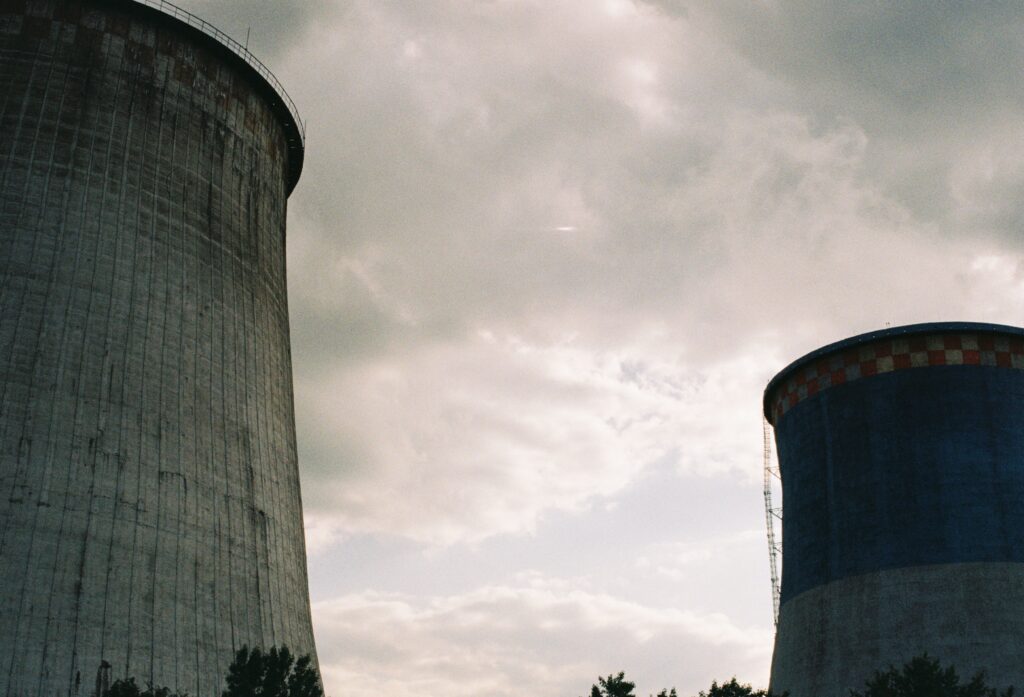
Rivers this shallow cannot cool a nuclear reactor properly. Romania has shut down one of the two reactors at its Cernavodă plant, with the other running at roughly half capacity. Hungary came close behind. By Sunday, its Paks plant had been reduced to a single working turbine, just millimetres of river level away from the first full shutdown in its 44-year history. The water stopped falling overnight, and by Tuesday the plant was still running, at just over 10 per cent of its usual capacity.
Romania declares a state of alert
Interim Romanian Prime Minister Ilie Bolojan declared a nationwide state of alert in the energy sector for the whole of August. He said the country would import power from Ukraine during peak evening hours and was in talks with Bulgaria and Greece for similar support. The government also approved an emergency operation to redirect water from a side channel of the Danube towards Cernavodă.
On Monday, the Romanian navy detonated underwater explosives near the town of Izvoarele to clear submerged rocks and improve water flow to the plant. Officials warn that if the plant’s second reactor also goes offline, Romania stands to lose around a fifth of its national electricity output overnight.
The crisis reaches beyond power stations. Authorities are already rationing water for close to 700 villages, and farmers who depend on the Danube for irrigation have taken a hit too. Hidroelectrica, Romania’s state hydropower producer, reported that its output fell by a third in the first half of the year alone.
Hungarian Prime Minister Péter Magyar said reduced output at the plant could continue for several weeks while the river remains low. He also announced plans to build four gigawatts of wind capacity by 2030, using EU funds alongside private investment, to make the country’s grid less dependent on the Danube. Neither country is alone: heatwaves have already forced reactors offline in France three times this year, and eight more European plants are currently operating on reduced power.
The EU’s existing water strategy
None of this catches the EU by surprise. The Commission presented its European Water Resilience Strategy back in June 2025, aiming to tackle scarcity, modernise water management and protect the bloc’s economy from exactly this kind of shock. Droughts already affect roughly four per cent of EU territory every year and cost an estimated €50bn in 2022 alone.
There is a significant risk that we may have to shut down a second reactor at the Cernavodă plant.
— Ilie Bolojan, Interim Prime Minister of Romania
Bolojan delivered that warning at a press conference in Bucharest on Friday, telling reporters there was “a significant risk that we may have to shut down a second reactor at the Cernavodă plant,” and that doing so would mean “a loss of around 20 per cent of national electricity generation” at the exact moment when heat-driven demand keeps climbing. That risk sits at the heart of a deeper problem: most European nuclear plants still rely on once-through river cooling, a design built for flow rates and temperatures that belong increasingly to the past. A new European climate resilience and risk management framework is due by the end of the year, meant to help member states prepare for such shocks before they hit rather than scramble once they do.
A few weeks ago, this was a distant climate forecast. Now it is a question of whether the lights stay on in two EU countries at once.