A flood knocks out phone masts. A border patrol loses signal in the mountains. Within a few years, Europe wants a fallback that never fails: its own satellites overhead. Today, it agreed to get them flying sooner.
Today, that fallback took a major step forward. The European Commission and the SpaceRISE consortium signed an implementation agreement. It moves IRIS², the EU’s secure satellite constellation, from planning into full-scale construction. Sixty-six new satellites will join the network. That brings the total to 348. The Commission now expects first launches by 2029, years earlier than originally planned.
The jump is bigger than it looks at first glance. Back in December 2024, the EU signed its original concession contract with SpaceRISE. That contract set IRIS² at around 290 satellites. Now Brussels wants the programme to move faster and grow larger at the same time.
Built for a rougher world
The idea for IRIS² took shape in 2023. The war in Ukraine had already shown how easily attackers can knock out ground-based communications. Since then, the security climate around Europe has only hardened. Brussels wants a network built to match it.
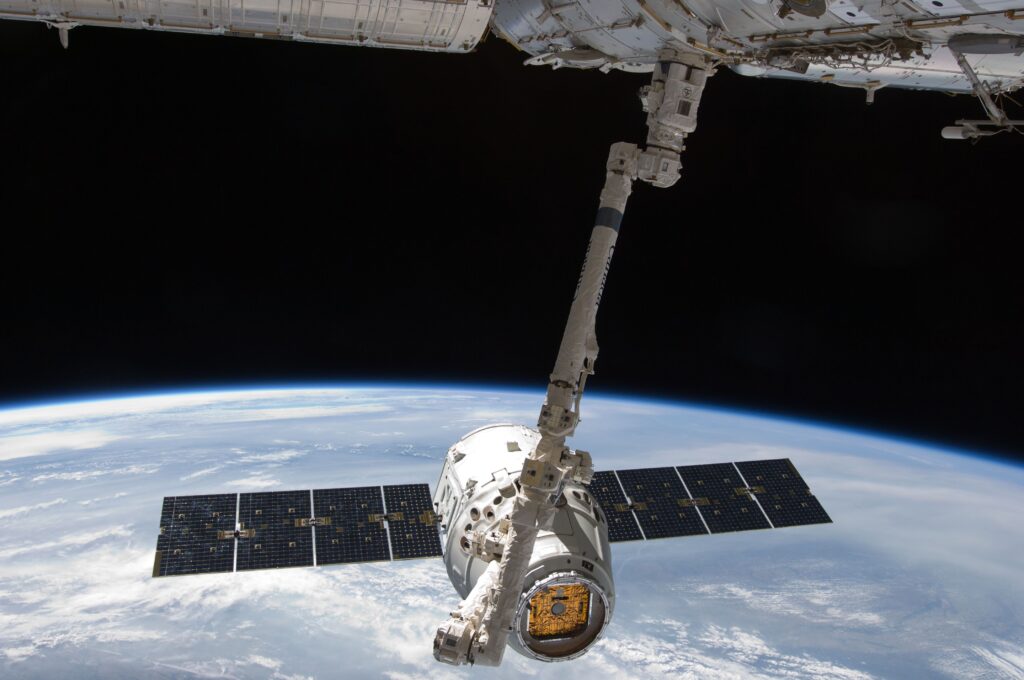
The extra 66 satellites will join the rest of the constellation in low Earth orbit. The full network will eventually carry 330 low-orbit satellites and 18 medium-orbit satellites. One dedicated layer among them will serve defence, security and emergency response, not everyday traffic.
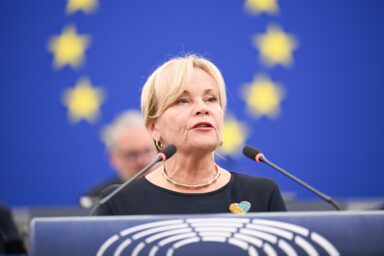
“Today we are taking a decisive step forward for Europe’s security and digital sovereignty,” said Andrius Kubilius, Commissioner for Defence and Space. He added that the accelerated timeline and reinforced architecture would bring the network online ahead of schedule. It should also boost secure governmental capacity by more than 60 per cent within the Union.
The Commission expects a 60 per cent jump in secure governmental capacity within the EU, and a 54 per cent jump globally. In practice, that means more bandwidth for the moments that matter most: a natural disaster, a border incident, a network outage in the middle of a crisis.
Who foots the bill
None of this happens without industry, and none of it comes free. The SpaceRISE consortium, made up of SES, Eutelsat and Hispasat, leads the build. Manufacturers including Airbus Defence and Space, Thales Alenia Space, OHB and Aerospacelab back them up. The extra investment will draw on the EU’s 2028–2034 budget. Member states and partner countries, including Norway and Iceland, will add their own contributions alongside the EU-27.
Today we are taking a decisive step forward for Europe’s security and digital sovereignty.
— Andrius Kubilius, Commissioner for Defence and Space, European Commission
Some governments have already opened their wallets. Poland has pledged €656m, Hungary €500m, and Spain has floated an investment of €1.6bn to €2bn. Talks continue over further national contributions, though nothing is final yet.
Nobody will know whether that money buys Europe real independence until the first satellites reach orbit in 2029. For now, IRIS² remains a promise: the next time a network goes down somewhere in Europe, the backup overhead will not depend on anyone else.