The Musk-Warsaw squabble about satellite internet services heats up. Starlink offers no explanation for its decision to carve Poland out of Europe, leaving itself open to charges of geographic illiteracy — or worse.
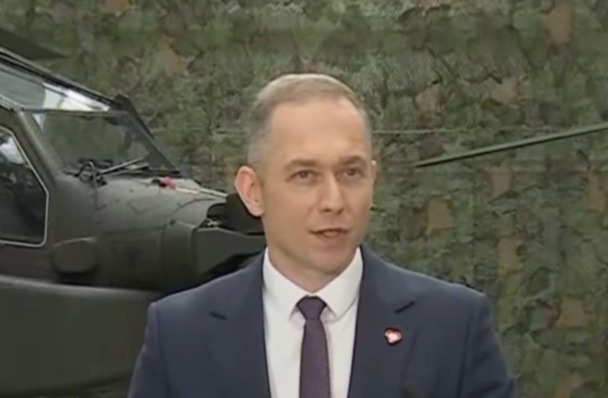
A blunt message landed on X from Deputy Polish Defence Minister Cezary Tomczyk on 13 August. “@elonmusk, Poland is in Europe. Open an atlas. Polish customers pay for Starlink. This is business, not a favour. We expect equal treatment. Change this decision,” he wrote. It was the sharpest line yet in a row that had been building for days.
The dispute concerns a simple but consequential decision by Starlink, the satellite internet service operated by Elon Musk’s SpaceX. The company has excluded Poland from its shared European roaming zone, which covers more than 30 countries, including Germany, Czechia, Slovakia, and Lithuania. Starlink’s own guidance now states: “Poland is not included in the Europe region above. Accounts registered in Poland are treated as Poland-only for home-country use.” The company has offered no explanation for the exclusion.
A minister reaches for the wallet
The practical effect is clear. Starlink’s Roam service lets customers use their terminals across borders within a designated region without triggering extra charges or restrictions. Polish users no longer enjoy that freedom. New customers from Poland have faced the change since 14 July 2026. Existing users will be brought under it from 17 August.
Mr Tomczyk’s tweet followed a broadside from Polish Foreign Minister Radosław Sikorski the day before. “Hey, @elonmusk, big man, stop discriminating Polish users of Starlink or we might re-think paying you $50 million p.a. for your services,” Mr Sikorski wrote on X. That sum refers to Poland’s annual spending to help provide Starlink services for Ukraine, which gives Warsaw unusual leverage in the dispute. The big man quip is a reference to ‘small man’, the epithet Mr Musk bestowed upon the Warsaw diplomatic heavyweight last year.
Digital Affairs Minister Krzysztof Gawkowski added his voice. “Poland is not a second-tier market. Polish customers are not second-tier customers,” he wrote. He demanded that SpaceX spell out the regulatory basis for the change. “If Elon Musk’s SpaceX wants to operate in Poland, benefit from the Polish market, and earn from Polish customers, it must treat them fairly and on equal terms,” he added.
“That is why I have appealed to SpaceX for the urgent restoration of equal terms for the company’s Polish customers,” Mr Gawkowski stressed. If SpaceX blames “local regulatory requirements”, Warsaw expects it to point to the specific rules rather than offer “general explanations”.
An old quarrel, a new edge
The government’s position is thus threefold. It asserts that Poland belongs in Europe by any reasonable definition. It demands a precise technical or legal justification. And it has made clear that public money—specifically the $50m Warsaw spends annually on Starlink for Ukraine—is now part of the conversation.
SpaceX has offered no public explanation for the exclusion. Some media reports have suggested it relates to the fact that terminals registered in Poland are used in Ukraine, though Ukraine itself is not included in Starlink’s European roaming region.
What is clear is that Poland’s exclusion singles it out within its own continent. Its neighbours to the west, south, and north all enjoy the roaming arrangement. Poland, which borders Ukraine and has been one of the most active supporters of Kyiv’s war effort, does not. Whether that is coincidence, commercial calculation, or something else, SpaceX has not said.
The price of being left out
The row also exposes how Starlink uses geography as a pricing instrument. Outside the United States, the company charges by region, with local currencies and different plan tiers. Exclusion from a regional zone is not a minor inconvenience. It means Polish customers who travel within Europe face a different, less favourable set of rules than customers in comparable countries. The same goes for those whose terminals are used across the border in Ukraine.
Warsaw’s response has been to treat the matter as discrimination, not a technical adjustment. That framing is deliberate. It places the burden of justification on SpaceX and invites a political, not merely a commercial, resolution. Mr Gawkowski’s appeal for “urgent restoration of equal terms” and Mr Sikorski’s threat to reconsider $50m in annual payments together constitute a coordinated pressure campaign — one that SpaceX, which relies on goodwill and government contracts across Europe, cannot easily ignore.
Whether it will work is another matter. Mr Musk has shown little inclination to yield to political pressure from Warsaw before. But the deadline of 17 August, when the restrictions extend to existing Polish users, gives the dispute an urgency that neither side can defer for long.