Portugal has become the latest European country to restrict face coverings in public, joining a patchwork of national rules that has steadily expanded since France introduced Europe’s first nationwide ban in 2011.
Portuguese President António José Seguro signed on August 18 into law a nationwide ban on clothing concealing the face in public spaces. The far-right Chega, the country’s leading opposition party proposed the measure; it received final parliamentary approval on 17 July.
It applies to streets, public services, businesses, sporting events, and demonstrations. Exemptions apply for health, professional, artistic, security, and weather-related reasons, as well as places of worship, diplomatic premises, and aircraft.
From Portugal to France
Violations will carry fines ranging from €150 to €3,000, depending on whether the offence was negligent or intentional. The law also introduces a separate penalty for forcing somebody to conceal their face through violence, threats, or abuse of authority.
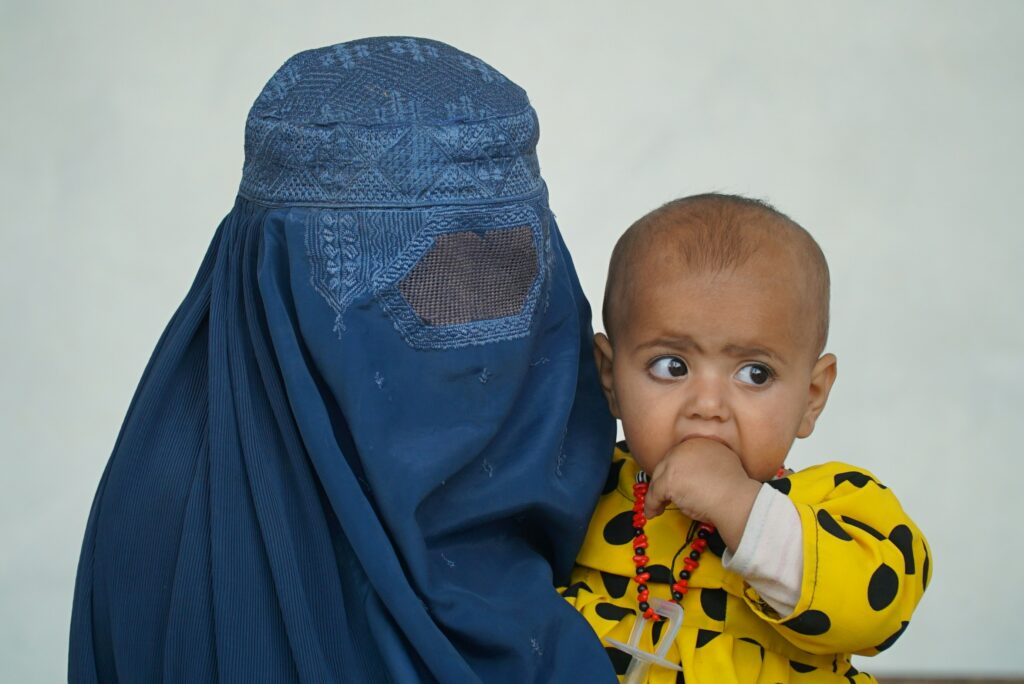
Although its final wording does not refer to any religion, the measure is widely understood to apply principally to the burqa and niqab worn by some Muslim women. The move is not isolated. Rather, Portugal joined an established European trend.
Portugal’s approach follows the model introduced by France, which became the first European country to prohibit full-face coverings in public spaces in 2011. Belgium adopted a similar nationwide ban the same year, while Bulgaria, Austria, and Denmark introduced their own restrictions between 2016 and 2018.
The rules are not identical. Some countries prohibit full-face coverings across public spaces. Others restrict them in specific settings or require the face to remain visible where identification or communication is necessary.
Protection, or further isolation?
The idea is the same. Countries are addressing broadly similar concerns through different combinations of criminal law, public-order rules and restrictions on religious dress. Arguments evolve, but the underlying idea remains unchanged. In Portugal, supporters argue that the law improves public security and protects women who feel pressure to covering their faces. Mr Seguro said the face is a central element of human identity and communication, according to Euronews.
However, the law creates a distinction between women who are forced to wear a veil and those who say they do so voluntarily. A woman who continues to cover her face in public of her own accord may receive a fine; in the case of a women coerced to cover her face, it is the person applying the coercion who may face punishment.
Amnesty International argues that this could restrict women’s participation rather than promote their independence. “Far from promoting women’s rights as claimed, this blanket ban is likely to have the opposite effect,” João Godinho Martins, executive director of Amnesty International Portugal, said.
The ban still draws controversy
The organisation warned that affected women could face exclusion from public life and greater social isolation, as well as difficulties accessing education, employment, and public services. Women facing pressure within their families could consequently find themselves caught between restrictions at home and penalties outside it.
The European Court of Human Rights upheld the French ban in its 2014 S.A.S. v France judgment. It accepted France’s argument that showing the face could form part of the conditions necessary for ‘living together’ and gave national authorities considerable freedom to regulate the issue. However, the Strasbourg court acknowledged that the ban had a particular negative effect on Muslim women.
Far from promoting women’s rights as claimed, this blanket ban is likely to have the opposite effect. — João Godinho Martins, Amnesty International Portugal
The decision remains controversial. In 2018, the UN Human Rights Committee reached a different conclusion after examining fines imposed on two women wearing the niqab. It found that France had not demonstrated that its general ban was proportionate and warned that it could confine women to their homes, restrict their access to public services, and marginalise them. The UN committee therefore found violations of religious freedom and protection against discrimination.
EU powers remain limited
Despite the growing number of national restrictions, the EU does not have common legislation governing face coverings in public. Rules concerning public order, clothing, and relations between the state and religious communities largely remain within national competence.
The EU Charter protects religious freedom, non-discrimination, and gender equality, but applies to member states only when they implement EU law. Portugal’s ban will therefore be assessed primarily under its constitution and the European Convention on Human Rights. EU anti-discrimination legislation prohibits religious discrimination in employment but does not provide equivalent protection across education, social services, and access to goods.
So far, Europe’s approach remains fragmented. But Portugal’s decision shows that restrictions on face coverings are no longer an isolated feature of French or Belgian law. They have become part of a wider European debate over where public security ends, where religious freedom begins, and whether national governments can reconcile integration and women’s rights with individual autonomy.