Russia’s war economy is under mounting strain, but far short of the much-vaunted collapse. Europe’s sanctions are biting; just not hard enough.
Four years into its invasion of Ukraine, Russia has not collapsed, even as economists the world over have been busy predicting just that. Its economy has not imploded. Russian President Vladimir Putin has not been forced to the negotiating table by financial pressure.
To many observers, this looks like a paradox. It is not; it is the predictable result of a war economy propped up by energy revenues, state spending, and an incomplete sanctions regime. It also points to hard choices for Europe.
The headline numbers tell part of the story. Growth fell from 4.9 per cent in 2024 to roughly one per cent in 2025. Officials now expect only 0.4 per cent in 2026. The International Monetary Fund still projects modest growth rather than contraction. Russia is stagnating, not spiralling. That distinction matters enormously for policy.
Running on empty
The Kiel Institute puts the structural damage in starker terms. Russia’s liquid sovereign wealth fund assets fell from 6.5 per cent of GDP at the start of the war to 1.8 per cent in April 2026.
The federal deficit exceeded the full-year target within the first quarter of 2026. Oil and gas revenues fell 45 per cent year-on-year in Q1 2026. These are not the numbers of a healthy economy. They are the numbers of one being eaten from within.
The most vivid account of Russia’s fiscal strain came from Russian Finance Minister Anton Siluanov himself. He warned Prime Minister Mikhail Mishustin in April that the government would not have enough money to make all scheduled payments on time.
The balance on the federal treasury’s single account fell to roughly minus 5.5tn rubles; i.e., about $65.3bn in the red. The government responded with an austerity regime that cut non-military spending by 35 per cent and is likely to trim federal staffing by 15 per cent.
Russia’s federal deficit for January through April reached 5.8–5.9tn rubles, or 2.5 per cent of GDP — nearly double the same period a year earlier, according to finance ministry data. Debt-servicing costs alone now consume roughly four trillion rubles, about nine per cent of the federal budget.
The Financial Times separately reported that overruns on military and security budget lines could reach two to four trillion rubles this year. Mr Putin has refused to cut military outlays, directing cuts elsewhere instead.
Mr Siluanov himself had told state television that the budget “has no problems whatsoever” and is “fully backed by resources”. Kremlin spokesman Dmitry Peskov has also previously acknowledged the deficit while describing it as manageable “current difficulties”. The gap between those two positions (one public, one leaked) is itself revealing.
The war economy’s inner logic
“Russia’s growing economic and fiscal vulnerabilities create an opportunity to intensify sanctions once geopolitical conditions permit, particularly as temporary support from elevated energy prices fades and fundamental challenges resurface,” the KSE Institute Sanctions Hub of Excellence wrote in August.
“(The country’s) macroeconomic vulnerabilities have grown in H1 2026. Its economy remains in stagnation despite a substantial windfall from higher energy prices, as deepening structural weaknesses continue to outweigh short-term gains,” it said.
How important is this, then? Three factors explain why Russia has not collapsed despite these pressures.
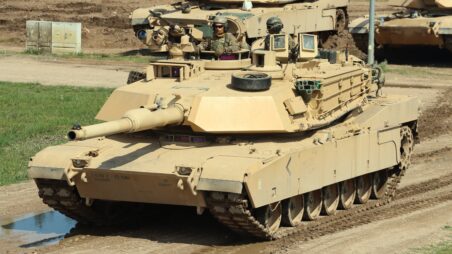
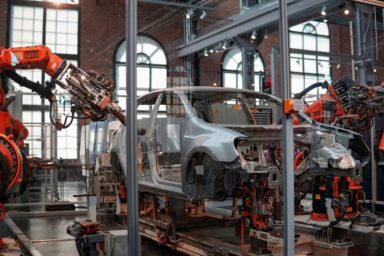
First, the state keeps forcing money into the war economy. Military production, defence wages, and security spending prop up headline output even as civilian activity weakens. Wartime growth has been driven largely by defence expenditure rather than genuine economic strength.
(Russia’s) economy remains in stagnation despite a substantial windfall from higher energy prices, as deepening structural weaknesses continue to outweigh short-term gains. — KSE Institute Sanctions Hub of Excellence
Second, Russia still earns substantial revenue from energy. Ukrainian strikes and Western sanctions have hit refinery capacity and revenues, but have not stopped Russia from selling oil and gas.
The KSE Institute notes that high commodity prices have buoyed the economy enough to prevent outright decline. (It also warns that a fuel crisis triggered by Ukrainian strikes on oil infrastructure has curtailed Russia’s ability to maximise windfall gains.)
Third, sanctions have been significant but incomplete. The KSE Institute says sanctions advanced in several important areas in 2026, including targeting the shadow fleet and anti-circumvention measures.
But it also notes that serious disruptions to global energy flows caused by the Iran war have prevented more transformative measures against Russian energy exports, leaving the sanctions architecture largely unchanged. Pressure has risen, but Russia has not been severed from world markets.
Cracks in the façade
The political picture adds texture to the economic one. “The voices of dissent that are beginning to be heard inside Russia’s tightly controlled dictatorship suggest that it is Putin’s Russia that might be more fragile than Zelensky’s Ukraine,” wrote Bill Emmott, The Economist’s erstwhile editor, in La Stampa.
Andrei Klepach, chief economist of the state-owned bank VEB, publicly stated that Mr Putin’s war has been a failure that has harmed Russia. (He lost his job, but not his life, Mr Emmott notes.)
Russia’s richest oligarch, Andrei Melnichenko, published a long personal essay in The Economist in early July making similar arguments. Whether Mr Melnichenko’s intervention was genuine dissent or an elaborate Kremlin safety valve remains disputed. Either way, Mr Emmott argues, it suggests Mr Putin felt compelled to allow it. It is a sign of elite pressure, not confidence.
Ukraine’s long-range missile and drone attacks have weakened the Russian economy by damaging energy infrastructure and military logistics. They have also brought fear to Moscow and other major cities.
Ukraine has recaptured some territory in southern Ukraine, and each month inflicts more Russian casualties than the Russian military can recruit. In military terms, the war looks like a deadly stalemate. In political terms, Mr Emmott argues, Ukraine (whose democracy can absorb dissent) may hold the stronger position.
The Guardian’s assessment aligns with this reading. Russia is finally stagnating. That does not mean it is about to stop fighting. But it does mean the economic foundations of the war effort are narrowing. The window for more forceful external pressure may be opening.
What Europe should do
The EU has now adopted 21 packages of sanctions. The 20th activated the anti-circumvention tool for the first time, targeting Kyrgyzstan as a re-export hub. The 21st widened transaction bans to banks and traders in third countries and froze the oil price cap until July 2027.
The Commission says sanctions have cut Russia off from global capital markets, hit the sovereign wealth fund, and targeted the shadow fleet. By July 2026, Europe had sanctioned 671 shadow-fleet ships. Yet the shadow fleet still carries a substantial share of Russian oil exports from the Baltic; it suggests EU-only pressure has not significantly constrained exports.
The biggest structural weakness is enforcement. The EU sanctions framework binds inside EU jurisdiction, but the EU avoids extraterritorial sanctions and instead prohibits circumvention.
That makes the regime legally careful, but also easier to evade through third-country intermediaries. If member states do not investigate evasion seriously, the policy leaks — regardless of how many packages Brussels adopts.
The voices of dissent that are beginning to be heard inside Russia’s tightly controlled dictatorship suggest that it is Putin’s Russia that might be more fragile than Zelenskyy’s Ukraine. — Bill Emmott, La Stampa
Four priorities follow. Anti-circumvention should become the core of the regime, not an add-on. Energy pressure (on oil logistics and shipping insurance in particular) should keep tightening wherever legally and practically feasible.
Enforcement inside the EU must improve, with asset freezes and control tests applied consistently across member states. And Europe should resist the temptation to treat sanctions as a substitute for a broader strategy.
The European Commission acknowledges that sanctions are forcing Russia to restructure around military production. They do not stop it producing for war altogether.
Is it even possible?
The honest answer is: probably not through sanctions alone, and not quickly. Collapse may have always been the wrong benchmark. Sanctions were designed to make the war more costly, reduce Russia’s economic flexibility, and erode its long-term capacity. That is happening.
But Mr Putin has so far chosen to absorb the pain by cutting civilian spending rather than military outlays. Parliamentary elections in September are unlikely to change that calculus. (The only anti-war opposition party, Yabloko, was prohibited from running by Russia’s supreme court.)
What Europe can realistically achieve is a continued narrowing of Russia’s options—fiscal, technological, and logistical—while supporting Ukraine’s capacity to inflict military and infrastructure costs that sanctions alone cannot.
The KSE Institute puts it plainly: Russia’s vulnerabilities create an opportunity to intensify pressure once geopolitical conditions permit. Europe’s task is to be ready when that window opens, and to close the gaps in its own regime before it does.
No sudden death
Russia’s economy is not dying fast. It is being hollowed out slowly. The question is whether Europe has the patience, the unity, and the political will to keep tightening the vice until something gives.
But that is still the optimistic reading of the status quo. A less rosy assessment is that the gradually tightening sanctions noose has allowed Mr Putin to reinvent Russia as a war economy without too much pain. (It was also entirely predictable: when economic sanctions work, they do so as a threat, not as a weapon.)
It has allowed him to find willing collaborators, most prominently in North Korea, China, India, and Iran. Basically, it has prepared Moscow for a bigger, even deadlier war with NATO. Seen through the war lens, the descent of Russia’s GDP growth to 0.4 per cent is hardly encouraging.