More than a month after thousands of people arrived in Ceuta, the city’s mayor-president says it is still “living in an impossible situation”. During a trip to Brussels, he called for EU support, arguing that the crisis extends beyond the enclave’s borders.
Ceuta’s mayor-president Juan Jesús Vivas travelled to Brussels to ask the EU for support in achieving “a return to normality”, including the return of migrants who arrived in the enclave. He argued that their arrival “was possible thanks to Morocco’s participation or its consent”.
He accused Rabat of “inappropriate behaviour” and of showing disrespect not only towards Spain but also towards the EU.
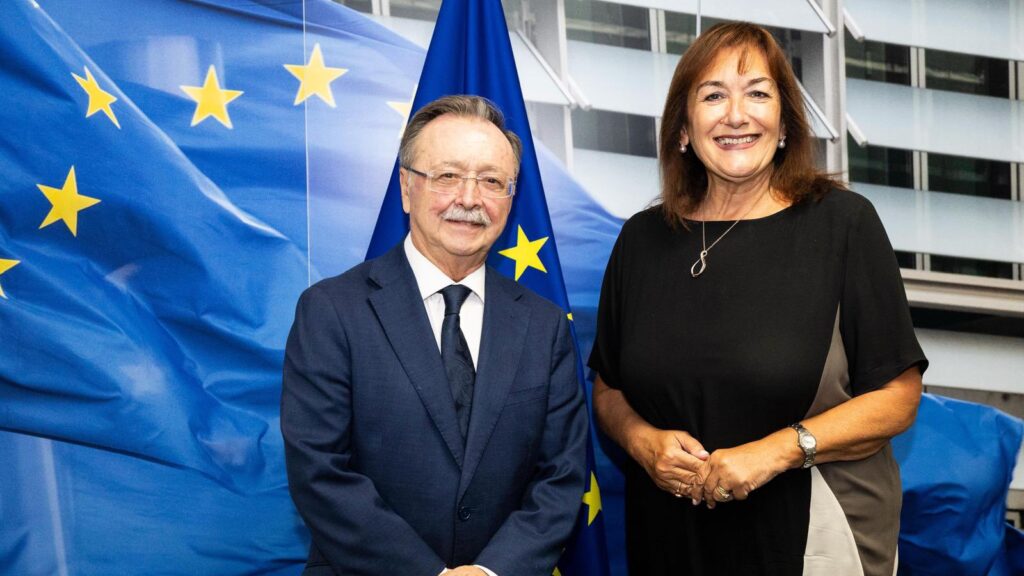
Following her meeting with Vivas, Commissioner for the Mediterranean Dubravka Šuica confirmed that “Ceuta can count on European solidarity”. Exactly what that solidarity will entail, however, remains unclear. The Commission has yet to authorise emergency assistance for the enclave, although it has identified the request as a priority.
Ceuta wants a response to Morocco
For Vivas, the events of 30 and 31 July sent a clear message from Ceuta: “Ceuta is not for sale, Ceuta will not surrender, Ceuta will defend itself.” He wants the crisis to become “a cause for all of Europe”, arguing that “if Ceuta sinks, Spain sinks, and Europe sinks”.
Vivas called on the European institutions to “make Europe’s presence more visible” in the Spanish enclave, including through Frontex and the European Union Agency for Asylum. He also called for EU financial support for border infrastructure, arguing that it should remain under Spanish and European control rather than that of a third country.
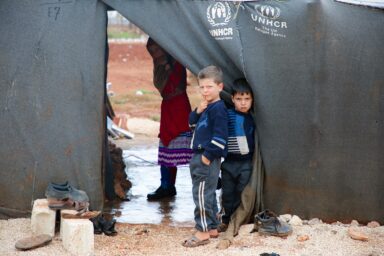
Another priority is funding to address what Vivas described as the humanitarian crisis caused by the arrivals, particularly the situation of the unaccompanied minors who remain in the autonomous city.
If Ceuta sinks, Spain sinks, and Europe sinks.
— Juan Jesús Vivas, Ceuta’s mayor-president
He also called for the EU to give “specific treatment” to Ceuta and Melilla and adapt the EU Pact on Migration and Asylum to the particular circumstances of the two autonomous cities, which together form the EU’s only land borders with Africa.
In recent days, Migration Commissioner Magnus Brunner held telephone conversations with Spanish Interior Minister Fernando Grande-Marlaska and Territorial Policy Minister Ángel Víctor Torres about the situation in Ceuta and the challenges that remain.
Commission officials are due to travel to Ceuta this week on a technical mission. “In parallel, the Commission services are proceeding with the priority assessment of the request for emergency assistance,” a Commission spokesperson said.
Meanwhile, Prime Minister Pedro Sánchez has announced plans to request the inclusion of Ceuta and Melilla in the EU Customs Union and their recognition as outermost regions of the EU.
What’s happening with Rabat?
Vivas also wants to see “a firm response from Europe to Morocco”. The mayor-president, who has been in office for 25 years, accused Morocco of having twice used border controls and migratory pressure to put the “territorial integrity of Ceuta, Spain and Europe” at risk.
At the same time, he reiterated his desire to maintain “fruitful and collaborative” relations with Morocco, stressing that cooperation must be based on respect for borders and territorial integrity.
Vivas accused Rabat of pursuing a policy of “hostility” towards Ceuta and Melilla over many years, including what he described as attempts at their “economic suffocation” and “encirclement”.
For now, the extent of that European solidarity remains to be seen. With the Commission still assessing Ceuta’s request for emergency assistance and the enclave pressing for a longer-term EU role at its border, the question is whether Brussels can help Ceuta return to “normality” without leaving the city to face the next crisis alone.