Europe lacks the launch infrastructure it needs to stay competitive in the space race. At stake is the continent’s current prosperity and future sovereignty.
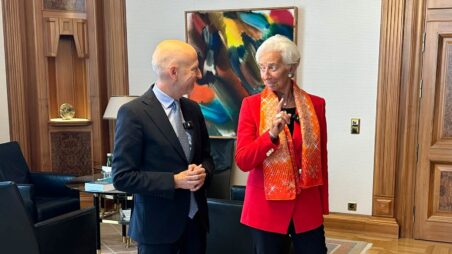
The Solvay Library in Brussels is not an obvious venue for a crisis meeting. Built as a temple to scientific ambition, it hosted Einstein, Niels Bohr, and the greatest minds of early 20th-century physics. EU Commissioner for Defence and Space Andrius Kubilius chose it deliberately on 23 September to open the second EU Access to Space Conference.
The symbolism was intentional. “I hope that our meeting on launching in the Solvay Library has the same symbolism,” he told delegates. “We are starting a big journey into known unknown territories.”
We need all the support we can get. — Andrius Kubilius, EU space commissioner
The journey, however, starts from a position of weakness. Europe has overcome its immediate launcher crisis. What confronts it now, Mr Kubilius argued, may be harder to solve. The world expects 50,000 satellite launches in the next decade. European satellite demand will multiply nearly six-fold by 2035.
The EU alone will need 62 launches by 2034, covering Galileo, Copernicus, IRIS², and a new planned governmental observation service offering space-based positioning, navigation, and timing. The launch infrastructure to deliver that does not yet exist.
A continent falling behind
The numbers are unforgiving. Ariane is set to launch ten times a year; 14 launches will be needed in 2031 alone. Vega is set for six launches a year, with another eight needed in 2030. The gap is one of structure, not a marginal one.
Europe currently ranks fourth globally in mass launch capacity, behind the US, China, and Russia. It lags in reusable rocket technology. Its share of global public space expenditure stands at 11 per cent, against 60 per cent for the US and 15 per cent for China. Private investment tells the same story: Europe has fallen from second place to third, behind both the US and China. Individual member states do not feature on the list at all.
“We are not only lagging behind in terms of numbers of launches, but also in terms of technology,” Mr Kubilius said. “We need rockets that can be used again and again and again.” The reusability gap is not merely a technical embarrassment. It is a cost and competitiveness problem that compounds over time, as rivals drive down the price per kilogram to orbit while Europe’s launch economics remain anchored to expendable systems.
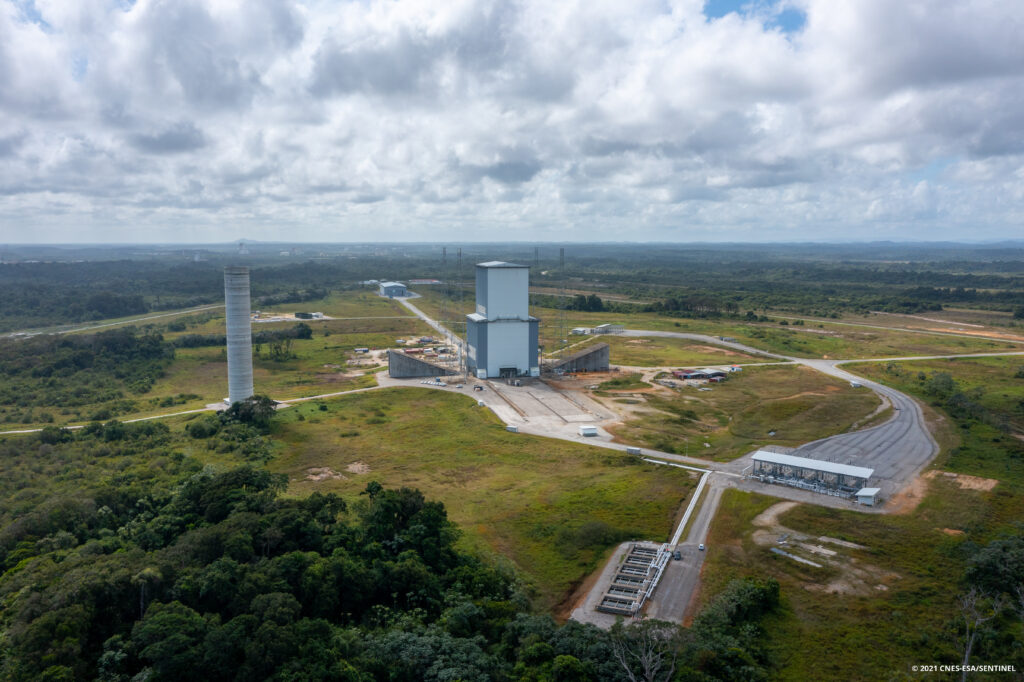
Ground infrastructure adds another layer of vulnerability. Europe has an operational spaceport in French Guiana and several emerging initiatives across the continent. But Mr Kubilius argued these sites need to function as a network — interconnected, sharing services, capable of dramatically higher launch cadences. Test facilities for emerging launch providers are also scarce. The first commercial launch from European soil, by Isar Aerospace from the Andøya spaceport in Norway, demonstrated what is possible. It has not yet been replicated at scale.
The root cause
Mr Kubilius was direct about what underlies all of this. “We are fragmented and divided,” he said, “with fragmented space markets, fragmentation in launch capabilities.” The observation is not new. What gave it weight was the framework he offered for addressing it.
At the International Space Summit earlier this year, the European Commission, the European Space Agency, and EU member states jointly presented a Declaration on Access to Space. It is a shared 35-year vision committing all parties to promote European preference, consolidate launch demand, coordinate resources, avoid duplication, and foster private investment.
“Thirty-five years is a long time ahead,” Mr Kubilius acknowledged. “The space age started 70 years ago. Thirty-five years is half the space age up till now. But we need to act with courage and long-term strategic vision, because the decisions we take today will decide our future.”
The declaration is a political document. Translating it into procurement decisions, budget commitments, and industrial choices is the harder task. It is what Mr Kubilius is now pursuing.
From vision to launch sites
The Commission has proposed a fivefold increase in the defence and space budget within the next EU multiannual financial framework. French President Emmanuel Macron endorsed the proposal at the Space Summit, calling for a budget that matches Europe’s ambitions. Mr Kubilius was candid about what comes next. “Getting agreement on the budget will be hard,” he said. “Difficult negotiations are taking place right now. We need all the support we can get.”
We are not only lagging behind in terms of numbers of launches, but also in terms of technology. — Andrius Kubilius
To move from declaration to action, Mr Kubilius announced a ‘launch tour of Europe’: visits to launch sites, manufacturing facilities, and test centres across the continent. It is modelled on an earlier ‘missile tour’ he undertook to assess European missile production capacity for Ukraine.
The goal is to identify bottlenecks firsthand, aggregate demand signals, and build the evidence base for an action plan on European access to space. He intends to present the findings next year following a broad public consultation.
Assets are real, unity is not
The Cassini seed fund for space startups will be succeeded by a Cassini 2.0, and the Commission is expanding access to risk finance through the European Investment Bank, covering instruments from debt to equity.
Europe’s assets are real. Vega C recently launched the Sentinel 3C satellite successfully. The new Ariane 64, on its maiden voyage, launched 32 satellites and doubled payload capacity to 20 tonnes. The engineering capability exists. So does the economic base: a single market of 450 million people, a GDP of nearly €20tn, and, as Mr Kubilius put it, “the best universities, the best scientists, and the best engineers in the world”.
What Europe lacks, he argued (for the umpteenth time), is not talent or technology. It is the will to act as a single entity. “Together we can mobilise the power of an entire continent,” he said. The question the Brussels conference left hanging is whether the continent’s governments are ready to let it.