Small fishing communities depend on EU money to modernise boats, attract young workers and keep coastal economies alive. But the bloc’s next long-term budget could leave them fighting harder for support.
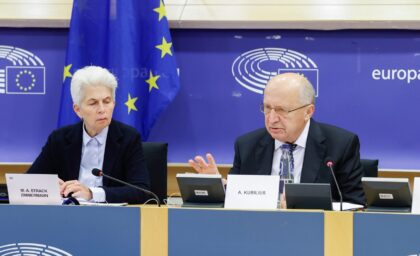
Small-scale fishing communities are warning that the EU’s next long-term budget could put vital funding at risk. At a European Parliament hearing, industry representatives urged Brussels to protect dedicated support for local fleets as the bloc prepares its 2028–2034 budget. It should give member states greater flexibility in how they allocate funding for fisheries and coastal development.
The fishing associations are concerned that in the current system of competition among the small operators, there is no guarantee that the financial support provided by the larger operator will be distributed fairly to the community.
The European Commission supported their proposal stating that the simplified procedure of obtaining funds through the new model will provide greater flexibility to member states regarding their ability to fund their local fishery operations.
Small fishing communities fear losing EU funds
One of the major worries is what will happen to the Fisheries Local Action Groups (FLAGs) that support fishing areas to get money from the European Union. FLAGs are also supporting investment in better safety equipment for boats, newer fishing gear, new fish markets and tourism.
María Belén Vicente González speaking for all local fisheries organisations throughout Europe expressed concerns about making Community Led Local Development optional under the proposed budget. She indicated that many small scale operations do not have the financial capability or knowledge to be able to access and follow through with complicated EU funding regulations by themselves.
During the last round of funding, local development programs helped create over 15,120 projects and attracted over €600 million in investment. These programs created approximately 5,000 jobs and maintained another 11,000. These figures were presented by representatives of the fishing sector but were not confirmed independent of the hearing.
Commission defends new funding system
The Commission representative Stylianos Mitolidis stated that nations will have to provide information on how the national/regional partnership plan addresses problems, including fleet modernisation, sustainable practices, and entry level/younger worker recruitment.
Brussels also mentioned that there is already money available in the form of the European Maritime, Fisheries and Aquaculture Fund (EMFAF) which may be able to fund all or part of eligible costs for smaller scale fishing businesses.
Fishing industry representatives, however, expressed concerns about accessing these funds. They stated that many companies do not possess sufficient administrative capability to complete the necessary paperwork required to obtain this funding.
Younger fishers face growing barriers
Access to funding is just one problem faced by small scale fishing fleets. The sector also struggles to attract younger fisherman into the workforce. Many operators of vessels are nearing retirement age. Representatives from Gipuzkoa in Spain said that it was becoming increasingly difficult to recruit candidates for captain positions and for individuals interested in taking over fishing operations.
Older vessels, training requirements and limited access to owning vessels all contribute to a less attractive career path for young people. Boats are in need of modernisation so they can be operated more safely and efficiently.
But many feel constrained by existing limits on vessel size and horsepower that limit their ability to modernise. Several speakers at the hearing encouraged the EU to grant fishing businesses more options to modify vessels without increasing pressure on fish stocks.
Small boats struggle to earn more from their catch
Another concern is the price fishers receive for seafood. Cristina Pita, a researcher specialising in small scale fisheries, stated that large retailers favor long term supply contracts with predictable volume. Small scale fishing operators rarely can negotiate price. She described small scale fishers as “price takers, not price makers”.
Ms Pita suggested several ways to help small-scale fishers earn more while catching fewer fish. These include enabling direct sales to consumers through better product labelling, providing greater support for producer organisations and encouraging large institutional buyers, such as schools and hospitals, to purchase locally caught seafood.
Coastal communities await funding decisions
According to the Commission, small-scale coastal fisheries account for 77 per cent of active EU fishing vessels and almost half of employment in the sector. Yet many operators continue to face problems accessing funding, securing fishing opportunities and earning enough from their catches.
The EU forthcoming Fisheries and Aquaculture Vision 2040 will provide another opportunity to address these challenges. For now, the dispute centres on the next EU budget. The outcome will matter well beyond fishing boats. Across Europe coastal regions, ports, fish markets, processors and local businesses also depend on the survival of small scale fishing communities.