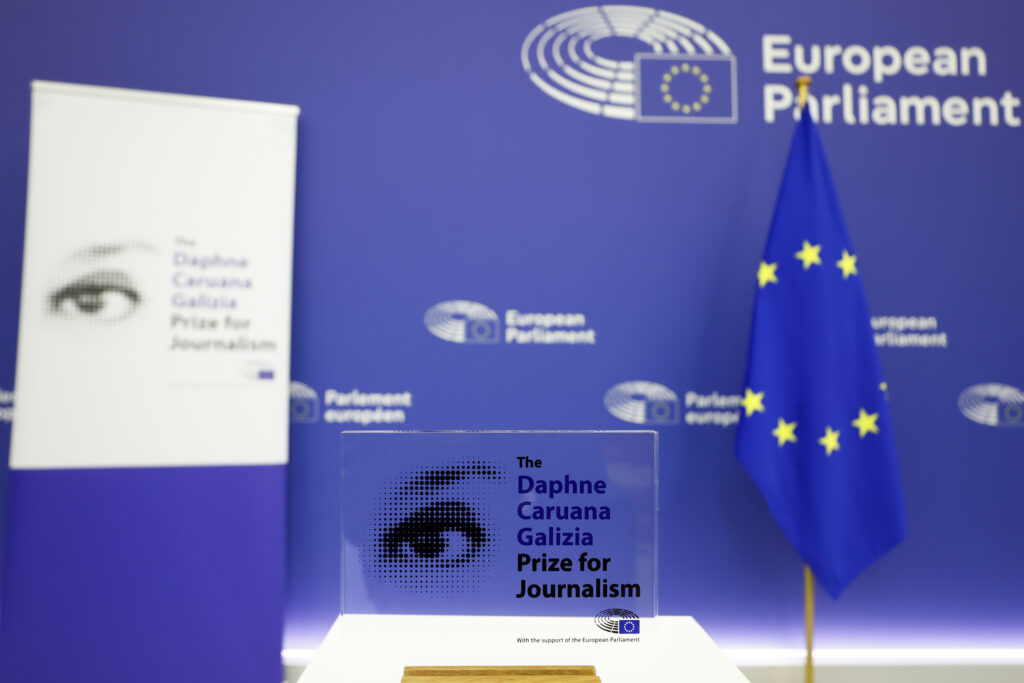
A car bomb killed Daphne Caruana Galizia while she was exposing corruption in Malta. Nine years on, nobody has been convicted of ordering her murder. New EU rules were meant to make sure the next journalist is safer. A recent study suggests Malta is still falling short.
“Nine years after Daphne Caruana Galizia’s assassination, Malta has still not confronted the institutional failures that made her murder possible,” David Casa (EPP/MLT), who heads the Maltese delegation in the European People’s Party Group, told EU Perspectives. “The State’s failure to secure a conviction of the alleged mastermind behind her assassination is another devastating blow to the pursuit of justice and accountability.”
His comments follow the acquittal of businessman Yorgen Fenech on 2 September. A jury cleared him of complicity in the murder of 16 October 2017 and of criminal association to commit murder. Mr Fenech has denied wrongdoing. The verdict renewed concerns about accountability for those who ordered the killing.
New rules, old weaknesses
The European Media Freedom Act (EMFA), which has applied since August 2025, aims to protect sources, strengthen media independence, and bring greater transparency to press ownership. “The European Media Freedom Act provides important new safeguards against political interference and strengthens the protection of independent journalism,” Mr Casa said.
In August 2025, Malta published a legal notice to align its laws with the act. The changes require competitive recruitment for public service media chief executives and allow court challenges against early dismissals. They also require ownership information to be accessible and kept up to date. Yet a recent study for the European Parliament describes Malta’s public broadcaster as operating under direct government control. Its funding remains opaque and dependent on state support.
Malta has set up an Office for Advertising and the Media, but the prime minister retains a central role in its leadership. Protecting journalists’ sources is another concern. Malta’s new rules restrict spyware use against journalists. However, the Security Service Act, which governs national security surveillance, contains no specific safeguards for journalists’ confidential sources.
Legislation alone cannot dismantle a culture of impunity. — MEP David Casa (EPP/MLT)
“Legislation alone cannot dismantle a culture of impunity. Malta must implement the public inquiry’s recommendations in full and ensure that no journalist is ever again made a target for exposing corruption,” Mr Casa said. The inquiry concluded in 2021 that the state bore responsibility for the journalist’s death by creating a climate of impunity.
Malta is not alone
Malta’s difficulties reflect a wider European problem. According to the study, protection against surveillance is among the weakest areas across the bloc. Most member states do not provide the level of protection against spyware and access to communications data that the regulation requires.
The study documents disputes over public media governance and funding across the bloc. In Slovakia, the Constitutional Court has asked the EU’s Court of Justice for guidance. In Germany, funding disputes have reached the Constitutional Court. In the Czech Republic, proposed funding changes have raised concerns about broadcasters’ independence.
The study also records progress. Slovenia’s new media law strengthens editorial autonomy and requires disclosure of conflicts of interest. Denmark and Finland adopted implementing legislation ahead of the August 2025 application date.