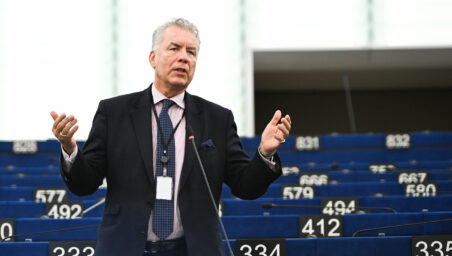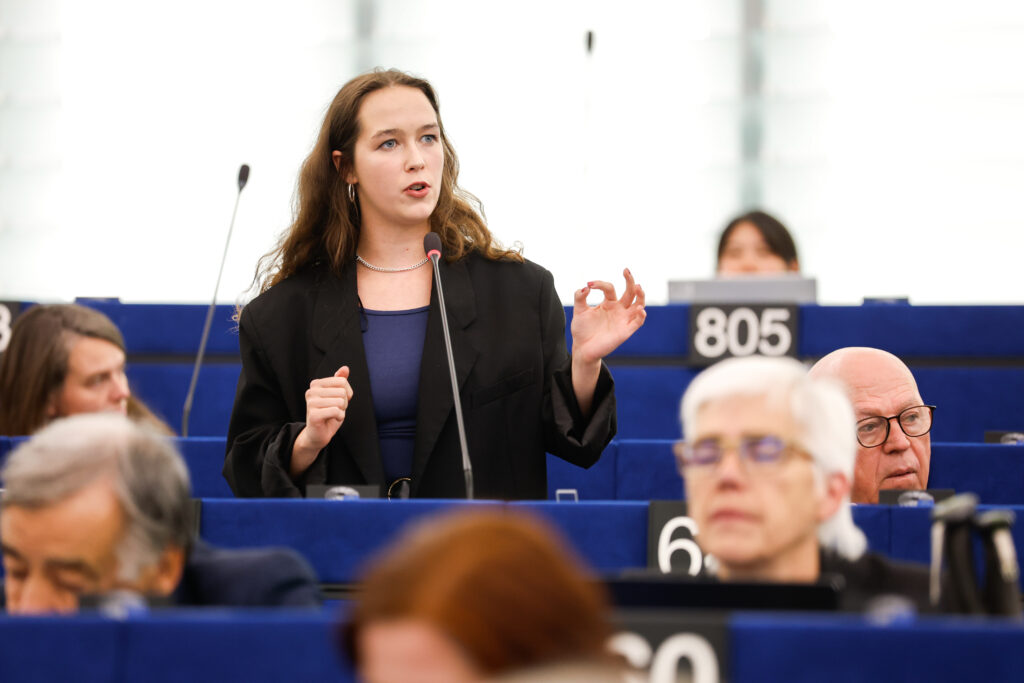
One fake nude of Lena Schilling seems to have started as footage from her press conference on climate. The Austrian Green lawmaker now wants Europe to hit the business behind such images where it hurts: its money. The EU ban on nudifier apps applies from 2 December. “A ban on paper helps nobody,” she says in an interview with EU Perspectives.
Lena Schilling (Greens/AUT) is far from the only one. Researchers at the think tank Agora Digitale Transformation found 46 women in the European Parliament on websites that host or facilitate sexualised deepfakes. That is one in six women lawmakers. The study estimates that women in the chamber are 33 times more likely to be hit than men. The images feed a lucrative business that relies on apps, adverts, and payment services. Victims, meanwhile, are left to chase every picture themselves.
From 2 December, nudifier apps are banned in the EU. What evidence would show that the ban is working, and will it be enough to reduce this kind of abuse?
A ban on paper helps nobody. From 2 December, these nudifier tools are no longer allowed to operate. We need to see their numbers dropping and companies facing real consequences if they still offer them. And we need to go after the entire chain: those developing these tools, spreading the images and making money from abuse. Women cannot be left to fight this alone.
If some member states do not have national AI authorities in place by 2 December, how can the EU effectively enforce the ban?
There is no excuse for being unprepared. Member states have had time to prepare for the implementation of the AI Act, and the deadline for designating national authorities has already passed. The Commission already has enforcement powers under the Digital Services Act (DSA) over the biggest platforms and must use them. From day one, companies must know that there will be consequences if they break the law.
What responsibility should online platforms such as Google, Meta, or X bear when people generate or spread this material through their services?
We have to look at the entire chain of responsibility, including the companies that develop these tools and the platforms that distribute, promote, and profit from it. That means accessible reporting mechanisms, swift action on illegal content, effective safeguards, and real action when companies fail to meet their obligations.
You have called for the sexualised deepfake industry to be demonetised. How can the EU effectively do that?
We must stop treating this as a problem that can be solved simply by deleting individual images. There is an industry behind this abuse, and we need to make sure that abusing women is no longer a profitable business model.
That means enforcing the AI Act against prohibited systems, applying the Digital Services Act to platforms that facilitate the spread of illegal content or fail to address systemic risks, and putting pressure on the wider infrastructure that enables these services to make money.
Abuse must not be a business model. — Lena Schilling, Austrian Green lawmaker
The people who create, distribute, and profit from this abuse must carry the responsibility, not the women targeted by it. We need to cut off the money flowing into this industry, including through advertising and payment services. Abuse must not be a business model.
From your own experience, what would you recommend other victims do if this happens to them, and what mechanisms are still missing?
From personal experience, I know what it feels like seeing naked pictures of you that you never took. If this happens to you, please know that you are not alone. If it feels safe to do so, document the content and save the relevant links and evidence. Ask a friend for help. Report it to the platform and, where appropriate, to the police or a support organisation.
Right now, too much of the burden still falls on the people who have been targeted. They are expected to play whack-a-mole with every image, contact every platform, navigate complicated reporting procedures, and fight to have the content removed, often while dealing with the personal consequences of the abuse. I was lucky that I have a team supporting me, but many women are left alone with this.
I do not want women to be left alone to clean up the mess that someone else has made of their lives. — Lena Schilling
I do not want women to be left alone to clean up the mess that someone else has made of their lives. We need clear, accessible points of contact, properly resourced authorities, faster and more effective removal procedures, and better support for victims. We also need the EU rules to be enforced consistently across all member states.