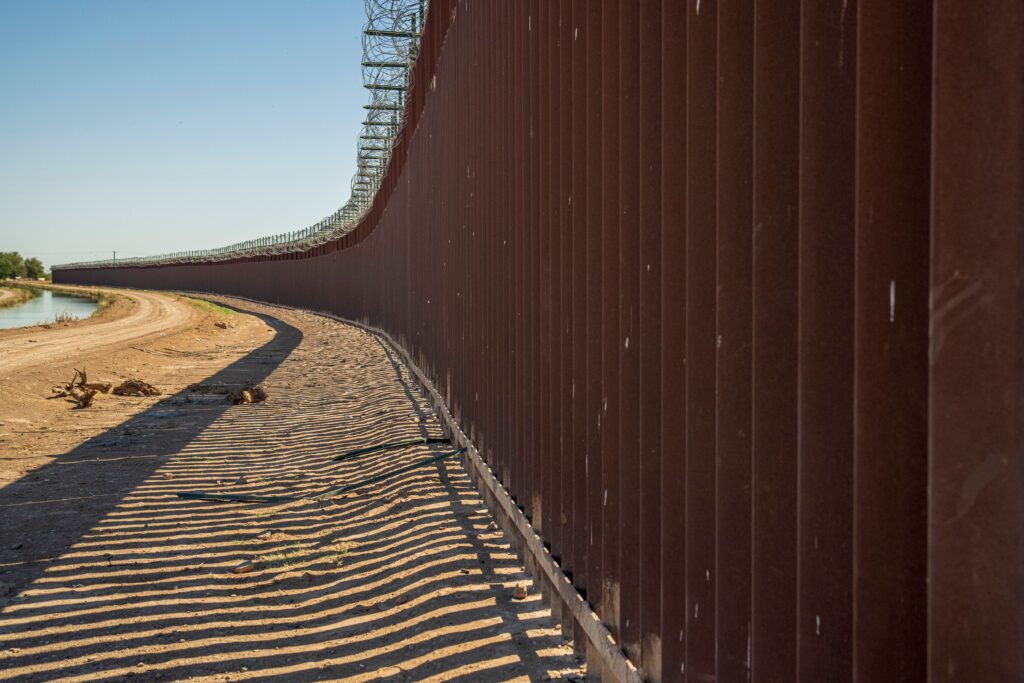
Money meant to support partner countries is ending up at Europe’s borders, a new report by ActionAid warns. Part of it now pays to stop people on their way to Europe or to send them back home. The EU’s next aid fund could go further still: countries that refuse to take back their citizens may lose funding.
The fund in question is Global Europe, the EU’s main tool for development and foreign aid. It is part of the bloc’s next long-term budget, the multiannual financial framework (MFF) for 2028–2034. On 19 October, the Committees on Foreign Affairs (AFET) and Development (DEVE) vote on it, with a plenary vote to follow. ActionAid presented its report, titled “Aid at the Borders”, to members of the European Parliament days before that vote.
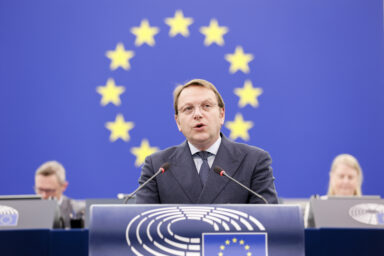
The European Commission defends its approach. Several MEPs, however, have serious concerns. Camilla Hagström, deputy head of the Commission’s unit for migration and forced displacement, rejected the idea that “cooperation should focus exclusively on legal migration and the protection of refugees”.
Development money, migration goals
The report looks at how the EU has used its international cooperation funds. It focuses on the increasingly tight link between migration policies and official development assistance (ODA). In 2021, the EU established the Neighbourhood, Development and International Cooperation Instrument (NDICI-Global Europe), with a budget of €79.5bn for 2021–2027. Its aim is to support the development of partner countries and contribute to the UN Sustainable Development Goals.
According to ActionAid, however, a portion of these funds increasingly goes to European migration priorities rather than the needs of the beneficiary communities. “Over the last twenty years, and especially since 2015, we have witnessed a profound transformation in the relationship between migration and development,” the report states. It warns that international cooperation may become subordinate to the goal of reducing arrivals in Europe.
Eva Baluganti, a consultant for ActionAid, said the organisation carried out a quantitative and qualitative analysis of European programmes. It identified “four main categories of intervention: protection of displaced persons, border management, return and reintegration, and addressing the root causes of migration. The protection of displaced persons is the category that has received the most funding, largely due to programs aimed at Syrian refugees in Turkey.”
ActionAid argues that several interventions, funded under the guise of development aid, actually aim mainly to control migratory movements and intercept people along routes toward Europe. That matters. OECD guidelines, updated in 2022, allow funding to count as ODA only if its primary objective is to promote the economic development and well-being of the recipient countries.
Returns and root causes
Ms Baluganti told MEPs that some programmes fail this test. “Programs that prioritize the containment of migratory flows do not adhere to this principle, even when framed in terms of search and rescue operations. Another issue concerns assisted voluntary return programs,” she said. “The question of whether they are truly voluntary becomes critical when such programs are implemented in contexts where individuals have, in effect, no other alternatives,” she added.
ActionAid also sees contradictions in projects meant to tackle the so-called root causes of migration. Such projects could help local development. But the choice may rest on their supposed ability to cut departures rather than on what communities actually need.
Aid as a bargaining chip
Global Europe will replace NDICI from 2028. One of its most controversial points would make aid depend on whether partner countries cooperate on returns and readmissions, that is, taking back people the EU wants to send home. ActionAid calls for rejecting the provisions in Article 12. They would allow the EU to suspend funding or programmes for countries it considers uncooperative. According to the NGO, this “negative conditionality” risks penalising local communities for decisions their governments make. Barry Andrews (Renew/IRL), chair of the DEVE committee, shares these concerns.
Mr Andrews said that Charles Goerens (Renew/LUX), who follows the file for his group as shadow rapporteur, plans to vote against Global Europe. The reason is migration. The share of the fund the EU plans to spend on it has risen from 10 to 17 per cent. “He might accept 12% or 13%, but not 17%,” Mr Andrews explained. He added that he himself would still support the text as a whole.
Europe finds itself in the contradictory position of supporting discriminatory policies while simultaneously financing interventions to address their humanitarian consequences. — Barry Andrews, Chair of the European Parliament’s Committee on Development
Mr Andrews also admitted that Parliament has not checked closely enough how the money is spent. “Europe finds itself in the contradictory position of supporting discriminatory policies while simultaneously financing interventions to address their humanitarian consequences,” he said.
The Commission sees it differently. Ms Hagström defended the so-called “flexible incentive approach”. The mechanism gives extra money to countries that step up their migration cooperation with the EU. ActionAid’s report argues that this system “risks introducing political criteria into the allocation of aid”. The Commission, by contrast, says the mechanism has also helped fund inclusive policies for refugees, particularly in sub-Saharan Africa. Ms Hagström did, however, admit that it needs a public evaluation. None is available yet.
Voices from the Parliament
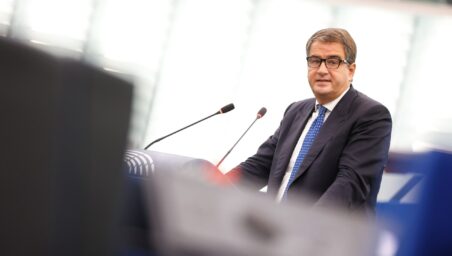
Marco Tarquinio (S&D/ITA) was far more critical. He accused the EU of gradually turning international cooperation into a tool for moving border control to countries outside Europe. “The task we have set for ourselves is to build a ‘great wall’, whatever the cost,” he declared. According to Mr Tarquinio, the costs of this strategy are not only economic. They fall mainly on migrants, who risk becoming trapped in the very countries with which Brussels has struck deals.
The task we have set for ourselves is to build a ‘great wall’, whatever the cost. — Marco Tarquinio, S&D MEP
Tineke Strik (Greens/NLD), her group’s shadow rapporteur for Global Europe, also criticised the growing weight of migration control. In her view, the money for Syrian refugees in Turkey makes the overall picture look better than it is. Take that money out, she argued, and the focus on border management and returns becomes much clearer.
Ms Strik explained that the Greens tried to set stricter limits on migration-related spending but failed to win a majority. In talks on conditionality, the group tried to limit the potential damage. It won procedural safeguards and exemptions for humanitarian aid, essential services, support for non-governmental organisations, and the promotion of human rights. Despite these concessions, Ms Strik still sees migration-related conditionality as a negative aspect of the new instrument.
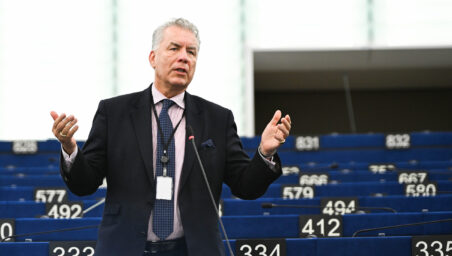
Erik Marquardt (Greens/DEU) also pointed to the EU’s legal obligations. He leads Parliament’s work on policy coherence for development, which checks that other EU policies do not undermine development goals. Under Article 208 of the Treaty on the Functioning of the EU, the main aim of development cooperation is to reduce poverty and, in the long term, to eradicate it. “This principle is being progressively replaced by the political goal of reducing arrivals,” he said.
Cooperation or control?
The debate shows a rift that runs through the EU institutions themselves. Some want to use development cooperation to manage migration better. Others fear this approach undermines what development aid was meant to do. As Parliament’s committees prepare to vote on Global Europe, the question is not only how much money should go to migration. More importantly, it is who should benefit from European aid, and whose interests should guide how the EU spends it.