Google had 60 days to stop favouring its own services and restricting app developers from pointing users to cheaper alternatives. The deadline ran out in September, yet Brussels still has not said whether the company has done enough. Asked when a decision would come, the EU’s competition chief offered no date.
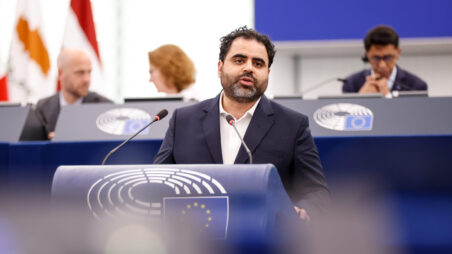
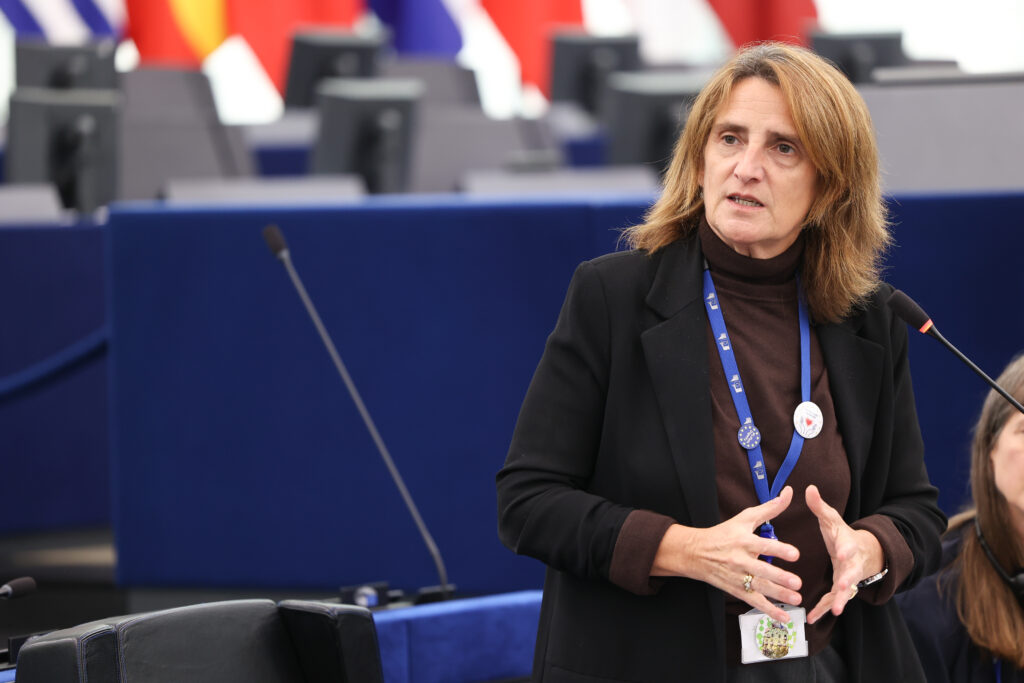
“Google, the 60-day deadline that you adopted has lapsed, but we have not yet had a decision from DG Competition,” Stéphanie Yon-Courtin (Renew/FRA) told European Commission Executive Vice-President Teresa Ribera on Tuesday. “When will you issue your conclusions, and will you impose restrictions or fines?” But Ms Ribera had no date to offer. “We’ve received proposals from Google. We’re assessing them. We also want to seek the views of other market operators.”
The exchange came during Question Time with the Commission at the European Parliament’s plenary session on 20 October. The debate’s central question was the upcoming revision of the EU’s merger guidelines. They set out how Brussels assesses whether company takeovers could harm competition.
The deadline has passed
In July, the Commission fined Google €460m for favouring its own shopping, hotel, transport, and sports services in search results. Another €430m was imposed for restricting app developers’ ability to direct users towards alternative, potentially cheaper purchasing channels outside Google Play.
Under the Digital Markets Act (DMA), platforms must comply with obligations intended to prevent them from unfairly disadvantaging rivals. Google was ordered to stop the infringements within 60 days. Google has begun changing its search results and app-store fees. Still, Brussels has not yet said whether those changes go far enough.
Ms Yon-Courtin questioned what the delay meant for the DMA’s credibility. She also warned about predatory behaviour in emerging AI and cloud markets and argued for an independent European competition authority, insulated from political pressure.
For rivals, visibility in search results and being able to direct customers towards their own offers requires more than fines, which raised another question. Are financial sanctions sufficient or might structural remedies be necessary? The idea is not new. Last year, Brussels ordered Google to eliminate conflicts of interest across its advertising business. The Commission suggested that selling part of that business might be the only effective solution.
Who gets to challenge Big Tech?
The scrutiny then turned to the power of digital giants, which buy competitors before they grow. “How can we create our own tech leaders if big giants take over all tech companies before they turn into their competition?” asked Tomislav Sokol (EPP/HRV). He warned of “killer acquisitions”, in which established firms acquire smaller businesses before they can become serious competitors.
Andreas Schwab (EPP/DEU) also spoke on the issue. He argued that some start-ups are acquired “not to improve the services for users, not to improve the product, but literally just to kill competition”. Rasmus Andresen (Greens/EFA/DEU) cited Commission research suggesting that greater market concentration had been accompanied by higher corporate profits and consumer prices, weaker business dynamism, and slower productivity growth. This challenges the assumption that larger companies necessarily deliver greater innovation or lower prices.
How can we create our own tech leaders if big giants take over all tech companies before they turn into their competition? — Tomislav Sokol, Member of the European Parliament
Ms Ribera acknowledged that dilemma. She said start-ups must be able to attract capital and scale up without acquisitions becoming an easy route to neutralise challengers. This is where the merger-guidelines review enters the debate. The revised guidelines aim to give greater consideration to future innovation, investment, and economic resilience when assessing whether mergers benefit or harm competition. One proposed feature is an “innovation shield” to clarify when certain acquisitions of small innovative companies are unlikely to harm competition.
Ms Ribera told MEPs that the revised guidelines would be formally adopted before the Christmas break. According to her, the Commission had received more than 200 consultation comments and was refining how companies should demonstrate future benefits.