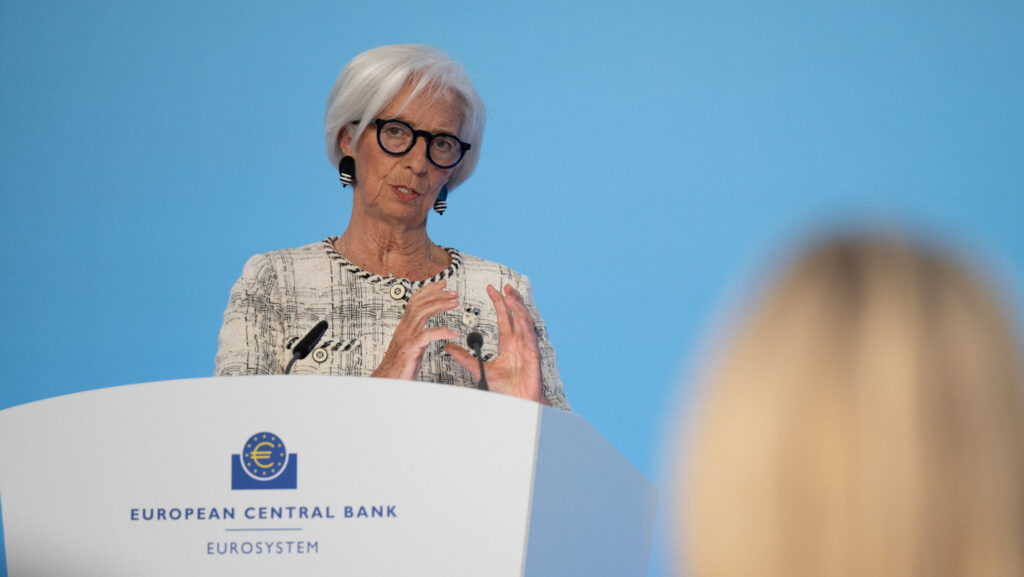
Christine Lagarde will step down as president of the European Central Bank on 7 February 2027, almost nine months before her term was due to end. European Council President António Costa said the process to appoint her successor would begin immediately.
“Europe has been well served by her leadership in uncertain times and her unwavering commitment to the European project,” Mr Costa said in his statement on 29 October. He pledged to advance the appointment process without delay to ensure a smooth transition. The ECB confirmed her departure date, but its brief announcement gave no reason for the early exit.
European Commission President Ursula von der Leyen also thanked Lagarde for helping steer the euro area through the pandemic and Russia’s war against Ukraine, praising her role in strengthening Europe’s economic sovereignty. “The world needs more leaders like you,” she wrote on X.
From pandemic support to the inflation fight
Ms Lagarde took office on 1 November 2019, succeeding Mario Draghi for an eight-year term scheduled to run until 31 October 2027. She previously led the International Monetary Fund from 2011 to 2019 and served as France’s economy and finance minister from 2007 to 2011.
Her presidency quickly became defined by successive crises. The ECB launched its pandemic emergency purchase programme in March 2020, eventually expanding its envelope to €1.85tn to support financing conditions during the coronavirus shock. In 2021, the bank’s strategy review established a symmetric two per cent inflation target over the medium term, replacing its previous formulation of inflation below, but close to, two per cent.
The subsequent inflation surge brought a sharp reversal. Between July 2022 and September 2023, the ECB raised its key interest rates ten times, increasing them by a cumulative 4.5 percentage points. Her early departure now opens the succession process before the end of that crisis-marked mandate.
Euro area leaders will appoint the next president under the EU treaty procedure, following a Council recommendation and consultation with the European Parliament and the ECB’s Governing Council.